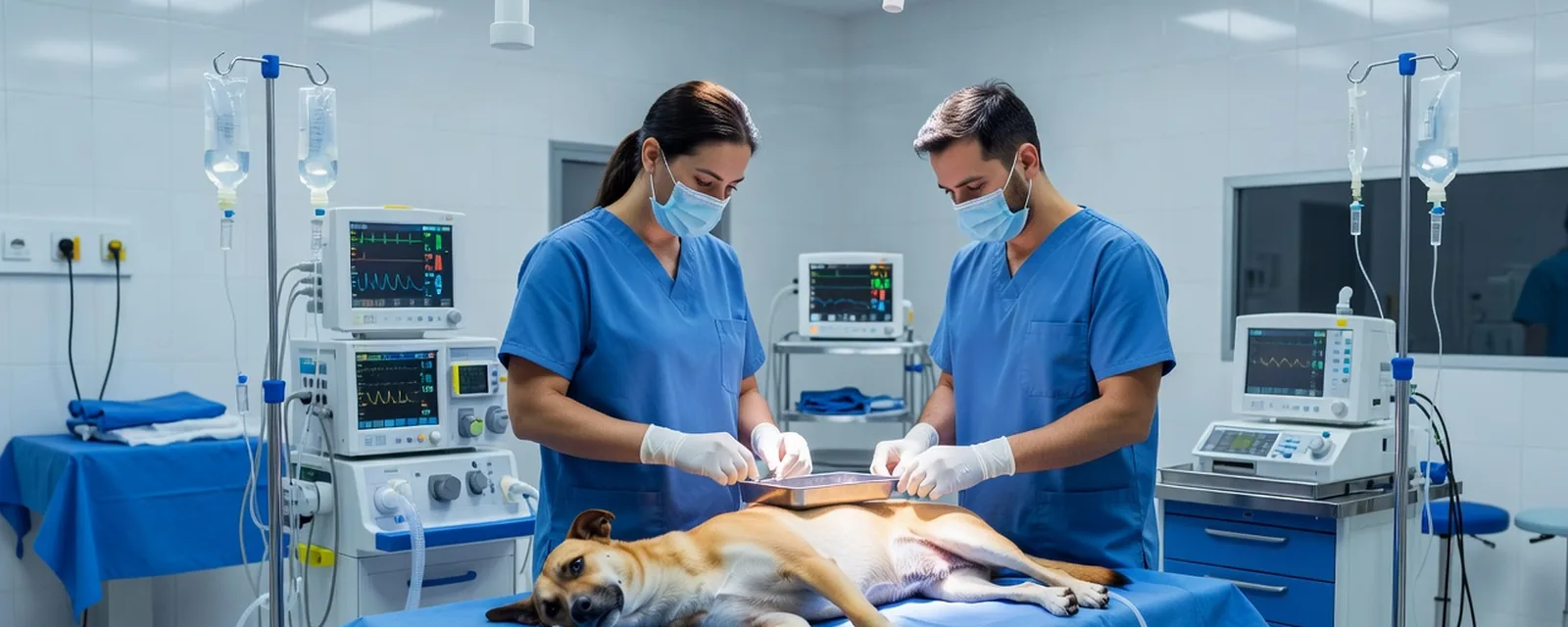
Pyometra is a severe bacterial infection that fills the uterus of an unspayed female dog or cat with pus. It typically strikes in the weeks after a heat cycle, makes pets sick fast, and is fatal if untreated — the infected uterus can rupture and spill infection into the abdomen.
The cure is emergency surgery to remove the infected uterus and ovaries — an urgent, higher-stakes version of a spay. With prompt surgery, the outlook is very good; with waiting, it worsens by the day. If your unspayed female is sick after a heat cycle, call us the same day.
Our pyometra service includes
- Same-day urgent evaluation for at-risk females
- Bloodwork, X-rays, and ultrasound to confirm the diagnosis
- IV fluid and antibiotic stabilization before anesthesia
- Emergency ovariohysterectomy (removal of uterus and ovaries)
- Hospitalized monitoring through recovery
- Honest guidance on spaying to prevent pyometra entirely
What to expect
Suspected pyometra is seen the same day: bloodwork and ultrasound confirm the diagnosis, IV fluids and antibiotics stabilize your pet, and surgery removes the infected uterus — usually within hours. Most patients feel dramatically better within a day or two and recover at home like a spay patient.
Pyometra Surgery guides & handouts
Take-home guides from our resource library related to this service.
Pyometra in Dogs and Cats: The Emergency Every Unspayed Female Risks
Every heat cycle, hormones prepare the uterus for pregnancy — thickening its lining and suppressing local immunity. Cycle after cycle, that environment becomes ideal for bacteria climbing up from the birth canal. When infection takes hold, the uterus fills with pus: pyometra.
Roughly one in four unspayed female dogs will develop pyometra by age ten. It is most common in middle-aged and older females, typically two to eight weeks after a heat, and it is always an emergency.
Symptoms of Pyometra
Signs range from dramatic to frustratingly vague, which is why the combination of "unspayed female + recently in heat + sick" should always trigger a same-day call:
- Lethargy, weakness, or hiding
- Drinking and urinating far more than usual
- Vomiting and loss of appetite
- Pus-like or bloody vaginal discharge (open pyometra)
- A swollen, tender belly with little or no discharge (closed pyometra — the more dangerous form)
- Fever early on; low temperature as sepsis develops
In a closed pyometra the cervix seals the infection inside, so there's no discharge to warn you — the uterus simply keeps filling until it ruptures. Never rule out pyometra just because a pet looks "clean."
How Pyometra Is Diagnosed
Diagnosis is usually quick: bloodwork typically shows a dramatically elevated white cell count and evidence of dehydration or early kidney strain, while X-rays and ultrasound reveal the enlarged, fluid-filled uterus. Ultrasound distinguishes pyometra from pregnancy — an essential distinction before surgery.
Why Surgery — and Why Immediately
Removing the infected uterus and both ovaries cures the disease and prevents recurrence, period. Antibiotics alone cannot sterilize an organ full of pus, and hormone-based medical protocols are reserved for rare, carefully selected breeding animals under intensive monitoring — with a real failure and recurrence rate.
Time matters because the patient is getting sicker while the uterus gets more fragile. Operating on a stable patient with an intact uterus is routine; operating after rupture and peritonitis is a fight.
What the Procedure Involves
- IV fluids, antibiotics, and pain control to stabilize before anesthesia
- An individualized anesthetic plan for a sick patient — not a routine spay protocol
- Careful removal of the pus-filled uterus and ovaries without spillage
- Abdominal lavage and inspection
- Hospitalized monitoring, continued fluids, and antibiotics after surgery
Recovery and Expected Outcomes
Most patients feel dramatically better within days of surgery — often by the next morning. Home care mirrors a spay recovery: 10-14 days of rest, incision protection, and finishing all medications. With prompt surgery, survival rates are excellent; delayed cases complicated by rupture or sepsis are far riskier and far more expensive.
Prevention is simple and complete: spaying eliminates pyometra risk entirely, which is one of the strongest medical arguments for spaying females not intended for breeding.
Why Choose Angelus Pet Hospital for Pyometra Surgery
- Same-day urgent care and surgery at our Glendale hospital
- In-house lab and ultrasound for a fast, confident diagnosis
- Stabilization-first anesthesia for compromised patients
- Experienced surgical team with dedicated anesthetic monitoring
- Financing options for emergency procedures
Frequently asked questions
How urgent is pyometra, really?
Genuinely urgent — it's one of the few conditions where days matter. The uterus keeps filling, the patient keeps absorbing toxins, and rupture turns a very treatable disease into a critical one. If your unspayed female is sick after a heat cycle, call today, not next week.
How much does pyometra surgery cost?
More than a routine spay — the patient is sick, the anesthesia is higher-risk, and hospitalization with IV fluids is part of proper care. Cost climbs steeply the longer the disease progresses, which is another reason early treatment matters. Financing options are available for emergency surgery.
Can pyometra be treated with antibiotics instead?
Antibiotics support treatment but cannot cure it — no antibiotic sterilizes an organ full of pus. Hormone-based medical management exists for carefully selected breeding animals, but it carries real failure and recurrence risks. For a pet not intended for breeding, surgery is the clear answer.
Ready to schedule?
Request an appointment at our Glendale clinic or call our team — we serve pets and their people across the surrounding communities.
Need help with the cost? Explore financing options