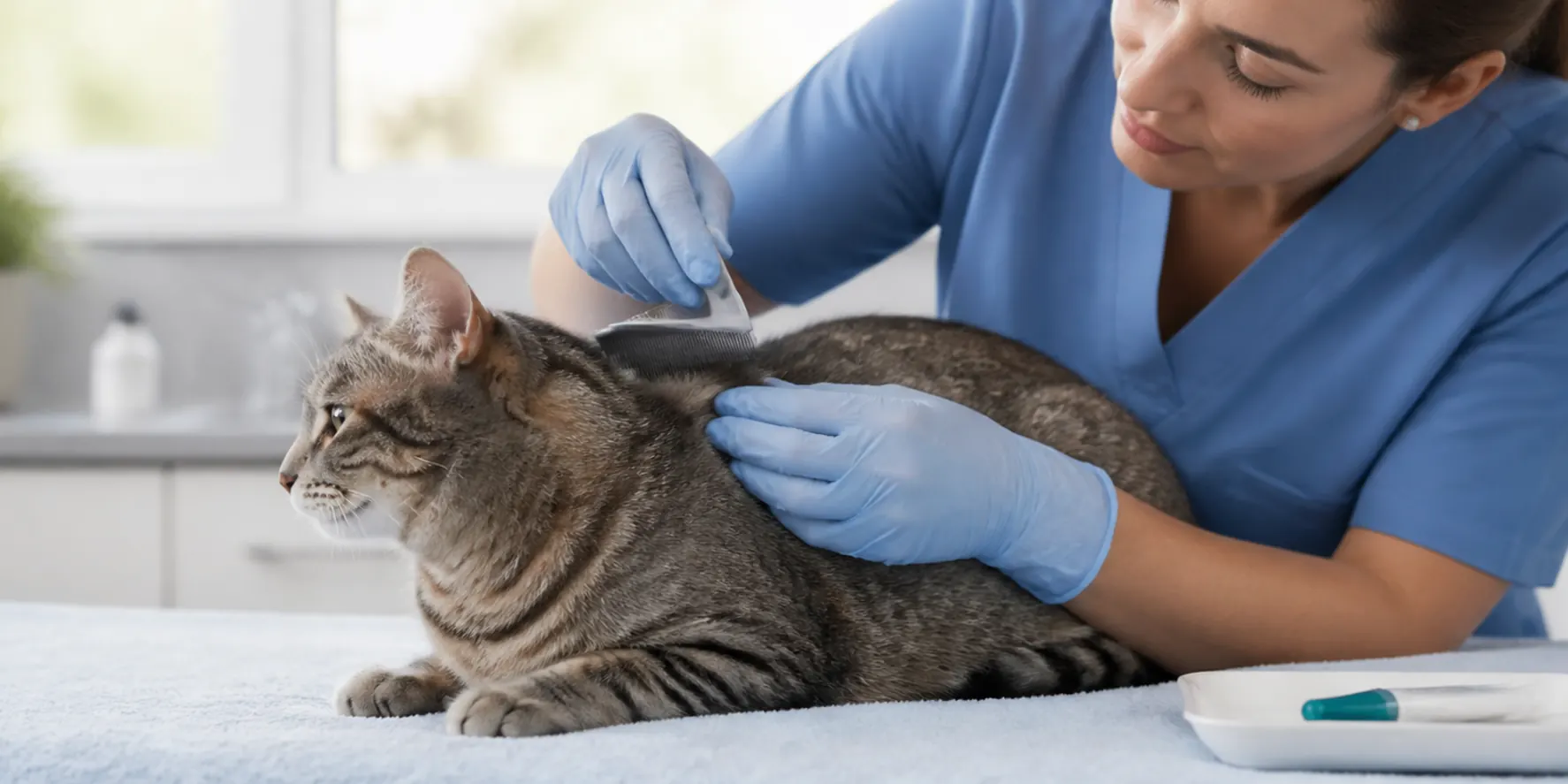
In Glendale's mild climate, fleas stay active year-round. A single flea can trigger intense allergic itching, tapeworm infection, and — in kittens — life-threatening anemia. Ticks, while less common on cats, can transmit disease as well.
Not every product on the store shelf is safe for cats; some dog formulations are toxic to felines. We'll recommend a prevention plan that's proven, cat-safe, and matched to your cat's lifestyle, whether strictly indoors or an avid backyard explorer.
Why prevention through your vet
- Cat-safe products only — no permethrin risks
- Year-round protection matched to local flea pressure
- Options that also cover heartworm and intestinal parasites
- Treatment plans for active infestations, including the home
- Flea allergy management for sensitive cats
What to expect
We'll check your cat for flea evidence (adult fleas or 'flea dirt'), treat any skin fallout like allergy or tapeworms, and set up a cat-safe, year-round prevention plan matched to your household — including the dog, because untreated housemates keep infestations alive.
Cat Flea & Tick Control guides & handouts
Take-home guides from our resource library related to this service.
Frequently asked questions
I never see fleas on my cat. How can she have them?
Cats are fastidious groomers and eat the evidence. Flea allergy can keep a cat itchy from bites you'll never witness, and 'flea dirt' — black pepper-like specks that turn red on a wet towel — is often the only sign. Absence of visible fleas is not absence of fleas.
Why can't I use my dog's flea product on my cat?
Many dog products contain permethrin, which is fatally toxic to cats — this is one of the most common serious poisonings we see. Only ever use products explicitly labeled for cats, at your cat's weight.
Do indoor cats in Glendale really need year-round prevention?
Our coastal climate never gets cold enough to break the flea cycle, and fleas hitchhike in on pant legs, dogs, and visitors. Year-round prevention costs less than treating one flea-allergy flare or home infestation.
Flea And Tick Prevention For Cats
At Angelus Pet Hospital when it comes to fleas and ticks, our primary focus is on prevention. Prevention is important because it stops a serious problem before it starts. If you are starting to notice signs and symptoms of fleas and ticks, that indicates that you are already dealing with an infestation. It is best to not reach that stage. With good education and the right prevention products you can easily avoid flea and tick infestations. A proactive approach to flea and tick prevention starts with a discussion about various factors that play a role in your pet's potential exposure to fleas and ticks. For example, whether your cats are indoor/outdoor is a factor, as well as whether they are exposed to other animals that go outside (including pets of friends or family that may come over for a visit). It is important to be aware that there are numerous products on the market that our veterinarians would strongly suggest you avoid. Every year, our veterinarians review all available flea and tick products to ensure that our recommendations are as up to date as possible. Our considerations include safety, effectiveness, and cost. Based on these factors we will work with you to customize a parasite prevention plan for your pets and family.
Signs That Your Cat May Have A Flea Or Tick Infestation
Visible fleas or ticks Scratching Red or irritated skin Scabs and/or flakes Excessive grooming
Common Cat Flea And Tick Treatments
There are many different cat flea products on the market. This includes a plethora of remedies involving substances that have no medical validity where fleas and ticks for cats are concerned. Our veterinarians would strongly recommend against numerous over the counter flea and tick treatments. Some common cat flea treatment methods include: **Oral Tablets:** These are a great choice for both prevention and treatment of fleas and ticks, while being safe for both your cat and your family. Oral tablets that treat fleas and ticks can only be obtained from your veterinarian. **Spot-On Flea Treatments:** There are many different spot-on flea treatments with varying effectiveness and different spectrums of use. **Cat Flea Collars, Powders, and Sprays:** We do not recommend the use of flea collars, powders, or sprays. While these products were the mainstay of flea control in past years, they are more toxic and less effective than the products we currently recommend. We choose the products based upon safety and efficacy. However, as with any new medication or product there is a possibility of adverse reaction. If you notice any discomfort or behavioral changes after administering or applying, please call us at: (818) 241-8333. It is essential to discuss cat flea treatment options with your veterinarian, in order to ensure the method you choose will be safe and effective for your feline friend. Some dog products are toxic or even lethal to cats so please make sure you are using a product specifically made for cats.
Finding And Treating Ticks On Cats
Ticks on cats are not as common as ticks on dogs because of grooming habits and lifestyle. However, cats can get ticks and they can become a health issue if left untreated. Ticks feed on the blood of the host, and use tiny but sharp teeth to embed themselves firmly into the skin and soft tissue of cats. Because they penetrate into the bloodstream, ticks can also spread blood-borne illnesses. We recommend tick products for cats on a case by case basis. Ticks on cats can cause welts and bruises around the area being fed on. It is also common to find the tick still attached. If you find a tick on your cat, please bring your cat in so we can show you the safest way to remove the tick and help formulate a plan to avoid ticks going forward. The various methods for treating ticks on cats include: Oral medication Spot-On Treatments We strongly recommend consulting your veterinarian immediately if your cat has ticks. Although there are various remedies to treat ticks on cats, it is essential to make sure the method you choose is safe, effective, and clinically proven.
Ready to schedule?
Request an appointment at our Glendale clinic or call our team — we serve pets and their people across the surrounding communities.