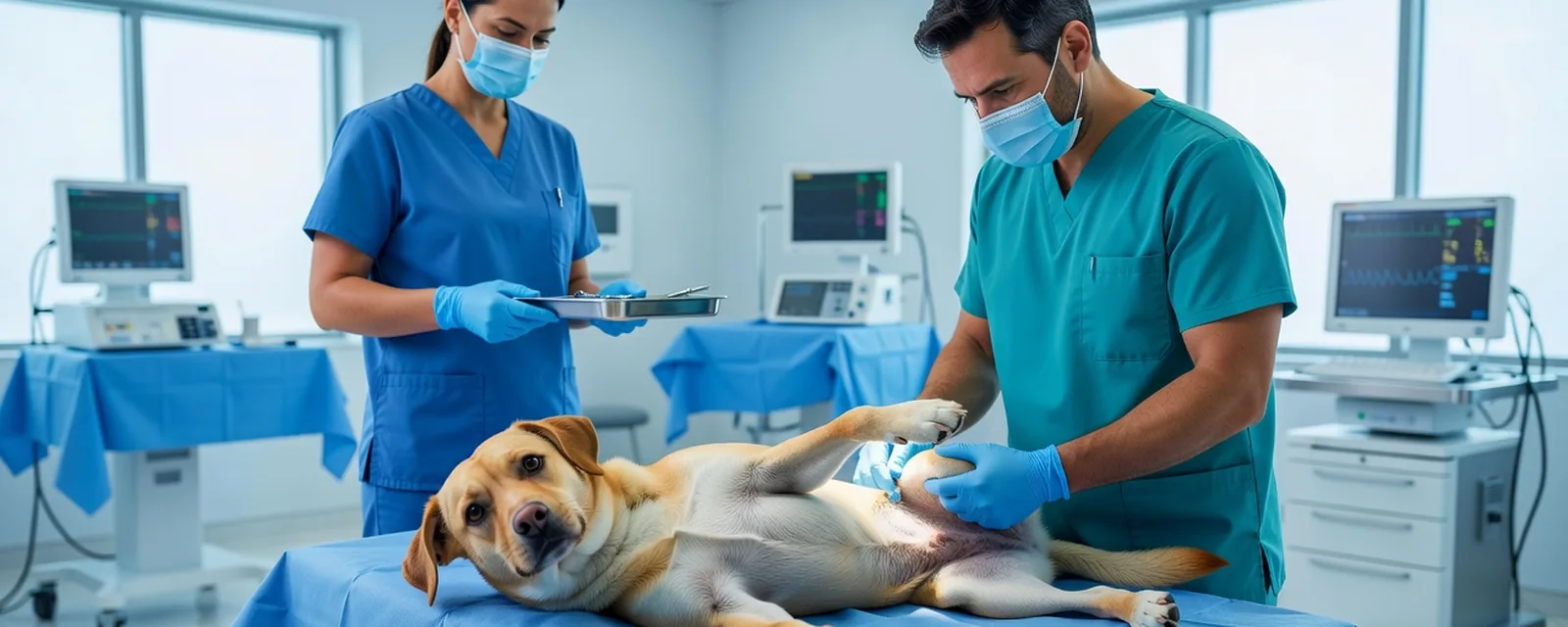
A luxating patella — a kneecap that pops out of its groove — is one of the most common orthopedic problems in small-breed dogs, and the classic sign is a dog that skips a step or two on a back leg, then trots on like nothing happened.
Mild cases may only need monitoring. But when the kneecap slips often enough to cause regular limping, pain, or cartilage wear, surgery to realign and secure it prevents years of arthritis — and we perform it in-house.
Our patellar luxation service includes
- Orthopedic exam with luxation grading (I-IV)
- X-rays to assess limb alignment and arthritis
- Groove-deepening (trochleoplasty) surgery
- Tibial tuberosity transposition when alignment requires it
- Soft-tissue balancing and joint capsule tightening
- Structured recovery plan with rechecks
What to expect
An orthopedic exam grades the luxation and X-rays assess alignment, then we talk honestly about whether your dog needs surgery or monitoring. Surgical patients typically go home the same day with pain medication and a staged eight-to-twelve-week return to full activity.
Patellar Luxation Surgery guides & handouts
Take-home guides from our resource library related to this service.
Luxating Patella in Dogs: When a Slipping Kneecap Needs Surgery
The patella (kneecap) normally rides up and down in a smooth groove at the end of the femur as the knee bends. In dogs with patellar luxation, the groove is too shallow or the leg's alignment pulls the kneecap sideways, letting it slip out — usually toward the inside of the leg (medial luxation).
The condition is largely genetic and most common in small breeds — Pomeranians, Yorkies, Chihuahuas, toy and miniature Poodles, French Bulldogs — though larger dogs and cats can be affected too.
Signs of a Luxating Patella
- Intermittent skipping or hopping on a back leg for a few steps
- Sudden yelp followed by holding the leg up, then walking normally
- Stretching the leg backward to "click" the kneecap back in place
- Bow-legged stance in growing puppies with severe luxation
- Gradually increasing stiffness or reluctance to jump
How It's Graded — and When Surgery Makes Sense
During the exam we assign a grade that guides treatment:
- Grade I: the patella can be pushed out but pops right back — rarely needs surgery
- Grade II: the patella luxates with movement and returns on its own — surgery if lameness is frequent or worsening
- Grade III: the patella sits out of the groove most of the time but can be replaced — usually surgical
- Grade IV: the patella is permanently out and cannot be replaced — surgical, ideally before skeletal deformity progresses
Every slip grinds cartilage against the edge of the groove. Repairing a symptomatic grade II or III knee early is far better for the joint than operating on a grade IV knee with years of wear — and dogs with patellar luxation also carry a higher risk of tearing their cruciate ligament in the same knee.
What the Surgery Involves
Surgical correction combines techniques chosen for each knee — most repairs use more than one:
- Trochleoplasty: deepening the femoral groove so the kneecap seats securely
- Tibial tuberosity transposition: moving the bony attachment of the patellar tendon so the kneecap tracks straight
- Soft-tissue balancing: releasing tight tissue on one side and tightening the stretched joint capsule on the other
Recovery and Aftercare
- Most dogs go home the same day or the next morning
- Two weeks of strict rest with pain medication and incision care
- Controlled leash walks building gradually from weeks two to eight
- Recheck exams (and X-rays if a bone transposition was performed)
- Return to normal off-leash activity around eight to twelve weeks
Expected Outcomes
Patellar luxation surgery has an excellent success rate: over 90% of dogs return to comfortable, active function, and serious re-luxation is uncommon when the groove and alignment are both corrected. Keeping your dog lean is the single best thing you can do to protect the repaired knee — and the other one.
Why Choose Angelus Pet Hospital for Patellar Luxation Surgery
- Orthopedic and soft-tissue surgery in-house at our Glendale hospital
- Honest grading — we tell you when a knee should be monitored, not operated on
- Individualized anesthesia with dedicated monitoring for small breeds
- Multi-modal pain management from before the first incision
- One team from diagnosis through final recheck
Frequently asked questions
My dog skips sometimes but seems fine — does that need surgery?
Not necessarily. Occasional skipping with a grade I-II luxation and no pain can often just be monitored. Surgery earns its place when limping becomes regular, the grade progresses, or a young dog has a high-grade luxation that will deform the leg as it grows. The exam tells us which situation yours is.
How much does patellar luxation surgery cost?
Less than the bigger orthopedic procedures like TPLO, though the exact figure depends on which corrections the knee needs (groove deepening, tibial transposition, or both). We provide a written estimate after the exam, and financing options are available.
Can both knees be done at once?
Both knees are often affected, and in select cases both can be corrected under one anesthesia. Many dogs do better staging them a few months apart so there's always one good leg to stand on — we'll recommend what fits your dog's grade, size, and temperament.
Ready to schedule?
Request an appointment at our Glendale clinic or call our team — we serve pets and their people across the surrounding communities.
Need help with the cost? Explore financing options