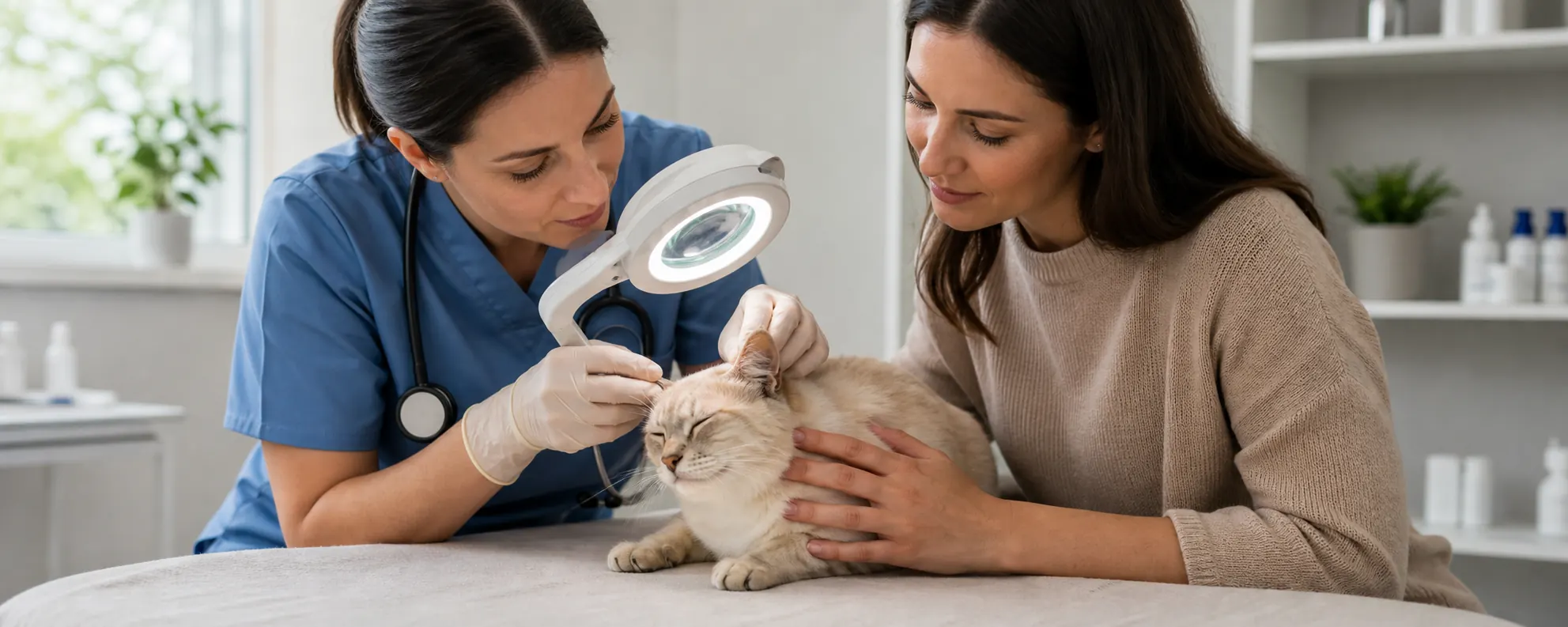
Skin problems in cats often look alike — hair loss, scabs, and itching — but their causes range from flea allergy and food sensitivity to ringworm, mites, and stress-related overgrooming. Effective treatment depends on finding the actual cause rather than guessing.
We use skin scrapings, cytology, fungal cultures, and structured food trials to pinpoint the diagnosis, then build a treatment plan that resolves the problem and keeps it from coming back.
Conditions we treat
- Flea allergy dermatitis
- Food and environmental allergies
- Ringworm and other fungal infections
- Ear mites and chronic ear infections
- Overgrooming and psychogenic alopecia
- Abscesses and wound care
What to expect
Expect detective work: skin scrapings and tape cytology under the microscope, fungal testing when ringworm is possible, and a structured history of diet, parasite control, and season patterns. You'll leave with a diagnosis or a clear diagnostic plan — plus treatment that starts relief immediately while we pin down the underlying cause.
Cat Dermatology guides & handouts
Take-home guides from our resource library related to this service.
Frequently asked questions
Why is my cat losing hair on her belly?
Symmetrical belly baldness is usually overgrooming, and the leading cause is itch — most often flea allergy, even in indoor cats — followed by pain and stress. We work through those in order rather than assuming it's 'just behavioral.'
Are scabs around my cat's neck and back serious?
That crusty 'miliary dermatitis' pattern is a classic allergy signature, most commonly flea allergy — a single bite can keep a sensitized cat scabby for weeks. Rigorous flea control plus short-term itch relief resolves most cases.
Can my cat's skin problem spread to me?
A few can — ringworm (a fungus) and certain mites are shared with people. If your cat has patchy hair loss and anyone in the house has round red skin lesions, mention both; treating pet and environment together stops the cycle.
Recognizing Cat Skin Conditions
So how do you recognize cat skin conditions? Here are some key signs to look for: Hair loss is a common sign of cat skin problems. Have you noticed any bald patches? Is your cat shedding more than normal? Excessive grooming can also indicate cat skin conditions are present. If the grooming appears more frenetic and less relaxed than normal, it may be because your cat is pruritic (itchy) and uncomfortable. While brushing your cat, if you notice any red, scaly, patchy, or scabby areas, schedule an appointment with your veterinarian. Fleas and ticks are common parasites which may be found on the skin. If your cat shakes their head excessively, this could indicate they may have a skin problem or an issue with their ears.
Types of Cat Skin Conditions
The following are some types of common cat skin problems you should be aware of: External parasites, such as fleas, can cause itchy skin and cat skin allergies. The cat will then scratch and bite and potentially cause secondary infections. Ticks can attach to your cat’s skin causing a raised bump or cause localized swelling. The bump is the cat’s response to fight off the tick. Mites, or ear mites, can produce itchy ears. This is more commonly seen in kittens. The cat will hold their head sideways indicating discomfort. Cats can also have ear infections which need to be treated promptly by your veterinarian. Cats can also develop polyps in their ears. A thorough exam includes an otoscopic exam of the cat’s ear canals. Cats can also be prone to food allergies. Your cat can develop an “itchy face,” or itchiness all over. Your veterinarian will determine if you need to change your cat’s diet. This will generally include a food trial and may require several attempts to rule out food allergy. Contact allergies can also be present in cats. This is very similar to how people develop allergies to common substances in their environment. Cat skin cancer. As in humans, cat cancer is a potentially life threatening condition. If you notice new or changing skin spots, make a veterinary appointment ASAP. Cat acne. Some cats are prone to cat acne. While this may appear similar to a rash on the chin most commonly, the treatment of cat acne may involve prescription medication. Cat dermatitis. Typically cat dermatitis is due to an allergic reaction to fleas, grooming products, food, or environmental irritants. Schedule an appointment with your veterinarian as soon as you see any of these symptoms. Sometimes it takes a while to diagnose the problem, the sooner, the better.
Testing and Diagnosing Cat Skin Problems
Your veterinarian has many types of tests available when it comes to cat dermatology issues, such as: One common test is to collect some of the material in the ear and look at it under a microscope. Your vet can also take a small scraping of the hair follicles or the debris on the skin and look at it under a microscope. They will be looking for mites, yeast or bacteria, or certain types of cells to determine the cause of the discomfort. Ringworm is a common cat skin condition that can be transmitted to children or adults, so this is something that needs to be diagnosed and treated immediately. There are many things your veterinarian will be looking at to determine what is the most appropriate treatment.
Treatments for Cat Skin Conditions
Getting a diagnosis from your veterinarian is the first step. It depends upon what we are dealing with and it may take time to get to the correct diagnosis and treatment. If you are dealing with fleas, your vet will treat for flea control. If you are dealing with food allergies, your vet may have to switch your cat’s food. Your vet may have to use an immune modulating medication to suppress allergic response in your cat. Anti-itch medications may be used to make your cat feel more comfortable. If ringworm is present, antifungal medication will be prescribed. Some medications must be injected by a veterinarian while other medication can be administered by you at home. It is important that you work with your veterinarian to accurately describe the symptoms of your cat's skin conditions. Then, your vet will perform a thorough exam and recommend the appropriate treatment.
Ready to schedule?
Request an appointment at our Glendale clinic or call our team — we serve pets and their people across the surrounding communities.