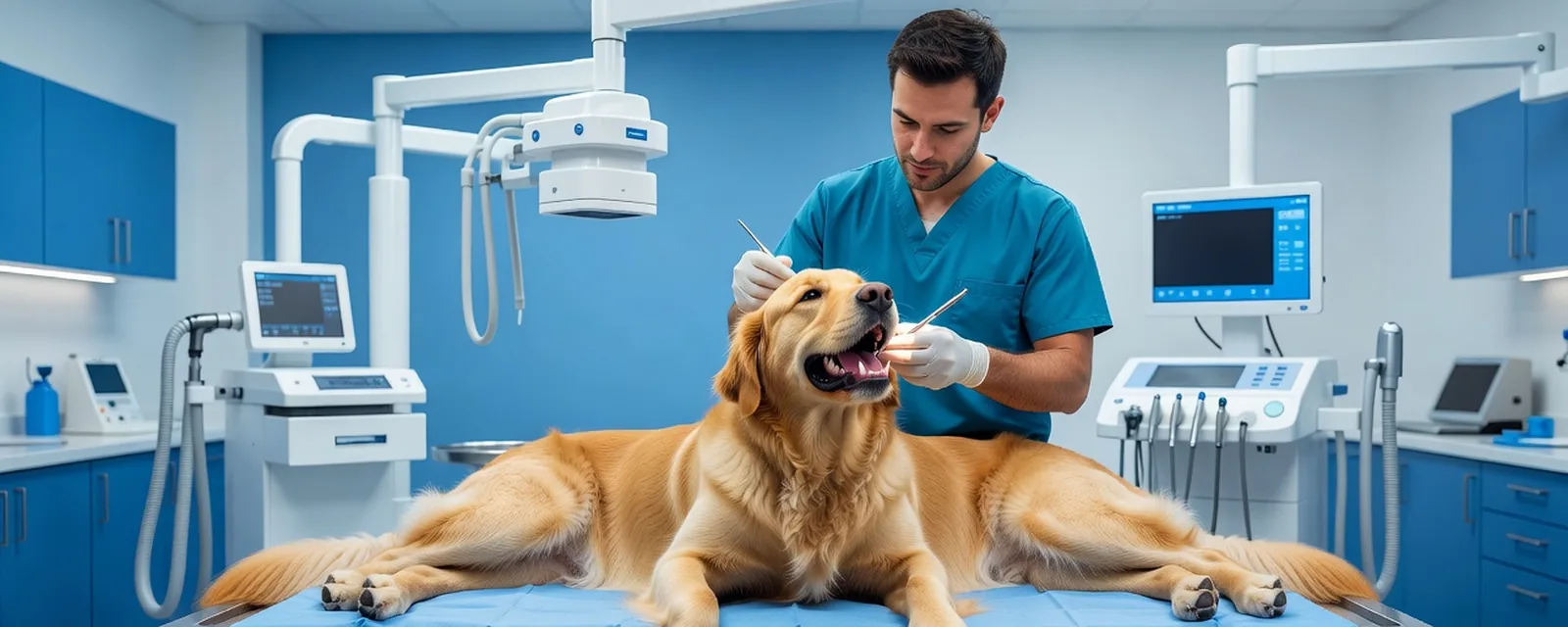
Pets almost never show mouth pain — they eat through cracked teeth, abscessed roots, and rotting gums because the alternative is not eating. Dental surgery exists for the problems a cleaning can't fix: fractured teeth, advanced periodontal disease, resorptive lesions in cats, and oral growths.
Every dental surgery here is done under monitored general anesthesia with full-mouth dental X-rays first — because more than half of each tooth is hidden below the gumline, and treating what you can't see is where dentistry actually happens.
Our dental surgery service includes
- Anesthetized oral exam with full-mouth dental X-rays
- Surgical extractions of fractured and diseased teeth
- Treatment of feline resorptive lesions
- Local nerve blocks so pets wake up comfortable
- Gum flap surgery and suturing for clean healing
- Oral mass evaluation and removal
What to expect
Drop-off in the morning after an overnight fast; bloodwork, anesthesia, full-mouth dental X-rays, and a call from us if the X-rays change the plan before we proceed. Extractions get nerve blocks and sutures, and nearly every patient goes home — and eats — the same evening.
Pet Dental Surgery guides & handouts
Take-home guides from our resource library related to this service.
From our blog
Dog and Cat Dental Surgery: Extractions, Oral Surgery, and Hidden Pain
Dental surgery goes beyond a cleaning: it treats the teeth that can't be saved and the mouths that hurt. By age three, most dogs and cats already have dental disease; by the senior years, painful problems — root abscesses, deep bone loss, broken teeth, resorbing roots — are close to the rule rather than the exception.
The most important thing to understand is that pets hide oral pain almost perfectly. The dog still eats. The cat still purrs. Then the diseased teeth come out, and two weeks later the owner tells us their pet is acting years younger — that's what hidden pain looks like when it stops.
Signs Your Pet May Need Dental Surgery
- Bad breath that's more than "dog breath"
- Drooling, dropping food, or chewing on one side
- Pawing at the mouth or rubbing the face
- A broken or discolored tooth (gray or purple means the tooth is dying)
- Swelling under an eye — often a root abscess of an upper tooth
- Red gums, loose teeth, or a lump anywhere in the mouth
- No signs at all — which is exactly why anesthetized exams find so much
Why Dental X-Rays Come First
A visually "fine" tooth can be dead, abscessed, or resorbing below the gumline — X-rays routinely reveal significant hidden disease in mouths that look acceptable on an awake exam. Under anesthesia, we probe every tooth and X-ray the full mouth before deciding what needs treatment, so the plan is based on evidence rather than what's visible from across an exam table.
Common Dental Surgeries
- Surgical extraction of fractured teeth with exposed pulp — these are painful and infected by definition
- Extraction of teeth undermined by advanced periodontal bone loss
- Treatment of tooth resorption in cats — a common, painful condition where the tooth structure dissolves
- Gum (gingival) flap procedures to clean deep pockets and close extraction sites
- Removal and biopsy of oral masses
- Extraction of retained baby teeth that crowd adult teeth in puppies and kittens
How We Keep Dental Surgery Comfortable and Safe
- Pre-anesthetic exam and bloodwork for every patient
- Individualized anesthesia with a dedicated monitoring team member
- Local nerve blocks that numb the surgical site before extraction
- Multi-modal pain medication continuing at home
- Warming, IV fluids, and recovery monitoring throughout
Recovery and Expected Outcomes
Most pets go home the same evening and — to their owners' surprise — most eat that night. We'll send soft food instructions for 10-14 days while extraction sites heal, along with pain medication; sutures dissolve on their own.
Outcomes are among the most gratifying in veterinary medicine. Dogs and cats function beautifully with fewer teeth — even with none — because a comfortable mouth beats a full, painful one every single time.
Why Choose Angelus Pet Hospital for Dental Surgery
- Full dental X-ray capability at our Glendale hospital
- Nerve blocks and pain-first protocols on every extraction
- Honest treatment plans — we save teeth that can be saved and remove the ones causing pain
- One team handling anesthesia, surgery, and follow-up
- Financing options for larger dental procedures
Frequently asked questions
Why can't the teeth be cleaned or extracted without anesthesia?
Because the disease lives below the gumline, where no awake pet allows probing, X-rays, or surgical work — anesthesia-free "dentals" polish the visible crown and miss the painful problems entirely. Modern anesthesia with pre-screening and dedicated monitoring is very safe, even for most seniors.
How much does dental surgery cost?
It depends on what the X-rays reveal — the difference between two extractions and twelve is real surgical time. We'll give you an estimate range up front and call you during the procedure if findings change the plan, so there are no surprises at pickup. Financing options are available.
How will my pet eat after losing teeth?
Better than before — a painful mouth is worse for eating than an empty one. After 10-14 days of soft food while the gums heal, most pets return to their normal diet, including kibble, even after multiple extractions.
Ready to schedule?
Request an appointment at our Glendale clinic or call our team — we serve pets and their people across the surrounding communities.
Need help with the cost? Explore financing options