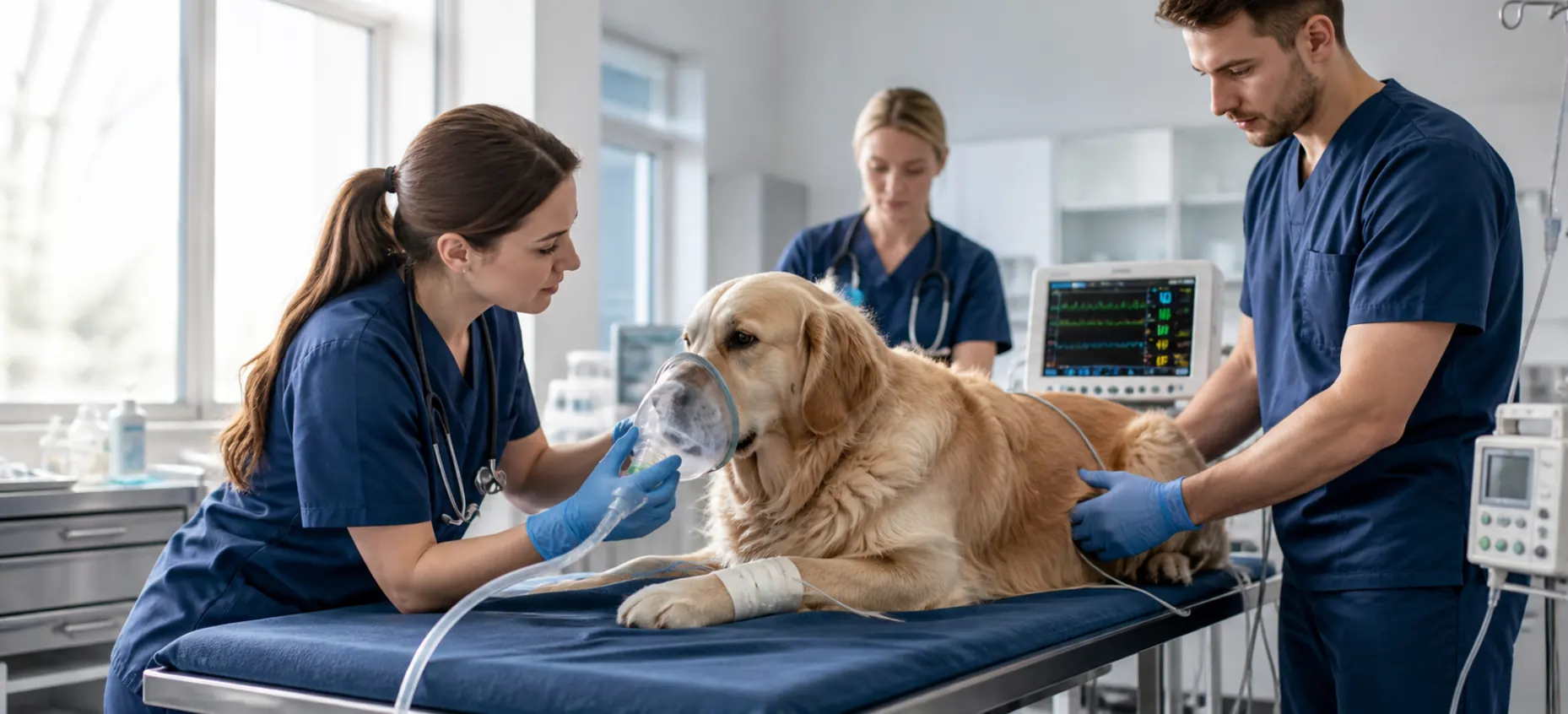
Bloat, toxin ingestion, heatstroke, trauma, seizures, and sudden collapse are minutes-matter emergencies. During hospital hours, our team is ready to triage and stabilize critical patients with on-site imaging, lab work, IV fluids, oxygen, and pain control.
If your dog's condition requires overnight monitoring or specialty intervention, we stabilize first, then coordinate a smooth transfer to a 24-hour emergency facility with records and imaging in hand.
Seek immediate care for
- Unproductive retching or a swollen, hard belly (possible bloat)
- Known toxin ingestion — chocolate, xylitol, grapes, medications
- Difficulty breathing or blue-tinged gums
- Seizures, collapse, or inability to stand
- Trauma from vehicles, falls, or dog fights
- Heatstroke symptoms after exercise or hot weather
Not sure whether it's an emergency? Call us — we'll help you decide fast.
What to expect
Call while you're on the way if possible. Your dog is triaged the moment you arrive — stabilization comes before paperwork — with oxygen, IV access, pain control, and rapid diagnostics as needed. Once stable, we review findings, options, and costs with you before major decisions, and coordinate 24-hour transfer when overnight care is needed.
Dog Urgent Care guides & handouts
Take-home guides from our resource library related to this service.
Frequently asked questions
What is bloat, and why is it so urgent?
Bloat (GDV) is the stomach filling with gas and twisting, cutting off its own blood supply — fatal within hours without surgery. The signature: a large-breed dog retching unproductively with a swelling, tight belly and growing distress. It is a drive-now emergency, every time.
My dog ate chocolate. How do I know if it's serious?
It depends on the type and amount versus your dog's weight — dark chocolate and baking chocolate are far more dangerous than milk. Call us or a poison hotline immediately with the details; if ingestion was recent, making your dog vomit at the clinic can prevent the whole crisis.
Should I give first aid before driving in?
Keep it simple: pressure with a clean cloth on active bleeding, keep a seizing dog away from stairs and furniture without touching the mouth, and transport on a firm surface for suspected spinal injury. Don't give human medications, and don't delay the drive for treatment at home.
Ready to schedule?
Request an appointment at our Glendale clinic or call our team — we serve pets and their people across the surrounding communities.