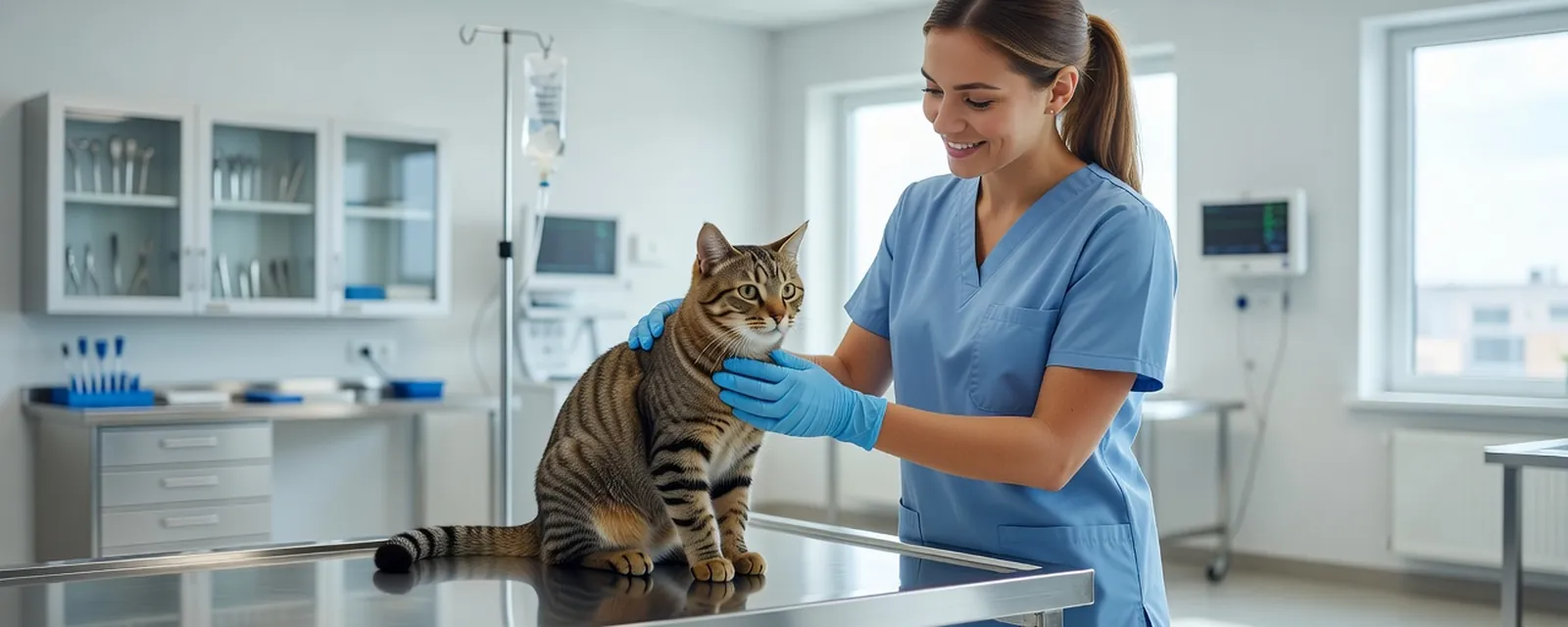
Spaying or neutering is one of the best health decisions you can make for your cat. Beyond preventing unplanned litters, it eliminates the risk of uterine infection and greatly reduces mammary tumor risk in females, prevents testicular cancer in males, and curbs roaming, spraying, and fighting — the behaviors that put outdoor cats in harm's way.
Every surgery at our practice includes a pre-anesthetic exam, tailored anesthesia with continuous monitoring, and pain management before, during, and after the procedure. Most cats go home the same day with easy-to-follow recovery instructions, and our team checks in to make sure healing stays on track.
What's included
- Pre-surgical exam and optional pre-anesthetic blood work
- Tailored anesthesia with continuous monitoring
- Multi-modal pain management
- Same-day discharge for most patients
- Recovery instructions and follow-up support
- Guidance on the best age to schedule
Most kittens are ready for surgery around five to six months of age — call us and we'll help you pick the right time for yours.
Related procedure guides
Cat Spay & Neuter guides & handouts
Take-home guides from our resource library related to this service.
Spaying and Neutering Your Cat: Timing, the Procedure, and Recovery
Spaying (removing the ovaries and uterus) and neutering (removing the testicles) are the most common feline surgeries — quick procedures with lifelong payoffs. Beyond preventing litters, they protect against several diseases and stop the hormone-driven behaviors that make intact cats hard to live with and dangerous to themselves.
Health and Behavior Benefits
- Spaying eliminates pyometra (a life-threatening uterine infection) and, done early, sharply reduces mammary tumor risk — feline mammary tumors are usually malignant
- Neutering prevents testicular cancer
- Spraying, yowling, and heat cycles stop or never start
- Roaming and fighting drop dramatically — and with them, abscesses and exposure to FeLV and FIV
When to Schedule It
Most kittens are ready around five to six months of age, before the first heat — that early timing is what maximizes mammary tumor protection. Cats can cycle and become pregnant as young as four to five months, so waiting for a first litter or first heat has no health benefit and real downsides.
Adult cats can be safely spayed or neutered at any age; the benefits — pyometra prevention above all — never expire.
What Happens on Surgery Day
- Morning drop-off after an overnight fast
- Pre-anesthetic exam, with bloodwork recommended before anesthesia
- Pain medication before the procedure starts
- Cat-calibrated anesthesia with continuous monitoring
- A short procedure — neuters in minutes, spays typically under an hour
- A warmed recovery space away from dogs, and same-day discharge for most cats
Recovery at Home
Cats bounce back fast — most act normal within a day or two. Your job is to keep the incision safe for 10 to 14 days: indoor rest, no wild play or high jumping, a cone or recovery suit if your cat licks the site, and paper-based litter for a few days after a neuter.
Check the incision daily; swelling, discharge, spreading redness, or an opened incision means call us. A small firm lump under a healing spay incision is common and usually just normal tissue reaction — we're happy to check it.
Ready to schedule?
Request an appointment at our Glendale clinic or call our team — we serve pets and their people across the surrounding communities.