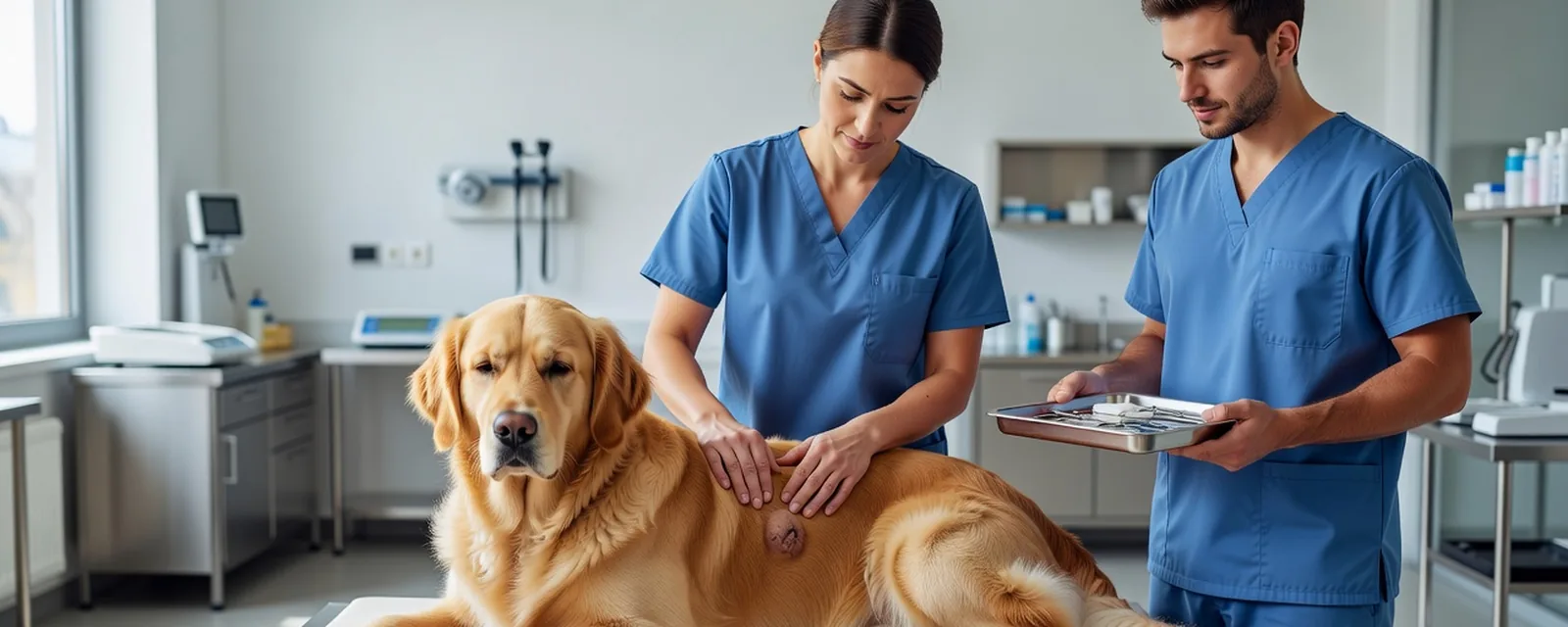
Finding a lump on your pet is unsettling — and the honest truth is that no one, including your veterinarian, can tell what a mass is just by feeling it. Many lumps are benign fatty tumors; others are cancers that look and feel identical to them.
Our approach is simple: test before cutting, remove with proper margins when removal is the right call, and send what we remove to the lab so you get real answers — not guesses — about what it was and whether anything more is needed.
Our mass removal service includes
- Fine-needle aspirate and cytology of new lumps
- Bloodwork and imaging to stage concerning masses
- Surgical removal with appropriate margins
- Histopathology (biopsy analysis) on removed tissue
- Splenic, mammary, and internal mass surgery — not just skin lumps
- Follow-up planning based on the lab results
What to expect
New lumps get a needle test first — usually awake, in the exam room. If removal is recommended, surgery is planned with appropriate margins, the tissue goes to a pathologist, and we review the results with you along with any follow-up the diagnosis calls for.
Mass & Tumor Removal guides & handouts
Take-home guides from our resource library related to this service.
Lumps, Masses, and Tumors in Pets: When and How They Should Come Off
"Mass" and "tumor" simply mean an abnormal growth — the words say nothing about whether it's dangerous. Lipomas (benign fatty tumors), warts, and cysts are common and often harmless. Mast cell tumors, soft-tissue sarcomas, mammary tumors, and melanomas are not — and several of them are famous for masquerading as harmless lumps.
That's why the rule of thumb is worth taking seriously: a new lump that is growing, changing, or has been there more than a month deserves a needle test, not a wait-and-see shrug.
When a Lump Should Be Checked Promptly
- It appeared quickly or is visibly growing
- It changes color, ulcerates, or bleeds
- It's firm, fixed to underlying tissue, or irregular in shape
- It bothers your pet — licking, chewing, or limping
- It sits somewhere surgery gets harder as it grows: eyelid, lip, ear, leg, or tail
- Your pet is a senior, or a breed prone to mast cell tumors
How We Diagnose a Mass
The first step is usually a fine-needle aspirate: a quick needle sample examined under the microscope, done awake in the exam room for most pets. Cytology tells us whether a mass reads benign, suspicious, or clearly malignant — and that changes the surgical plan entirely.
For masses that look concerning, we may recommend staging before surgery: bloodwork, chest X-rays, ultrasound, or CT to check whether a tumor has spread, and to map exactly how deep a mass goes before the first incision.
What Mass Removal Surgery Involves
The single most important part of tumor surgery is the margin — removing a rim of normal tissue around the mass so no microscopic cells stay behind:
- Benign masses are removed with narrow margins through small incisions
- Suspected malignancies are removed with wide, deliberate margins planned in advance
- Removed tissue goes to a pathologist, who confirms the tumor type and whether the margins are clean
- Internal masses — splenic, mammary chains, abdominal — are handled with full pre-surgical staging and planning
This is also why removing a suspicious mass while it's small is such a gift: a one-centimeter tumor on a leg can be removed completely and closed easily. The same tumor at five centimeters may not leave enough skin to close — or enough margin to cure.
Recovery and Aftercare
- Most skin mass removals go home the same day
- 10-14 days of incision care, cone use, and restricted activity
- Pain medication matched to the size and depth of the removal
- Biopsy results reviewed with you, typically within about a week
- A monitoring or treatment plan if the pathology calls for one
Expected Outcomes
For benign masses, removal is curative — done. For many malignant tumors, complete excision with clean margins is also curative, particularly when caught early; that pathology report saying "margins clean" is the best sentence in veterinary oncology. When a tumor type warrants more than surgery, we'll walk you through the options honestly, including what we'd do for our own pets.
Why Choose Angelus Pet Hospital for Mass & Tumor Removal
- Needle testing first — we don't recommend surgery on guesswork
- Cytology, imaging, surgery, and follow-up at one Glendale hospital
- Margin-focused surgical technique with pathology on removed tissue
- CT on-site for staging and surgical planning of complex masses
- Straight answers about results and what, if anything, comes next
Frequently asked questions
How much does it cost to remove a mass?
It ranges widely — a small skin lump is a short procedure, while a large or invasive tumor is real surgery with staging beforehand. The needle test is the inexpensive first step that tells us which one we're dealing with, and every removal gets a written estimate first. Financing options are available.
Can't we just watch the lump for a while?
Watching is a fine plan for a lump a needle test has already called benign. Watching an untested lump is gambling — some aggressive tumors look identical to harmless ones, and they're far easier to cure at one centimeter than at five. Test first; then "watch" becomes a safe choice instead of a hopeful one.
Will my pet need chemotherapy or other treatment after removal?
Most removals need nothing further — benign results and cleanly excised tumors are typically done. If pathology shows a type that benefits from more, we'll explain the options honestly, including realistic outcomes, costs, and when a specialty oncology referral makes sense.
Ready to schedule?
Request an appointment at our Glendale clinic or call our team — we serve pets and their people across the surrounding communities.
Need help with the cost? Explore financing options