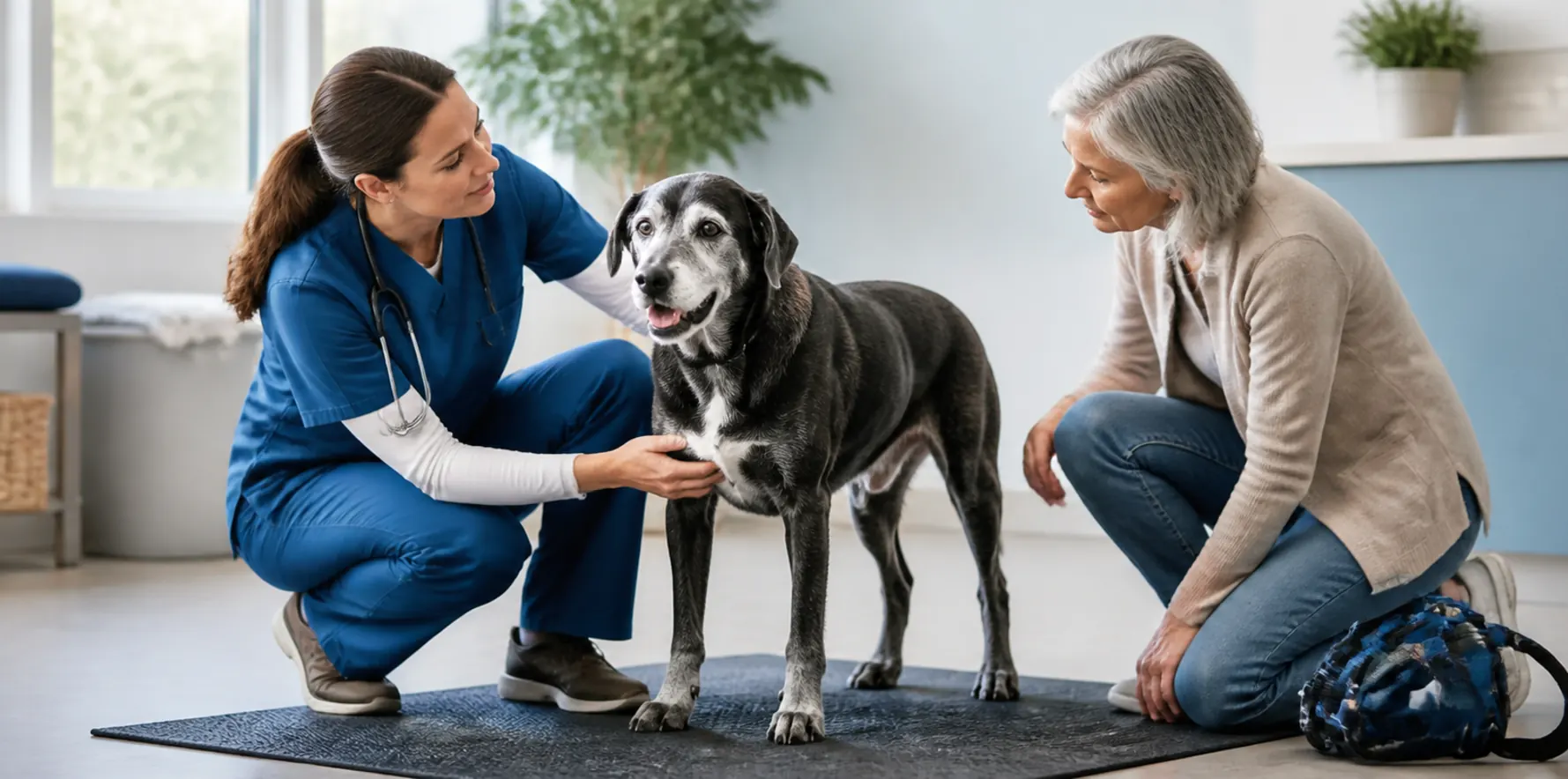
Depending on size, dogs enter their senior years between ages seven and ten. What owners often accept as normal aging — stiffness, thinning weight, cloudy eyes, restless nights — is frequently arthritis, kidney disease, endocrine disease, or cognitive decline: conditions we can treat.
Senior dogs benefit from exams every six months with regular lab work and blood pressure checks, so changes are caught between visits instead of years later. Small interventions — pain control, a therapeutic diet, traction mats at home — routinely transform an old dog's daily comfort.
Senior program
- Semi-annual comprehensive exams
- Organ function and endocrine screening
- Arthritis evaluation and modern pain management
- Cognitive change assessment
- Nutrition adjustments for aging bodies
- Quality-of-life planning and support
What to expect
Twice-yearly senior visits with deliberate depth: full exam with arthritis scoring, weight and muscle tracking, lab work and blood pressure, cognitive assessment, and a home-comfort review. Every finding is triaged into treat-now, watch, or discuss — with costs and benefits laid out honestly.
Dog Senior Care guides & handouts
Take-home guides from our resource library related to this service.
Frequently asked questions
My senior dog is slowing down. Isn't that just age?
'Slowing down' is the most under-diagnosed treatable condition in dogs — usually arthritis pain, sometimes heart or endocrine disease. Age itself doesn't hurt. When we treat what does, owners routinely get back a dog they thought was simply old.
What is canine cognitive dysfunction?
A dementia-like decline: disorientation, disrupted sleep, house-training lapses, staring, or new anxiety. Caught early, medication, diet, and enrichment measurably slow it — one more reason 'weird new behaviors' in an old dog deserve an exam, not resignation.
What home changes help an aging dog most?
Traction first — rugs or yoga mats on slick floors change daily life for arthritic dogs. Add raised bowls, a supportive bed with low entry, ramps for cars and couches, night lights, and shorter-but-more-frequent walks. We'll tailor the list to your dog's weak points.
What is the most important thing to know about caring for a senior dog?
Senior dogs have different needs. As they age, they're going to have different exercise, diet requirements, and there are going to be times where you think, "Oh, they're just getting old," when they're not jumping up, or they're not moving as well. Also, things in their body metabolically will change—their kidney, their liver, their heart. And we want to make sure that you know that some of these things can be the quality of life things that we can help and address. So what we're going to want to do is see these dogs every six months; we're going to want to do lab work at least once a year. But in many older pets that are 10 plus, we may want to do it twice a year, depending on the size of the dog, the breed, et cetera. And when we're doing lab work, we're looking for things like, again, kidney and liver disease. Urinary tract infections quite often go undiagnosed in a dog. They don't all show the obvious symptoms, although they can. Drinking more water can be a sign of a UTI in a dog, and it's one of those things I tell people to watch out for. Again, that can also be a sign of diabetes, kidney disease, or liver disease. We want to know about any kind of slowing down. When people come in for an annual exam, I start by just saying, "Tell me about the day in the life of your dog, and what is different from last year?" And that's a good place for us to think about what's going on. Weight is hugely important to keep them thin as they age because weight is so inflammatory for your pet. And we want to help keep their weight in check.
What is the life expectancy of a dog?
If we're going to pick a number, the average life expectancy of a dog will be about 12. But certainly, for large breed dogs, giant breed dogs, it is lower. It's probably closer to eight. Giant breed dogs are things like Great Danes, Great Pyrenees, or Irish Wolfhounds. Large breed dogs, which we mostly see, would be Goldens and Labs and German Shepherds. For those dogs, the average age life span will be closer to 10 to 12. Indeed, small breeds of dogs can live longer. So they would be more like 12 to even 13 or 14. But we have many of these breeds that will last well into their teens, so it just depends.
How does getting older impact the health of my dog?
Aging itself is not a disease, but of course, things like the ligaments in your dog may suffer; the metabolism is going to slow down. We start to see problems with their ability to see. Their oral disease becomes important in older dogs. They're all going to have some dental disease pretty significantly by the time they're four years of age. And if we don't address that regularly, they're going to wind up with abscesses underneath the gum line. You can't see these things. These are chronic sources of infection and pain for your dog, and dogs will not let you know that. So we have to help you figure that out. We see a lot more tumors as dogs age. So there are quite a few things. And the most important thing is to get in here for an annual exam or every six months, depending on the age and the breed of the dog.
Can wellness care extend the life and vitality of my dog?
When we do exams, we catch things daily—kidney disease with lab work, heart disease with listening to the chest. We find lumps and bumps on your dog, and certainly, we check their oral health. We find tumors in the mouth. We find tumors on the body. And some of these things are things we can just get rid of and stop the spread of cancer. So we identify these things, determine whether they're benign or malignant, and take the best course of action. We're never going to do anything without your approval, and we're always going to work with you and partner with you to figure out what's the best thing for your pet for the best quality of life for the longest time possible.
Why is it important to avoid self-diagnosing if my dog is slowing down or whether they are actually sick?
The reason to not self-diagnose is you're not a doctor. And rarely are owners correct. Looking up a condition online will rarely get you an accurate diagnosis. I'll just be honest with you about that. That doesn't mean there isn't some good information on the internet, but there's so much. You have one small picture of information and one pet, and so to extrapolate that and make that be a diagnosis is rarely correct. And we want to do the best thing. So let's get them in here, and we'll work together to come up with a plan.
What will my veterinarian be looking for when examining my senior dog?
So we're going to start at the nose and go back to the tail, and we're going to look at everything. Eyes and ears, and the mouth are super important. We're going to feel the body wall to look for tumors of any kind. We look at the skin very thoroughly. We're going to palpate the abdomen, where we feel the organ systems in the abdomen. And also, we're going to listen to the chest. Quite often, we're going to do a rectal exam and then collect lab work and possibly chest x-rays to have a look at the chest—many cancers can kind of creep up on us, like lung disease and heart disease. And we like to stay on top of those for quality of life.
Do I need to change my senior dog's feeding schedule?
Quite often we are going to change your senior dog's diet, but it depends on your dog. Every pet is individual and every owner has different thoughts. So we're going to work with you to come up with the best diet. We'd like to make sure that older dogs are getting high-quality protein sources and we also like them to be eating vegetables if they'll tolerate them. I kind of like all dogs to be doing some of that, but especially as they age, as their ability to absorb protein becomes decreased. We want to make sure we have that high-quality protein source and we also want to ensure senior dogs don't get overweight.
What activities and training can I do with my senior dog?
So every dog varies tremendously. The most important thing is that it's regular and moderate. So by regular, I mean that they're taking the walk every other day or every day. Dogs that walk every day with their owner age so much better. It's an amazing difference. So if you're not walking your dog and you can think about it, it's really helpful. Having them go out in the backyard is not the same thing as taking the half-mile or mile walk, or, in the case of dogs that have been walking for a long time, they can walk longer. The difference is we don't want them out in the heat. Old dogs do not tolerate the heat. We also don't want them having to jump up and down because that could hurt their backs. We want to try to stay on a flat and cool surface. We don't want the dog's feet burning. Daily exercise is so important for dogs and every dog's different so we'll help you determine what's the safest and best.
If I want to adopt a senior dog, what should I know?
Senior dogs are great. We love old dogs here in the practice. Honestly, a little bit of gray on the muzzle is just precious and we love their wisdom that they've accumulated over the years. So I think it's a lovely thing. One of our technicians always adopts the oldest, most unadoptable dogs and she loves them and we all come to love her pets as well. So I think it's certainly something you can do. It would probably be a great idea to make sure that a veterinarian has examined the pet before you adopt them or immediately after so that we can make sure that you understand what the particular care and needs are or what we can do to keep that quality of life really great.
What behavior changes will I notice in my senior dog?
They're going to start sleeping a little more. Their vision may not be quite as perfect. Almost all dogs that get to be about the age of 13 have hearing loss. We want to make sure that we're aware of what's going on so that you can provide the best care for them at home.
What are some activities I should have my senior dog avoid?
I recommend that senior dogs avoid jumping and twisting behaviors like playing ball, which can be rough when you think about how the dog runs and then slams on the brakes and turns and twists. I'm not a fan of frisbee throwing for any dog age, as well as running alongside a bicycle. I think there are very few dogs that can do that safely without getting overheated or injuring themselves. It's not a good exercise method. I do think there are a few dogs that do that really well, but it's very rare. Again, for senior dogs, regular and moderate exercise is the best.
Ready to schedule?
Request an appointment at our Glendale clinic or call our team — we serve pets and their people across the surrounding communities.