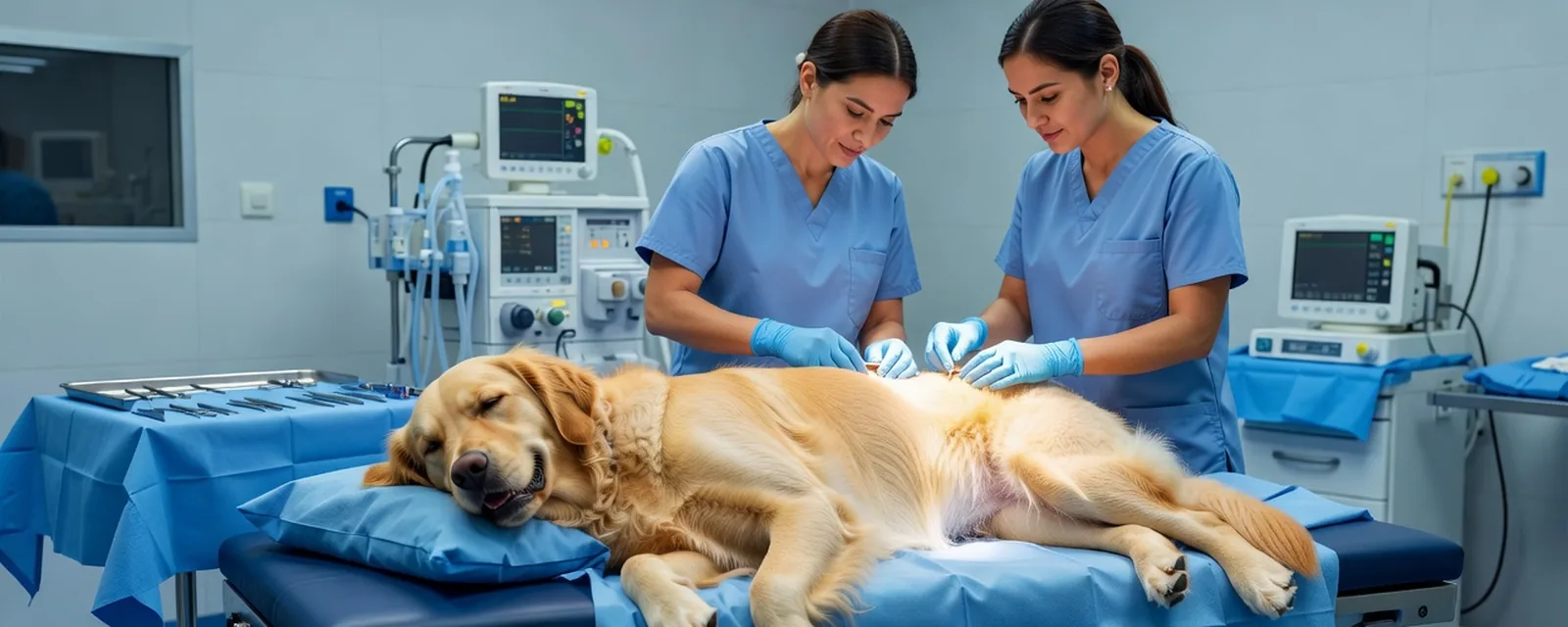
FHO — femoral head ostectomy — is a salvage procedure that permanently eliminates bone-on-bone hip pain by removing the "ball" of the ball-and-socket hip joint. The body then builds a supportive cushion of fibrous tissue, creating a comfortable false joint.
It sounds drastic, but for the right patients — cats and small-to-medium dogs with painful hips from dysplasia, arthritis, fractures, or dislocations that won't stay in — FHO reliably turns a painful hip into a functional, pain-free one without the cost of a total hip replacement.
Our FHO service includes
- Hip evaluation with sedated exam and digital X-rays
- FHO surgery performed in-house
- Pre-anesthetic bloodwork and dedicated monitoring
- Aggressive pain management for early limb use
- Rehabilitation plan — early movement is part of this recovery
- Follow-up rechecks through full return to function
What to expect
A sedated hip exam and X-rays confirm the hip is truly the source of pain, then FHO surgery removes the femoral head and neck. Unlike most orthopedic recoveries, controlled activity starts within days — we'll send you home with pain medication and a week-by-week movement plan.
FHO Surgery guides & handouts
Take-home guides from our resource library related to this service.
FHO Surgery in Dogs and Cats: Removing the Source of Hip Pain
In a healthy hip, the femoral head (ball) glides inside the acetabulum (socket) on smooth cartilage. When that joint is destroyed by dysplasia, arthritis, a fracture, or repeated dislocation, every step grinds bone against bone.
A femoral head ostectomy removes the femoral head and neck entirely. With the painful contact gone, muscles and a pad of fibrous scar tissue take over supporting the leg — a "false joint" that doesn't have the mechanics of a normal hip but, critically, doesn't hurt.
When FHO Is Recommended
- Hip dysplasia with arthritis pain that medication no longer controls
- Legg-Calve-Perthes disease (femoral head degeneration in young small-breed dogs)
- Fractures of the femoral head or neck that can't be reconstructed
- Hip dislocations that re-luxate after being replaced
- Severe hip arthritis where total hip replacement isn't an option
FHO works best in cats and dogs under about 50 pounds, where the false joint carries weight easily. In larger dogs it can still be the right choice when pain is severe and referral for hip replacement isn't feasible — outcomes are good, though a subtle gait change is more common.
Diagnosis: Confirming the Hip Is the Problem
Hind-limb lameness can come from the hip, knee, or spine, so we start with a full orthopedic exam — often with light sedation to assess the hip's range of motion without pain guarding. Digital X-rays confirm the diagnosis and rule out knee and spinal disease so surgery targets the real source of pain.
What the Procedure Involves
Under general anesthesia, the surgeon approaches the hip, dislocates the joint, and removes the femoral head and neck with a precise cut. The muscles are closed over the joint space, forming the foundation of the new fibrous cushion. There is no implant — nothing to loosen, reject, or fail down the road.
Recovery: The One Surgery Where Early Activity Helps
FHO recovery is deliberately different from fracture or TPLO recovery. The false joint forms best when the leg moves early and often:
- Comfortable, controlled leash activity begins within days of surgery
- Gentle range-of-motion exercises keep the new joint mobile
- Pain is managed aggressively so your pet is willing to use the leg
- Most pets bear weight within one to two weeks
- Full function typically develops over six weeks to a few months
Prolonged crate rest actually works against an FHO — we'll give you a week-by-week activity plan that builds the best possible false joint.
Expected Outcomes
For cats and small dogs, outcomes are excellent: most return to running, jumping, and climbing with no visible lameness, permanently free of hip pain and off daily pain medication. The false joint has a slightly shorter stride on close inspection, but for the pet it is simply a hip that no longer hurts.
Why Choose Angelus Pet Hospital for FHO Surgery
- Performed in-house at our Glendale hospital — no referral required
- Honest guidance on FHO versus medical management for your pet's size and age
- Anesthesia tailored to each patient with a dedicated monitor
- A rehabilitation plan built into your discharge instructions
- Financing options available for orthopedic procedures
Frequently asked questions
How is FHO different from a hip replacement?
A total hip replacement rebuilds the joint with implants — excellent mechanics, specialty-referral price. FHO removes the painful joint surfaces and lets a fibrous false joint form: less expensive, no implants to fail, and for cats and small dogs the functional result is typically excellent.
How much does FHO surgery cost?
FHO is substantially more affordable than total hip replacement, which is part of why it's such a practical choice for cats and smaller dogs. You'll receive a written estimate after the exam and X-rays, and financing options are available.
My dog is large — is FHO still an option?
Often, yes. Larger dogs adapt more slowly and may keep a subtle gait change, but when hip pain is severe and referral hip replacement isn't feasible, an FHO still trades a painful hip for a functional one. We'll be candid about the expected outcome for your dog's size.
Ready to schedule?
Request an appointment at our Glendale clinic or call our team — we serve pets and their people across the surrounding communities.
Need help with the cost? Explore financing options