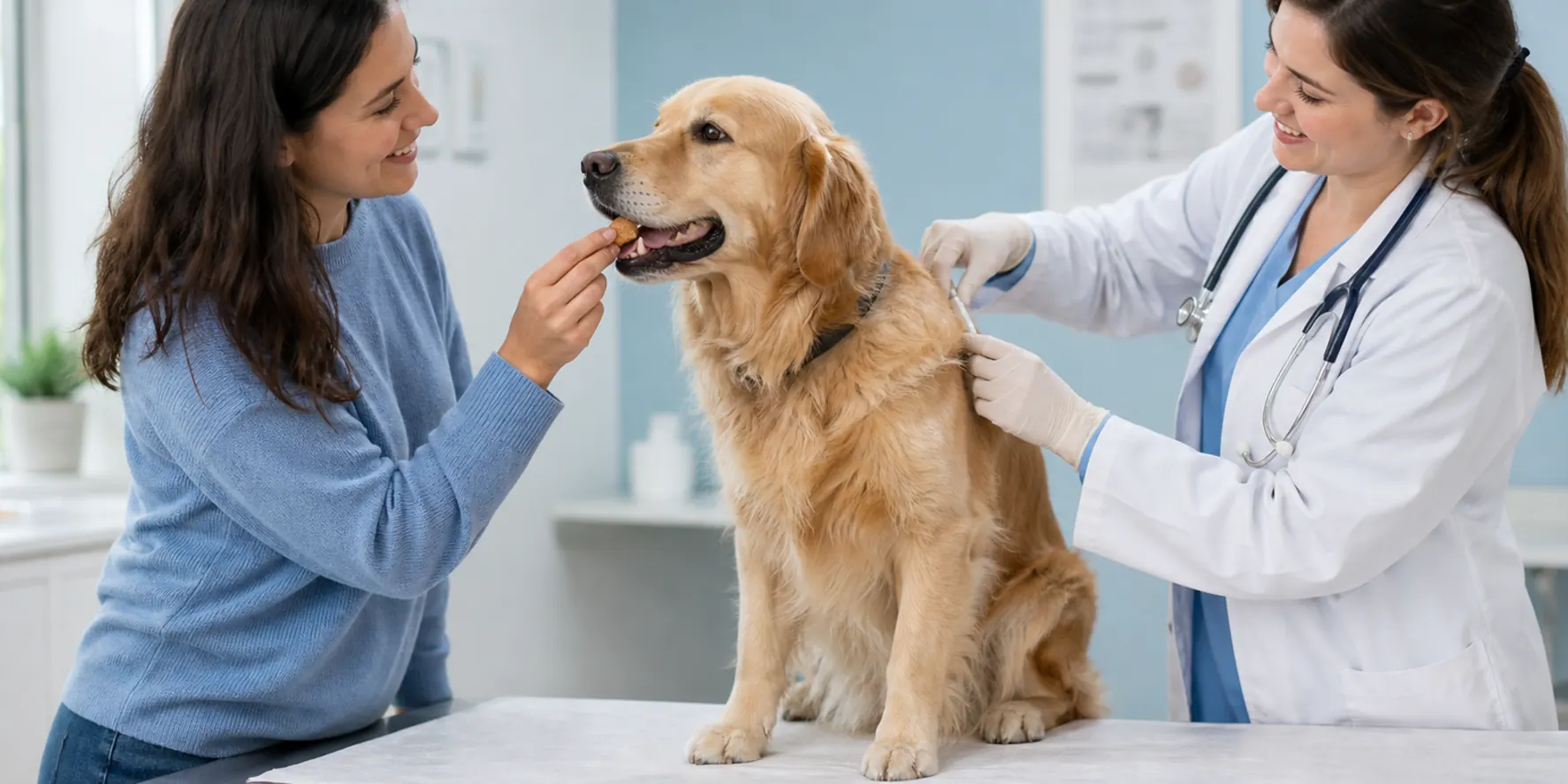
Vaccination remains the most effective protection against diseases that once killed dogs routinely — parvovirus, distemper, and rabies among them. Every dog needs core vaccines; beyond that, we recommend based on lifestyle rather than a one-size-fits-all checklist.
Dogs who visit parks, groomers, or daycare benefit from bordetella and canine influenza protection; hikers and dogs around standing water may need leptospirosis coverage (increasingly relevant in Los Angeles County). We'll walk through your dog's actual exposures and build the schedule accordingly.
Vaccines we offer
- DHPP (distemper/parvo combination) — core
- Rabies — core, required by Los Angeles County
- Bordetella and canine influenza for social dogs
- Leptospirosis for outdoor and wildlife-exposed dogs
- Rattlesnake vaccine for trail dogs, case by case
- Puppy series scheduling done right
What to expect
Vaccines come with a full exam and an honest lifestyle conversation — parks, daycare, hiking, travel — so your dog gets what their actual risk requires and skips what it doesn't. We'll map the schedule out so boosters land on time without extra trips.
Dog Vaccinations guides & handouts
Take-home guides from our resource library related to this service.
Frequently asked questions
Which vaccines are truly essential for every dog?
The core: DHPP (distemper, hepatitis, parainfluenza, parvo) and rabies, which Los Angeles County requires. Everything else — bordetella, influenza, leptospirosis, rattlesnake — is added based on your dog's real exposures.
Why is everyone recommending the leptospirosis vaccine now?
Because lepto has risen sharply in LA County — urban wildlife like raccoons and rats spread it through water and soil, it attacks kidneys and liver, and it infects people too. For most local dogs the vaccine has moved from optional to advisable.
Can my puppy socialize before finishing the vaccine series?
Carefully, yes — and they should: the socialization window closes around 14-16 weeks, before the series ends. Safe moves: carried outings, homes with known vaccinated dogs, and puppy classes requiring vaccination. Avoid dog parks and unknown dogs until fully protected.
What exactly are dog vaccinations?
Dog vaccinations are injections that dogs are given in a series, starting in the puppy stage and extending through adulthood. They depend on the dog's lifestyle and the dog's age as to what types and how many vaccines we will be giving. The purpose of the vaccine is to introduce tiny amounts of a virus or bacterial particle that causes the body to create an immune response. This response allows the body to be protected so that if it were exposed to this bacteria or virus, the body would be able to mount an immune response to fight off the disease and never become sick from that.
How do vaccinations impact the health and well-being of my dog?
I'll tell you a little story. Back when I first got out of veterinary school, parvovirus was sort of new. We had a parvo ward in the hospital that I worked in my first year out of school, and it was full of animals who were incredibly ill. Think of the Ebola virus. That's what it's like for dogs. When they get parvo, they're extremely sick. And at the beginning, we didn't even know how to treat it. It took a while to get good at doing that. The vaccines' purpose is to ensure that your dogs don't experience parvo, rabies, or distemper, which is another fatal disease. A lot of puppies can be exposed early on if they're not vaccinated. These diseases are horrible for your pets to go through, and the good news is they're entirely preventable.
Are vaccinations required by law?
The only vaccine that is required by law is rabies. And that is because it is a zoonotic disease for humans, and it can be fatal for humans if they contract rabies. We do want all dogs and cats vaccinated for rabies. Some states require both dogs and cats to vaccinate. Some states disregard cats, but all dogs and cats should be vaccinated for rabies because it's contracted from many different wildlife forms. In California, we have bats that can transmit rabies to dogs and cats. In many other places, a lot of mammals can carry rabies. It's an important disease to vaccinate against.
How soon should I get my dog vaccinated?
I always tell people, when you get your puppy, which is usually around seven to eight weeks, we want to start vaccinating because puppies are unable to mount a long-term immune response until they're about four months old. Just regardless of what age you get them, a puppy should be vaccinated every three weeks until they're four months of age, which is the time when they're able to mount a long-term immune response. Otherwise, most dogs are going to need something once a year. And some boarding facilities require Bordetella every six months, and those dogs may need to be vaccinated every six months if they're frequently boarding.
Why is it important to avoid missing a dog vaccination?
There's an average amount of time that's been studied as to how long the vaccine lasts. It's incredibly critical that we stay on schedule because if you go much past that, then puppies are not completely covered, and they can pick up harmful diseases. It's the same with adult dogs, but adult dogs can maintain a much longer immunity time. It depends on the dog’s age and the situation, but we don't want to miss their vaccines.
What are the typical puppy and dog vaccination schedules?
Again, for puppies, vaccinations will be every three weeks until they're four months, and sometimes a little bit later than that, too, depending on certain factors. We may add lepto on at the end, and that's a series of two the first year. For dogs, we generally want to see dogs every year, which is why that annual exam is so important. But also, at Angelus Pet Hospital, we like to spread out the vaccines once a year so that you're not getting all the vaccines every year. That way, it's a little bit easier on the immune system, and it's a good thing to add to the annual visit. We'll assess where we are. Things change for people. Let’s say, for example, they may not have been going out hunting with their dog initially, and then they decided they're going to be doing that. Because they’re now hunting, we may want to add in leptospirosis if they enter an area where that goes on. It's imperative that we catch up with you once a year and check in and see what the needs are and base vaccinations off that.
What diseases are prevented with vaccinations?
There are many diseases, so parainfluenza, parvovirus, distemper, rabies, Bordetella, which includes several different upper respiratory infections, and leptospirosis. I'm probably missing one, but that's most of them. People quite often think they don't see these diseases, and it's because we keep dogs vaccinated! If we stop vaccinating dogs, these diseases will come rearing right back, so we want to keep up with them.
Is it safe to get multiple dog vaccinations at the same time?
99.9% of all dogs tolerate all the vaccines at one time, just like kids do. Just remember, when you have babies, they get numerous vaccines when they're brand new infants, which to me is amazing. But dogs tolerate it. There's an occasional dog that's a little more sensitive to vaccines, and we may pretreat or spread them out for that dog in particular, or if clients have specific concerns.
What is titer testing, and is it effective?
Titer testing is a way of checking whether your dog has antibodies for distemper or parvovirus. As dogs age and they've been vaccinated thoroughly through puppyhood and at their one-year appointment, some dogs can mount a long-term immune response. Some dog owners don't want to vaccinate them in these cases, or there's occasionally a medical reason we don't want to. However, we want to make sure that those dogs have adequate titers, meaning that they can respond if they were exposed. And that's the purpose of doing annual titers on dogs who are not being vaccinated, because if they do dip low, then we're going to have another conversation about the importance of keeping them up on those vaccines because those diseases are terrible.
Does my puppy need to restart boosters if they miss a vaccination?
No. Really, we don't want your puppy missing vaccines because we don't want them to be exposed. But for the most part, we just start back up every three weeks until they're four months. So, again, there's not a specific number of vaccines you're supposed to get. It's just staying on that series. If somebody found a puppy at three months of age, we're not going to go back and start vaccinating as if they were eight weeks. It's going to be every three weeks until they're four months. So if they get one under four months, let's say 15 weeks, I'm going to recommend they get an additional booster to make sure they're safe for the next year.
Ready to schedule?
Request an appointment at our Glendale clinic or call our team — we serve pets and their people across the surrounding communities.