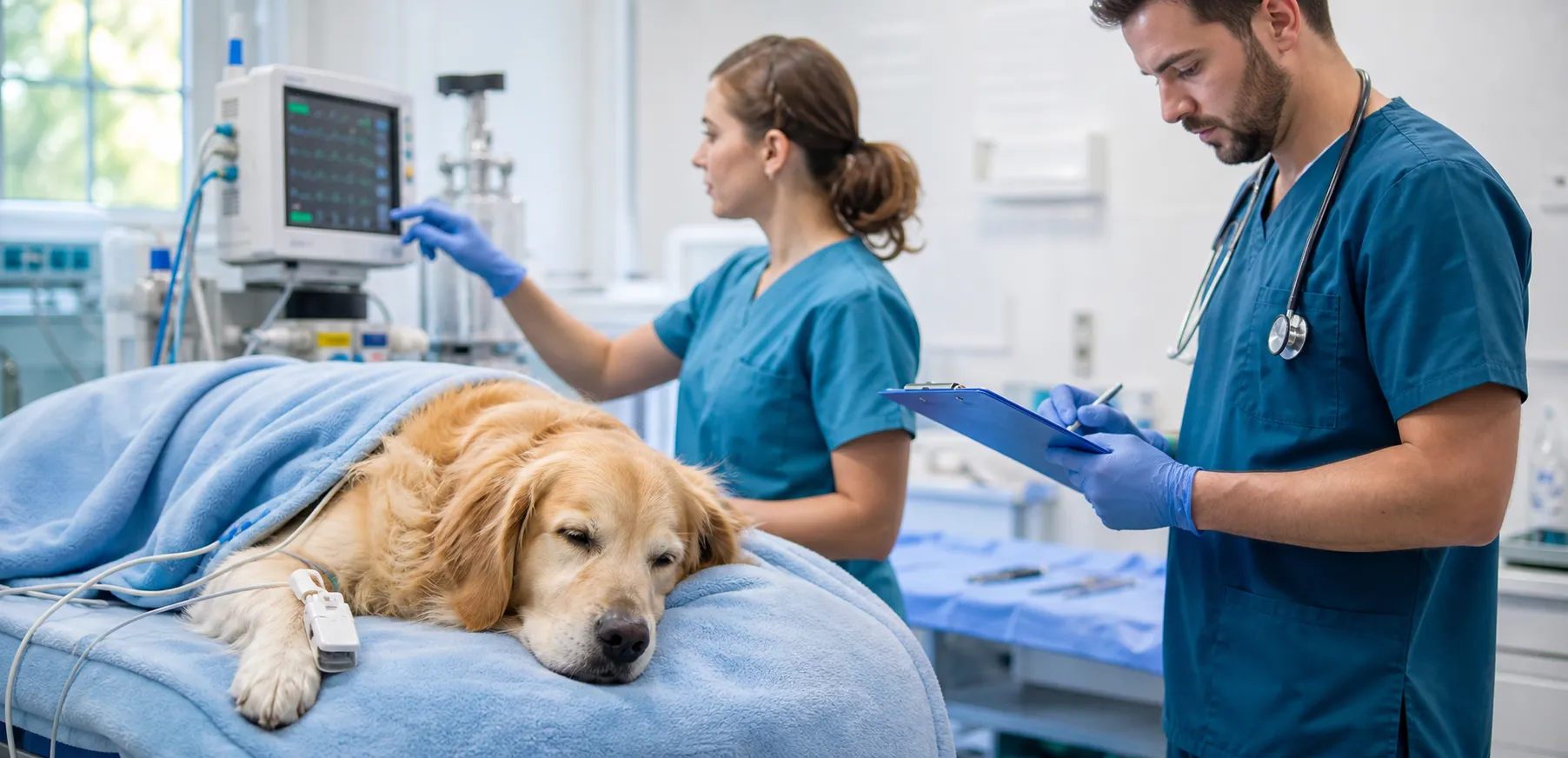
Our surgical service covers a broad range of procedures performed right here in our hospital — both soft-tissue surgeries like spays, mass removals, and abdominal procedures, and orthopedic surgeries including TPLO, fracture repair, and patellar luxation correction. Keeping surgery in-house means your dog is cared for by the team that knows them, from workup through recovery.
Every patient receives a pre-anesthetic exam and bloodwork, an individualized anesthetic protocol, IV support, and continuous monitoring by a dedicated team member from induction through recovery. Pain prevention starts before the incision, and you go home with clear written aftercare and direct access to our team.
Soft-tissue surgery
- Spay and neuter
- Mass and tumor removal
- Gastrointestinal foreign body removal
- Bladder stone removal (cystotomy)
- Abdominal exploratory surgery
- Pyometra surgery
- Splenectomy
- Wound and laceration repair
- Amputation
- Other soft-tissue procedures
What to expect
Every surgery includes a pre-anesthetic exam and bloodwork, an individualized anesthetic protocol with IV support, continuous monitoring by a dedicated team member, and multi-modal pain management from before the first incision through your take-home medications. You'll get a call as soon as your dog is awake.
Orthopedic surgery
- TPLO surgery
- Fracture repair
- Patellar luxation repair
- Femoral head ostectomy (FHO)
- Other orthopedic procedures
Additional surgical services
- Dental and oral surgery
- Eye surgery
- Ear surgery
- Emergency surgery
Surgical procedure guides
In-depth pages on the procedures we perform most — what each involves, when it's needed, recovery timelines, and expected outcomes.
Dog Surgery guides & handouts
Take-home guides from our resource library related to this service.
Frequently asked questions
How risky is anesthesia for my dog?
For a healthy dog with modern protocols and monitoring, the risk is very low — and pre-anesthetic bloodwork plus tailored drug choices lower it further for seniors and dogs with health conditions. We'll discuss your dog's specific risk honestly, not generically.
How do I manage the cone and the incision at home?
The cone stays on — one determined licking session can undo a surgery. Check the incision daily: mild bruising and redness early is normal; discharge, spreading redness, swelling, or gaps mean call us. Keep activity leash-only until the recheck clears it.
Which surgeries do you perform in-house?
Both soft-tissue and orthopedic procedures are performed here in-house — mass removals, foreign body and bladder stone surgery, wound repairs, abdominal exploratories, TPLO surgery, fracture repair, and patellar luxation correction among them. Your dog stays with the team that knows them, from pre-surgical workup through recovery.
Will my dog need lab work done before having surgery?
Yes. We require our patients to have lab work before surgery primarily to understand how safe surgery is or isn't going to be for some of those patients and understand their overall metabolic stability going into the procedure.
What will my veterinarian be looking for in the pre-surgery lab work?
In the pre-surgery lab work, there are a few different indicators that we're looking at to understand how the anesthesia is going to be metabolized or digested, so there are a few organ functionalities that we look at. We also check their platelet count, which is the glue of the blood, to ensure they're clotting properly and that there aren't any other significant abnormalities that would give us concern about their overall health. The results of these checks will tell us whether their anesthetic risk is much higher or if we need to change our plans for their procedure.
Who will be monitoring my dog while under anesthesia?
Here at Angelus Pet Hospital, we have a team of veterinarians and technicians. Some of the technicians are registered veterinary technicians who have additional schooling and licensing and particular training in anesthesia, and they're the ones who are monitoring our anesthetic procedures.
How long will my dog need to recover after having surgery?
It's variable as to what your dog will have done and how long it will take them to recover. Most soft tissue surgeries, spays, neuters, and wound repairs take about 10 days for a complete healing period. Some of the other oral surgeries, depending on the level of extraction, can be a week to two weeks. And then some of the more complicated procedures, such as drastic wound repairs and things like that, can require about a two-week recovery.
How can I help my dog recover at home after surgery?
One of the most critical things is paying attention to discharge instructions from your doctor, which you'll receive after their procedure. Those instructions include information about medications that they may go home with and the diet they need, and their activity level. Activity restriction can be vital to some of the healing processes, as well as whether or not they will need an e-collar or a cone, and how long they're going to need to maintain that as well as any follow-up that would be indicated afterward for their procedure.
What can I do at home to get my dog ready for surgery?
So some of the best things that you can do at home are to have had your pre-surgical exam with your veterinarian so that you know what to anticipate coming into the surgery. Also, you should have fasted your dog, not giving them food, the morning of the procedure. Those are some of the most important things. And hopefully, you have them willing to get in the car the morning of their procedure.
How soon can my dog come home after surgery?
Most of our patients will be dismissed in the late afternoon or early evening on the day of their procedure. Their go-home time will be discussed with you when the doctor gives you a call about their procedure once they're in recovery.
Will my dog need post-surgery pain medication?
So depending on the procedure, the post-surgery pain medication will be dispensed. The majority of our surgical procedures go home with pain medication. Dogs that have had spays, neuters, wound repairs, and mass removals will go home with pain medication. With dental cleanings, they don't always need them afterward. And those will be discussed with you both before and after the procedure.
Ready to schedule?
Request an appointment at our Glendale clinic or call our team — we serve pets and their people across the surrounding communities.
Need help with the cost? Explore financing options