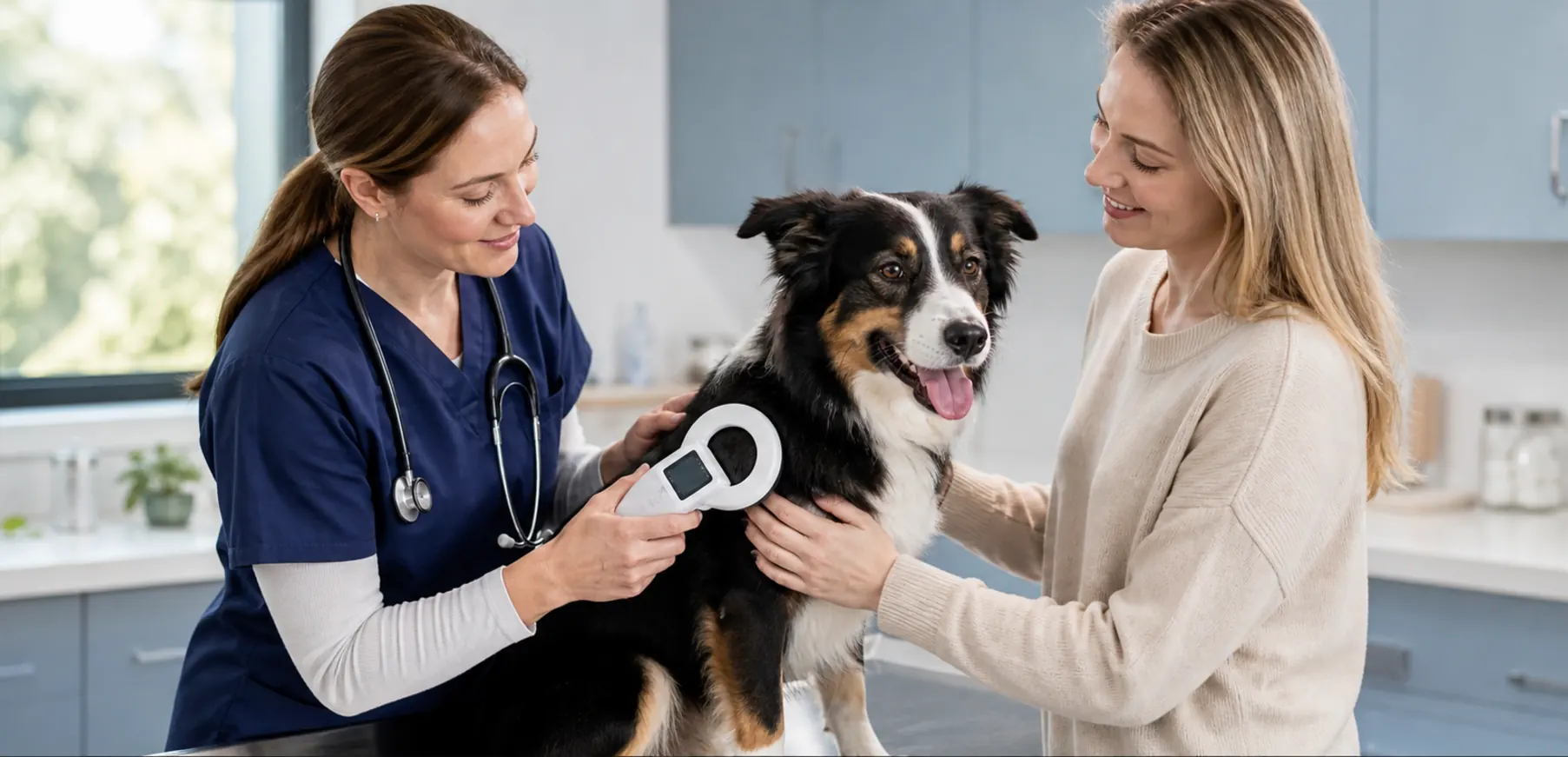
One in three pets goes missing at some point, and dogs with microchips are returned to their families at more than twice the rate of those without. The chip — the size of a grain of rice — is placed under the skin in seconds during any visit, no anesthesia needed.
A chip only works if it's registered, so we complete your registration before you leave and show you how to update contact details whenever you move or change numbers. Every stray scanned at a shelter or vet clinic gets checked for one — make sure it leads back to you.
Microchipping includes
- Quick injection during any appointment
- Universal-scanner-compatible chip
- Registration completed same day
- Free scan checks at any visit
What to expect
One quick injection between the shoulder blades during any visit — most dogs react less than they do to a vaccine. We register your contact details before you leave, and we'll scan the chip free at future visits to confirm it's reading properly.
Frequently asked questions
My dog wears tags. Isn't that enough?
Tags are great until the collar comes off — which is exactly what happens in the scrapes, squeezes, and panics that make dogs lost. The chip is the backup that can't fall off, and shelters scan for it as step one with every stray.
Does the microchip hurt or cause problems later?
Placement is a single quick needle stick, and complications are genuinely rare. The chip is inert glass the size of a rice grain with no battery — it sits quietly for life and only responds when a scanner passes over it.
I adopted a dog who's already chipped. What now?
Make sure the registration points to you: we'll scan the chip, look up its registry with the universal lookup tool, and help you transfer or update the record. An unregistered or stale chip finds nobody.
What does it mean to have my dog microchipped?
A microchip is just what it sounds like, a very small chip. It's about a centimeter in length, and it's slipped under the skin of your dog using a large bore needle. We can do it at the time of spaying or neutering, which is what we usually recommend since they will be anesthetized and won't feel it, or we can do it pretty much any time during a routine visit. That microchip provides a permanent form of identification should your dog be lost.
Can microchips be used to track my dog?
A microchip may not be used to track your dog, but some tracking devices are different than a microchip, but that's not what this does.
How is a microchip used to identify my dog?
The way a microchip works is that it is a permanent form of identification under your dog's skin. Suppose your dog were to run away if the gate is left open, they jump out of your car, someone's watching your dog and your dog's unfamiliar with that person or their home, or hopefully not, but if fireworks scare the beans out of your dog and they jump out of your yard. What happens is that when someone picks up your dog and finds your dog, they'll bring them to a veterinary hospital or a shelter, and all of these locations do have the microchip scanner. So if someone were to bring a dog in here, we would scan the dog, which would help us identify the owners, get ahold of the owner and reunite you with your dog. It's a very successful way of doing that.
What if I forget or lose my dog's microchip information?
It's no problem because your veterinarian's office will maintain the records. In addition, the company that you have the microchip with will also have a record of this. So you can call them and get the updated information.
Are there smart products that can connect to my dog's microchip?
No, at this time, there are no other smart products that connect with the microchip. But, some of the newer chips now contain a temperature sensor so the dog's body temperature can be taken by just scanning the chip! No more rectal thermometers!
Ready to schedule?
Request an appointment at our Glendale clinic or call our team — we serve pets and their people across the surrounding communities.