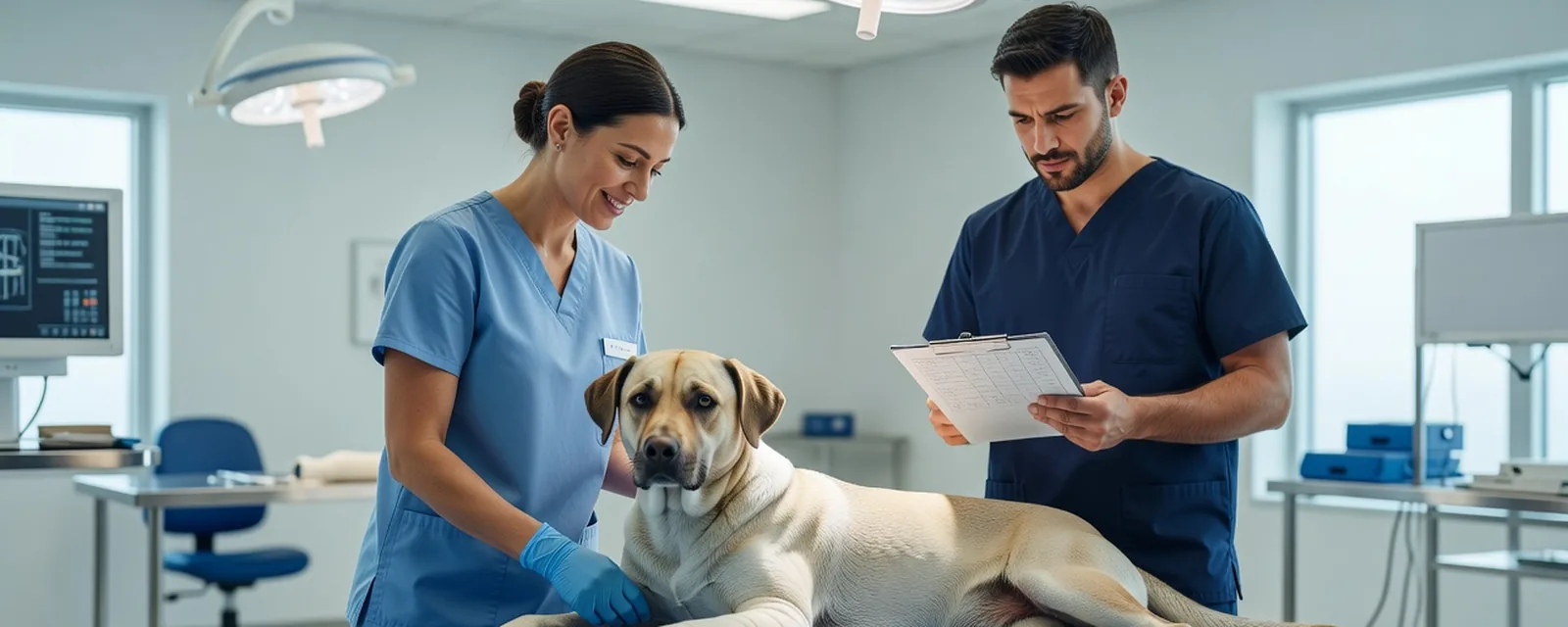
Broken bones in dogs and cats usually follow a moment everyone wishes they could take back — a car accident, a fall from a height or someone's arms, a dog-park collision. The good news: with modern fixation, most fractures heal completely and pets return to fully normal lives.
Our Glendale surgical team repairs fractures in-house using bone plates, pins, wires, and external support matched to the specific break, with digital X-rays on-site for diagnosis, surgical planning, and healing checks along the way.
Our fracture service includes
- Emergency stabilization and pain control
- Digital X-rays for diagnosis and surgical planning
- Internal fixation — bone plates, screws, pins, and wires
- Splinting and casting for select fractures
- Follow-up X-rays to confirm healing
- Recovery and rehabilitation guidance
What to expect
Emergency patients are stabilized and made comfortable first, then sedated X-rays map the fracture and we walk you through repair options and a written estimate. Surgery uses plates, pins, or wires matched to the break, and your pet goes home with pain medication, activity restrictions, and scheduled recheck X-rays.
Fracture Repair Surgery guides & handouts
Take-home guides from our resource library related to this service.
Broken Bones in Dogs and Cats: How Fracture Repair Works
A fracture is any break in a bone — from a hairline crack to a bone shattered into multiple pieces. Fractures are almost always the result of trauma: vehicle accidents, falls, animal fights, or a leg caught the wrong way. Because the same trauma can injure the chest, abdomen, or head, every fracture patient gets a full evaluation, not just an X-ray of the obvious leg.
Signs of a Fracture
- Refusing to bear any weight on a limb
- Obvious swelling, bruising, or a limb at an odd angle
- Crying out when the area is touched or moved
- A wound over the injury (an open fracture — an emergency)
- Hiding, panting, or aggression from pain in a normally friendly pet
If you suspect a fracture, keep your pet as still as possible, avoid splinting at home, and call us or an emergency hospital right away. Careful handling prevents a closed fracture from becoming an open one.
Diagnosis and Planning
After your pet is stable and comfortable — pain medication comes first — sedated X-rays show exactly where the bone is broken and how. The fracture pattern determines the repair: a clean two-piece break, a spiral fracture, a growth-plate fracture in a puppy or kitten, and a shattered (comminuted) fracture each call for different hardware.
For complex fractures involving joints, the pelvis, or the skull, our on-site CT scanner can map the injury in three dimensions for precise surgical planning.
How Fractures Are Repaired
The goal of any repair is the same: hold the pieces perfectly still, in alignment, long enough for bone to bridge the gap. Depending on the fracture, that means:
- Bone plates and screws — rigid fixation for most long-bone fractures
- Intramedullary pins — stainless rods placed down the bone's central canal
- Cerclage wires — encircling wires that compress spiral or long oblique fragments
- External splints or casts — for select stable, well-aligned fractures, mostly in young animals
Young pets heal remarkably fast — a puppy can bridge a fracture in three to four weeks — while adult and senior pets typically need six to twelve weeks.
Recovery and Aftercare
- Strict activity restriction until X-rays confirm healing — no running, jumping, or furniture
- Pain medication for comfort and antibiotics when indicated
- Bandage or splint checks to protect the skin underneath
- Recheck X-rays, typically around four to eight weeks, before activity increases
- A gradual, staged return to exercise once the bone has bridged
Expected Outcomes
Most surgically repaired fractures heal completely, and most pets return to full normal activity with no long-term lameness. Fractures involving a joint surface or growth plate carry a higher chance of later arthritis, which is why precise alignment at surgery — and honest follow-up — matter so much.
Why Choose Angelus Pet Hospital for Fracture Repair
- Orthopedic surgery performed in-house at our Glendale hospital
- Same team from emergency stabilization through healed recheck
- Digital X-rays and CT on-site — no separate imaging appointments
- Anesthesia monitored by a dedicated team member on every procedure
- Financing options for unexpected injuries
Frequently asked questions
How much does fracture repair cost?
It varies widely with the bone and the fracture pattern — a simple splinted toe and a plated femur are very different procedures. You'll get a written estimate before surgery once X-rays show what's involved, and financing options are available for unexpected injuries.
Does a broken bone always need surgery?
No. Some stable, well-aligned fractures — especially in young, fast-healing pets — do well in a properly managed splint or cast. Many others heal straighter, faster, and more comfortably with surgical fixation. We'll show you the X-rays and explain why we'd choose one over the other for your pet.
Will the plate or pins need to come out later?
Usually not — most implants stay in for life without causing problems. Removal is only recommended if hardware becomes loose, infected, or irritating after the bone has healed.
Ready to schedule?
Request an appointment at our Glendale clinic or call our team — we serve pets and their people across the surrounding communities.
Need help with the cost? Explore financing options