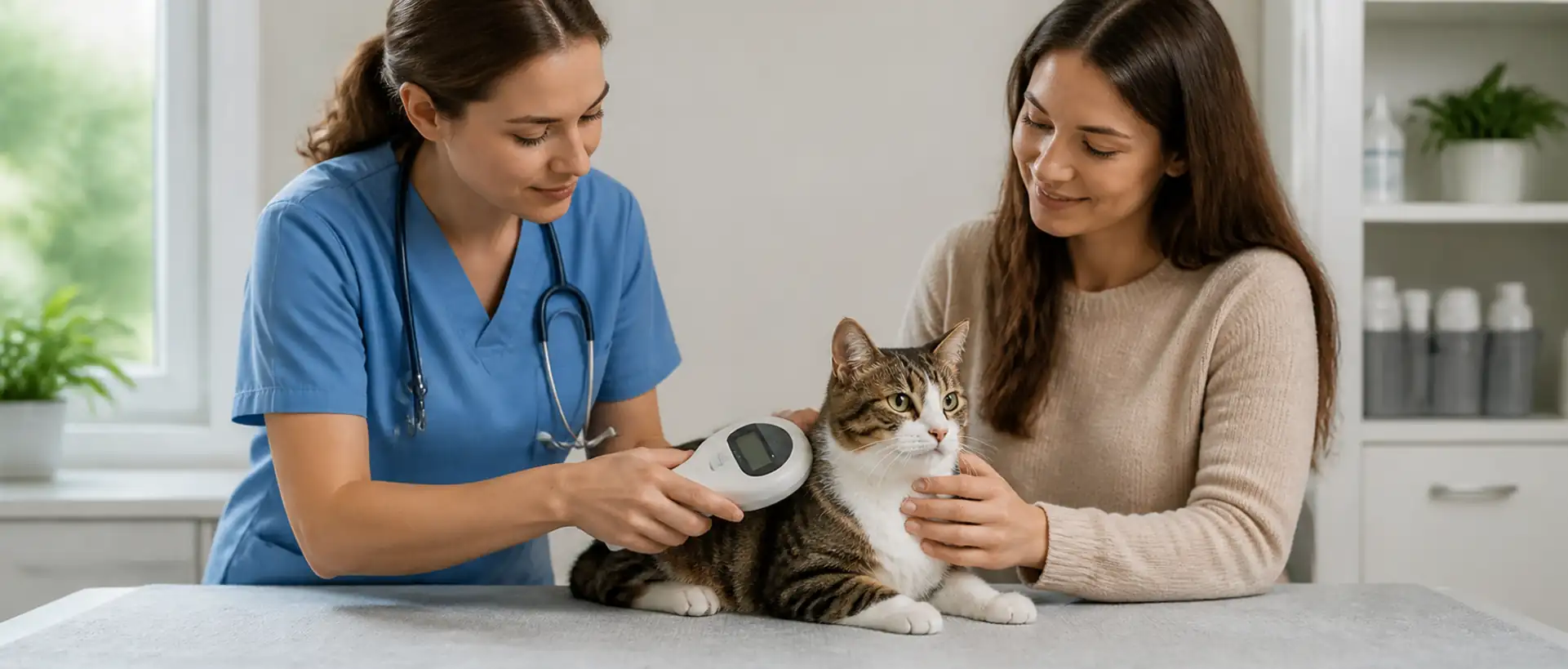
Collars slip off and tags wear out, but a microchip is permanent. The rice-grain-sized chip is placed under the skin between the shoulder blades in seconds during any visit — no anesthesia required — and can be read by any shelter or veterinary clinic scanner.
Indoor cats are actually among the most important to chip: a cat who has never been outside panics when it happens, travels farther, and carries no street smarts. We register your chip before you leave and show you how to keep your contact information current.
Why microchip your cat
- Permanent identification that can't fall off
- Placed in seconds during any appointment
- Registration completed before you leave
- Dramatically higher return-home rates for chipped cats
What to expect
The chip is placed with a quick injection between the shoulder blades during any visit — no anesthesia, over in seconds, about as eventful as a vaccine. We register your contact information before you leave and show you how to update it online whenever it changes.
Frequently asked questions
My cat never goes outside. Why microchip her?
Because escapes happen precisely to cats with no outdoor experience — a door left open, a screen that gives way, an earthquake, a move. Panicked indoor cats bolt far and carry no collar history. The chip is for the day everything goes wrong.
Does a microchip track my cat's location?
No — it's not a GPS. It's a passive ID number read by a scanner at any shelter or vet clinic, linked to your contact information in a registry. That link is what turns a found cat into a returned cat.
My cat is already chipped. Is there anything to maintain?
Keep the registration current — a chip pointing to an old phone number returns no one. We scan chips free at any visit to confirm they're reading properly, and we can help you update the registry on the spot.
What does it mean to microchip your cat?
A microchip is a tiny, computerized chip that's placed underneath your cat's skin, usually around the shoulder area. And the purpose of it is to be a form of identification should your cat get lost and wind up at the shelter or a veterinary hospital.
Is microchipping dangerous or painful for my cat?
No. There's absolutely no danger to microchip, and there's no pain because it's a beveled needle. So it slips right under the skin. We can insert them when the cat is awake, and I don't think I've ever had a cat notice it. Or we'll do it when they're getting spayed.
How is the cat microchip used to identify my cat?
There's a little scanning device that we can run over your cat. All the shelters and veterinary hospitals know, if someone were to turn in a cat, to go ahead and check for their microchip because it's standard these days. So we'll use that to identify who the cat is, contact the company and find out who the owners are, and get in contact with you to let you know we have your cat.
Why does my cat need a microchip if they already have a collar with a tag?
Collars can be easily lost and slip off the cat. So that's the reason. And a lot of people don't keep a collar on their cat. So we want to have microchips that have a permanent form of identification.
Who can scan my cat's microchip information?
Anyone that has a scanner can do it. And so almost all veterinary hospitals and shelters have scanners.
What if I forget or lose my cat's microchip information?
The information is stored online with the company who provided the microchip. And so even if you lose all your information, they should have it available. It is super important, though, to make sure you update your information when you move or your phone number has changed so they have a way of contacting you.
What information is provided with a cat microchip?
In general, the most vital information is the owner's name and the phone number. The address can be on there as well so we know what area they are from. But mostly we want to know how to contact you, so email and a phone number are the most essential to keep updated.
Is my personal information available with the cat microchip?
No, the information that's available is we know that your cat has a microchip and what the number is, and then we'll send that to the company. And the company that you chose will go ahead and contact you and let you know that someone has your cat, and who that is and where they are located.
Will my cat's microchip stay in place?
Yes, the microchip is made to stay wherever it's placed. It might migrate a very small amount, but in general it stays in place. And they're very safe, too.
Ready to schedule?
Request an appointment at our Glendale clinic or call our team — we serve pets and their people across the surrounding communities.