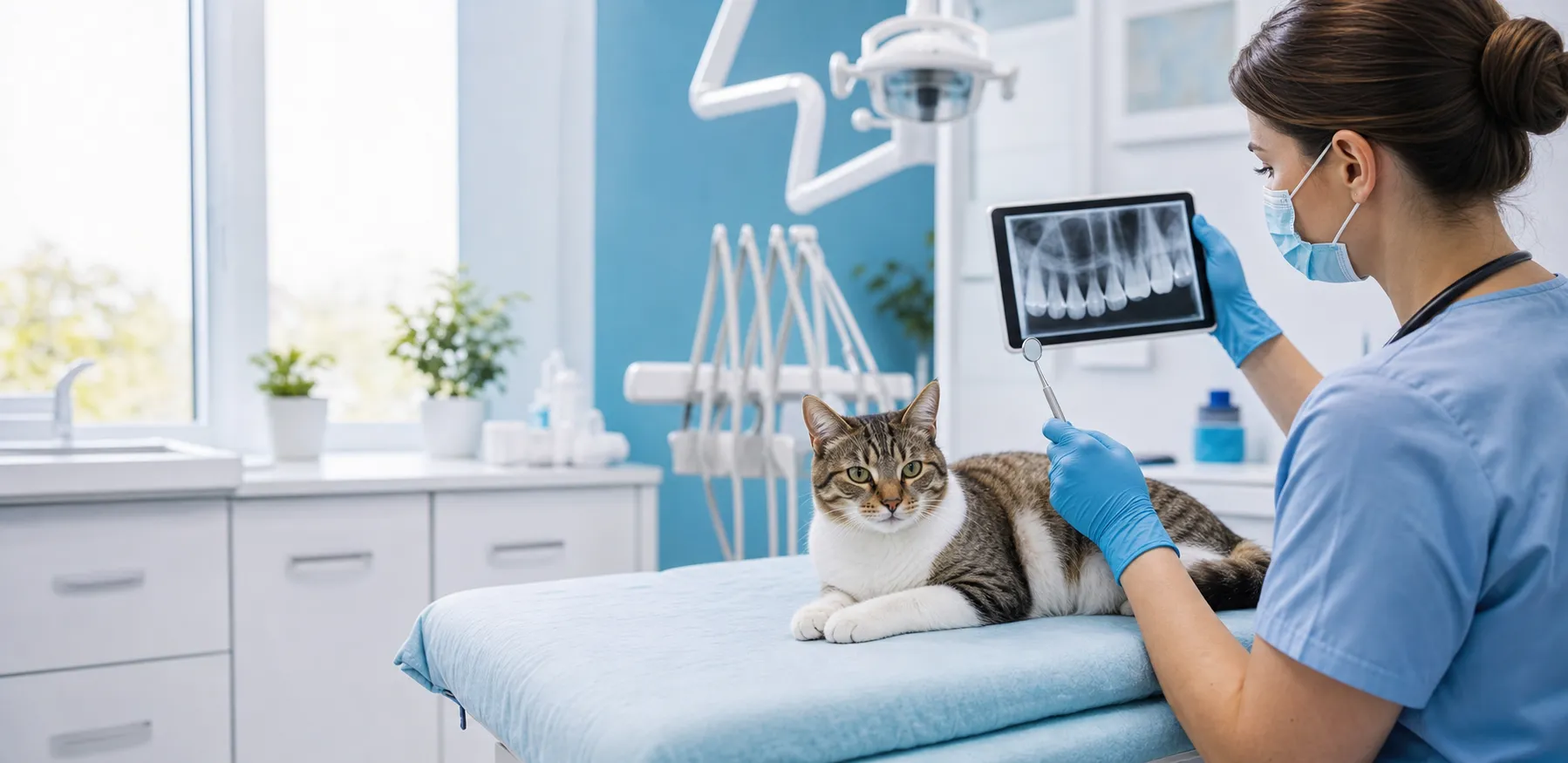
By age three, most cats have some degree of dental disease — and because cats instinctively hide pain, owners rarely see it. Untreated dental disease causes chronic pain and can seed bacteria to the heart and kidneys.
Cats also suffer from a uniquely feline problem called tooth resorption, in which the tooth structure dissolves painfully below the gumline. It's invisible without dental X-rays, which is why full-mouth radiographs are part of every feline dental procedure we perform.
Feline dentistry services
- Oral exams at every wellness visit
- Professional cleaning and polishing under anesthesia
- Full-mouth digital dental X-rays
- Treatment of tooth resorption and gingivostomatitis
- Surgical extractions with local nerve blocks
- Home care coaching for willing cats (and realistic alternatives)
What to expect
A feline dental (COHAT) is a day procedure under anesthesia: full-mouth X-rays, tooth-by-tooth probing, ultrasonic scaling above and below the gumline, polishing, and extraction of teeth too diseased to save — with local nerve blocks so your cat wakes comfortable. You'll get before-and-after photos and a clear picture of what we found.
Cat Dental Care guides & handouts
Take-home guides from our resource library related to this service.
From our blog
Frequently asked questions
How do I know if my cat has dental pain?
You usually won't — cats keep eating through significant dental pain. Subtler tells: swallowing kibble whole, preferring soft food, dropping food, drooling, jaw chattering, or grooming less. Red gums and mouth odor on exam are the reliable evidence.
What is tooth resorption?
A uniquely common feline condition where the body dissolves the tooth's own structure, typically below the gumline — invisible without dental X-rays and genuinely painful. Affected teeth can't be filled or saved; extraction ends the pain, and cats eat noticeably better afterward.
Can't you just clean my cat's teeth without anesthesia?
Awake 'cleanings' scrape visible tartar and miss the disease below the gumline, where the pain actually lives — while stressing the cat. Anesthesia is what makes X-rays, probing, and subgingival cleaning possible; without those it's cosmetics, not care.
How do veterinarians diagnose dental problems in cats?
When you bring your cat in here for their annual, we're able to see a lot, and we can tell what's going on in your cat's mouth. And then when we're doing a dental procedure, if they are indeed due for having their teeth cleaned, we take an x-ray in addition to checking the pockets of the gums and such to determine if they have periodontal disease. The x-rays are essential to determine whether or not that tooth is diseased.
What are some possible conditions caused by poor cat dental care, and what are the treatments?
So again, the resorptive lesions are these lesions that you can see just at the gum line and they go underneath the gum line to the root of the tooth. Those are extremely painful. Gingivitis is where there's redness along the gum and that's an infection right at the line of the tooth. They're smelly and painful. And periodontal disease is a more severe situation where the disease is going up underneath the gum line and causing problems with the whole tooth. We see broken teeth in cats as well. We also see other things like tumors and such, and those are things we're going to find on an oral exam. So you need to have us take a peek in the mouth at least once a year and twice a year for cats that are older than 10.
How often should I brush my cat's teeth?
Ideally, you'll brush them once a day. And if your cat gets used to brushing once a day, it can become part of the routine. You can even give them a little treat, which seems counterintuitive after you brush them, but the idea is that we get that brush going up along the gum line. So if they're brushed every day it's ideal, but if you did it every other day, it's going to be great too. So really whatever you can do is helpful, but the more often you do it, the better.
Are there any tips for making brushing my cat's teeth easier?
We've got a great video online that shows you how to do this. Also, when you're in here for the exam, our technicians are awesome at showing you. We have brushes that are made specifically for cats and paste that's made specifically for cats that has flavors like chicken and salmon, which they love.
Can I use human toothpaste on my cat?
Absolutely do not use human toothpaste on your cat. They do not like the taste of it, and it's not meant to be swallowed, so it can cause a stomach upset. Do not use anything but cat toothpaste.
Do I still need to brush my cat's teeth if I give them dental treats?
Dental treats can be helpful, but they're not nearly as helpful as going ahead and brushing them every single day.
Ready to schedule?
Request an appointment at our Glendale clinic or call our team — we serve pets and their people across the surrounding communities.
Need help with the cost? Explore financing options