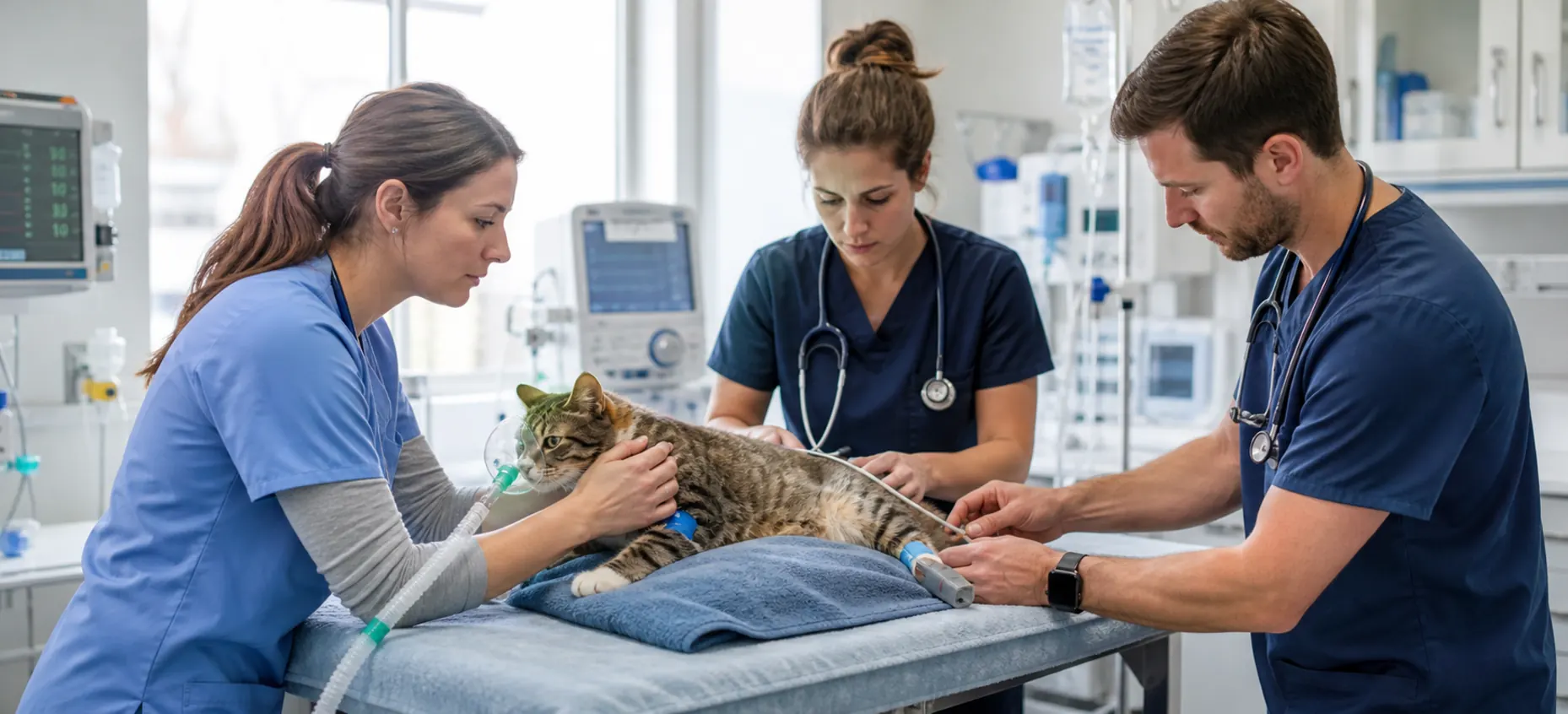
Some feline conditions simply cannot wait. A male cat straining in the litter box, sudden open-mouth breathing, repeated vomiting, or collapse are emergencies where minutes matter.
During hospital hours our team is equipped to triage and stabilize critical feline patients with on-site diagnostics, oxygen support, IV fluids, and pain control. If your cat needs overnight or specialty critical care, we stabilize first and then coordinate transfer to a 24-hour facility.
Call immediately if your cat shows
- Straining or crying in the litter box with little or no urine
- Open-mouth or labored breathing
- Sudden inability to use the back legs
- Repeated vomiting or refusal to eat for more than a day
- Known ingestion of a toxin (lilies, medications, antifreeze)
- Trauma such as a fall or vehicle strike
When in doubt, call us. Our team can help you decide whether your cat needs to be seen right away.
What to expect
Call ahead if you can — it lets us prepare a room, oxygen, and supplies before you arrive. Your cat is triaged immediately on arrival; stabilization (oxygen, IV fluids, pain control) comes before paperwork. Once your cat is stable, we'll walk you through findings, options, and honest costs before any major decision.
Cat Urgent Care guides & handouts
Take-home guides from our resource library related to this service.
Frequently asked questions
My male cat keeps straining in the litter box. Is that an emergency?
Yes — treat it as one. A blocked urethra can kill a male cat within 24-48 hours as toxins and potassium build up. Straining with little or no urine, crying in the box, or licking the genitals urgently warrants immediate care, day or night.
My cat ate part of a lily. What do I do?
Come in or get to an emergency hospital immediately — every part of a true lily, even pollen groomed off fur, can cause fatal kidney failure in cats. Aggressive early fluid therapy is protective, and hours matter. Bring the plant if you can.
How do I know if my cat's breathing is an emergency?
Open-mouth breathing, sides heaving, blue-tinged gums, or a resting breathing rate over about 40 breaths per minute are all emergencies in a cat. Cats hide respiratory disease until they're in real trouble, so visible effort means the reserve is already gone.
Ready to schedule?
Request an appointment at our Glendale clinic or call our team — we serve pets and their people across the surrounding communities.