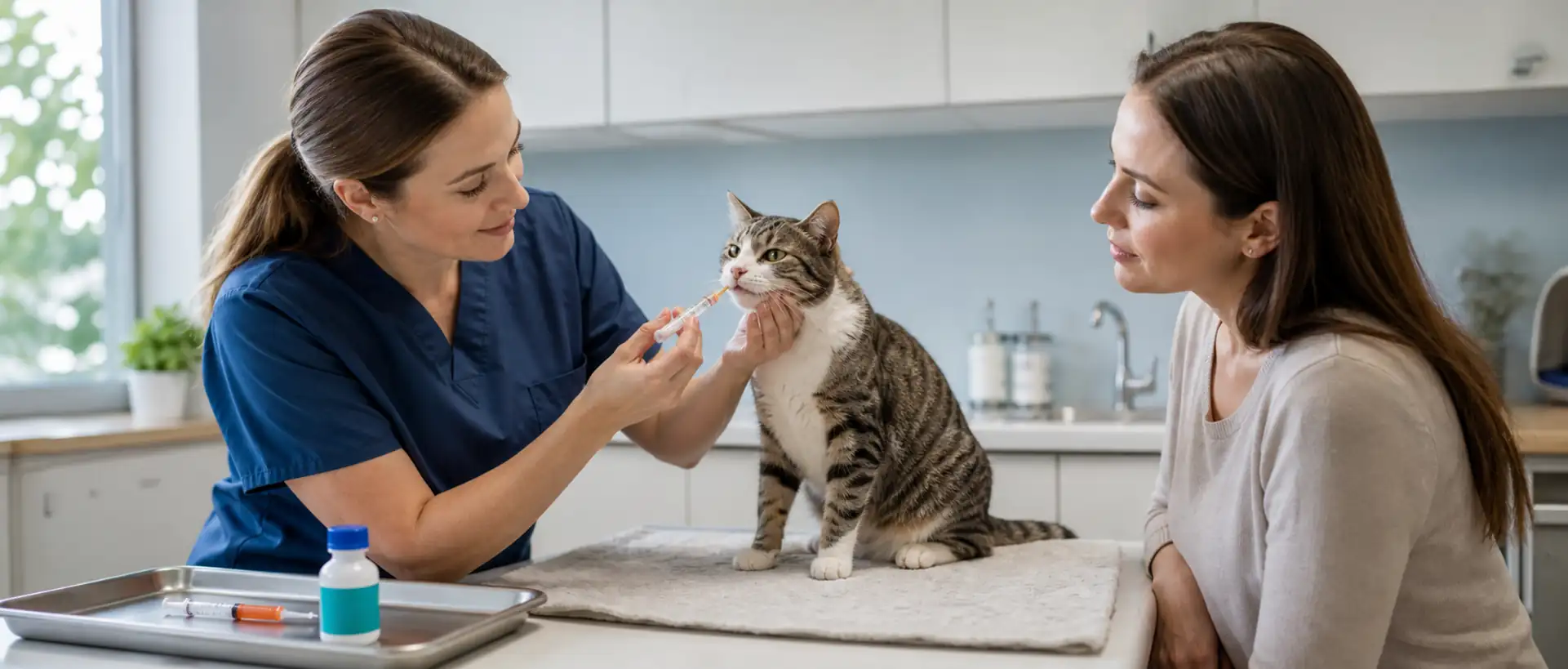
Anyone who has tried to pill an unwilling cat knows that the best medication is worthless if it never gets swallowed. We factor 'pillability' into every feline prescription we write.
For cats who refuse tablets, we can often prescribe flavored compounded liquids, transdermal gels applied to the ear, or long-acting injections given in the hospital. Our team will demonstrate techniques and adjust the plan until it works for both of you.
Medication services
- Prescriptions and timely refills
- Compounded flavored liquids and treats
- Transdermal and injectable alternatives
- Pilling technique coaching
- Medication reviews for cats on multiple drugs
What to expect
Tell us honestly what your cat will and won't tolerate — it changes what we prescribe. We'll demonstrate techniques in the exam room, send you home with the easiest formulation available, and adjust (compounded liquids, transdermal gels, long-acting injections) if round one fails. A medication that doesn't get into the cat doesn't work.
Cat Medication Support guides & handouts
Take-home guides from our resource library related to this service.
Frequently asked questions
I can't pill my cat. What are my options?
Plenty: flavored compounded liquids, tiny 'mini-tabs,' transdermal gels rubbed inside the ear, treats designed to hide pills, and for some conditions, long-acting injections we give in hospital. Tell us it's a battle — we'd rather change the plan than have doses missed.
Can I give my cat human pain medication?
No — this is genuinely dangerous. Acetaminophen (Tylenol) is lethal to cats in tiny doses, and ibuprofen and aspirin cause kidney failure and ulcers. If your cat seems painful, call us; safe feline options exist.
My cat seems better. Can I stop the antibiotics early?
Finish the course. 'Better' means the most susceptible bacteria died first; stopping early selects for the resistant survivors and invites a relapse that's harder to treat. If side effects are the issue, call us — we'll switch rather than stop.
Common Reasons And Prescriptions For Cat Medicine
Veterinarians prescribe medication to cats for various reasons. One of the most common reasons cats are treated with medication is for IBD (inflammatory bowel disease). Sounds uncomfortable, and it sure is. This type of condition requires daily medications and a special prescription cat food along with lots of TLC. Corticosteroids are also commonly used for the treatment of IBD. To make things easier on you and your pet, cat medications can be compounded into a flavor tab or a flavored liquid for easier administering (and who doesn’t like salmon flavor!) Our veterinary technicians will train you on what to do and will help you manage your cat’s medication schedule. Another common reason for giving your cat medication is for infections. Whether the infection is from a wound or some other reason, antibiotics are used for a specific period of time until the infection is gone and your cat is up to their old tricks again. In some cases, pain medications are needed to keep your cat comfortable and pain-free for a period of time. A little extra care and attention, fluffing of the cat bed, and some gentle petting may help the medicine go down easier. There are also long-lasting antibiotic and pain relief injectables available. Talk to one of our veterinarians about these options at your next appointment. With proper instruction from our veterinary team, you can be successful at giving your cat their medication. And at the end of the day, you know you’ve done your best to make your buddy feel comfortable throughout the healing process. Cats who are hyperthyroid may be given an oral or transdermal gel medication. In some cases this type of medication may be easier to apply for the pet owner. Other common reasons your veterinarian may need to treat your cat with medications may include: Heart Disease Diabetes Some forms of cancer, intestinal lymphoma Hyperthyroidism IBD/Inflammatory Bowel Disease
How To Give A Cat Liquid Medicine
If you have to medicate your cat for a long period of time, have a game plan. You will want to be prepared with a plan of action. While every cat is different when it comes to taking medications, most cats respond well to positive reinforcement when administering cat medications. You will have a quick window of opportunity to medicate your cat, before they change their mind. Trying to medicate your cat on the ground is much more difficult and tough on both of you. Place the cat comfortably on a high table. Here are some great photos, step by step on giving your cat medications: Giving Various Types of Oral Medications To Your Cat
What To Do When You Need To Refill Your Cat Prescription
Most vets have a well stocked pharmacy for their patients. It is best to get your pet’s prescription filled at your veterinary hospital. Some drugs that need to be compounded or flavored have to be made and then either picked up or mailed to you. For refills on medications, call your veterinarian. Your pet may need to have occasional blood tests to make sure they are on the correct dosage throughout the prescribed treatment.
What is Prescription Cat Food?
Prescription cat food is formulated for specific health issues your cat may have. There are certain health conditions that will benefit from prescription cat foods. These foods are formulated by veterinary nutritionists. Your cat may turn their nose up at first when you introduce a new food, and sometimes it may take trying a different prescription food to find one they like.
Behavior Modification Medications For Cats
What should I do when my cat displays unwanted behaviors? Humans sometimes don’t have a clue as to why their cat has suddenly become a “totally different animal.” Is there anything I can do to help guide him toward a positive behavior? There are many behavior modification medications for cats. It depends on what behaviors the cat is displaying. There are also some natural pheromones that can be used for behavior problems. A combination of behavioral medicine and behavior modification techniques is a good starting point to help your cat overcome negative behaviors. It may take time for your cat to respond to the medication and time to learn new positive behaviors. It takes humans time to learn new behaviors too!
Ready to schedule?
Request an appointment at our Glendale clinic or call our team — we serve pets and their people across the surrounding communities.