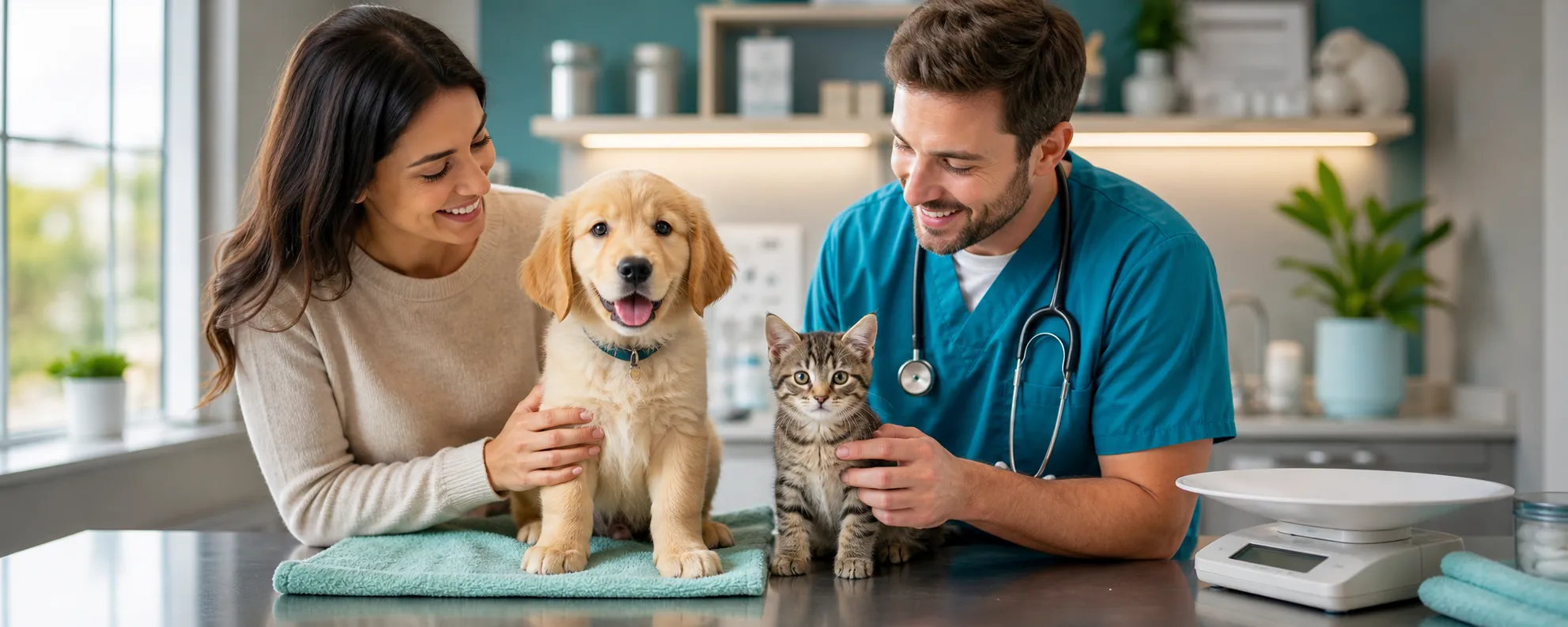
The first year shapes the next fifteen. Puppies need a properly timed vaccine series (immunity gaps happen when boosters run late), strategic deworming, heartworm and flea prevention startup, and a spay/neuter plan suited to their breed.
Just as critical is everything that isn't medical: socialization during the narrow window when it matters most, crate and house training, chewing and nipping, and nutrition for growth. Puppy visits are unhurried on purpose — bring your list of questions.
First-year essentials
- Exam and booster series every 3-4 weeks until 16 weeks
- Deworming and parasite prevention startup
- Microchipping and registration
- Socialization and training guidance
- Growth nutrition and feeding plans
- Spay/neuter timing tailored to breed and size
What to expect
Visits every three to four weeks until about sixteen weeks: exams, staged vaccines, deworming, prevention startup, and microchipping — plus real time for training, socialization, and feeding questions. Bring your list; new-owner coaching is half the appointment on purpose.
Puppy Care guides & handouts
Take-home guides from our resource library related to this service.
From our blog
Frequently asked questions
What should my puppy's vaccine schedule look like?
DHPP starting at six to eight weeks, boostered every three to four weeks until at least sixteen weeks, with rabies near the end of the series and lifestyle vaccines as needed. The timing rules matter more than any single dose — late boosters leave immunity gaps.
How do I survive puppy biting and chewing?
It's developmentally normal and it passes — faster with redirection: a yelp-and-disengage for hard bites, an immediate trade to a legal chew, and plenty of daytime exercise and naps (overtired puppies bite more). Consistency from every family member is the multiplier.
When can my puppy go to the beach and the park?
Public high-dog-traffic ground is a parvo risk until the vaccine series finishes around sixteen weeks. Until then: carried outings, car rides, friends' yards with known vaccinated dogs, and puppy class. After the final booster — Glendale is theirs.
Why is it so important to start good puppy care on day one?
Because there are many diseases, parasites, and viral diseases that your puppy can get, heartworm disease even, and we want to prevent all of these things or treat them if necessary, if they have parasites. And some of these diseases are zoonotic, which means it could be transmitted to humans, and we never want that to happen. Veterinarians are also concerned with the family's health too. And that's our job—to make sure that we don't miss anything that would be in your pet that could transmit to you or your kids.
How soon should I bring my puppy in to see a veterinarian for their first exam?
We recommend that you make your exam appointment before you even leave to get your puppy. And that's because we want to get them in here right away. We want to get started on deworming and to diagnose congenital issues if present. We also want to set you up with proper behavior and training plans so we can set up a great plan moving forward.
What are the most common health problems in puppies?
We see a lot of parasites—intestinal parasites and sometimes external. Some puppies come with fleas and ticks. It depends on where they come from. We'll see ear mites on occasion or scabies, which are skin mites. Demodex is another type of skin mite. These are things we're going to look for. We're going to look at your puppy's coat and do a fecal sample to make sure that, if there are intestinal parasites, we're going to treat those appropriately. We'll also get them set up on the right vaccines so that we don't wind up with parvo. Unfortunately, some of these people get puppies from places that are not super reputable or people that don't know that they've handed you a puppy that has parvo. And those symptoms are going to show up in 24 to 48 hours after you get the puppy, so we'd like to be on top of that.
What are some signs and symptoms of illness in your puppy?
You should be getting a puppy between seven and eight weeks or older. Seven to eight weeks is when it should be weaned. Puppies do sleep a lot, but they're also very active once they wake up. First of all, if you come in here and I have a puppy that's like a wet noodle, I'm concerned right off the bat. They should be eating and drinking normally and having normal stools, and have a certain amount of engagement with people. We would be able to tell you if they're off if you bring them in here. It's not a laid back puppy. Unfortunately, a puppy like that is probably sick. Anything that just doesn't look right to you probably is not right, but it's best to just bring them in here right away so we can help you determine if that's not normal.
What will my vet be looking for when first examining my puppy?
There are many things we look for—normal behaviors, personality types, and then, physically, we're going to check the fecal and send it off to the lab. We're also going to look in the ears and the eyes and the mouth to make sure that the teeth are in the mouth properly. We're going to listen to the heart and lungs. The heart should sound normal for a puppy. We do pick up congenital heart defects. We're going to feel the intestines and make sure that things feel good there. And we're going to ask you some questions that will help us determine what's going on at home to determine that this is a normal, healthy puppy. There are many things to talk about when you guys come in here. We reserve about 30 minutes for the first puppy visit because there's much to talk about. We want to make sure you have all the information you need. We also have a ton of online info for you too.
How often does my puppy need to go to the veterinarian?
It's critical when you get a puppy to come in right away, and then every three weeks until they're four months. We'll also recommend that they come in for a six-month visit. Between four and six months, many things go on, and we hate to miss that six-month visit because we have behavioral and diet changes, and exercise recommendations. Most important is the behavioral aspect of things. We want to make sure that your dog is meeting the right guidelines. We're going to make sure certain behavior is correct, or we're going to help you to find the best way to redirect that behavior.
When should I get my puppy spayed or neutered?
We recommend having most puppies spayed or neutered right around six months. For some of the larger breeds of dogs, we recommend that we wait until later on because of their bone development, so with the large breed dogs, we'll discuss whether to wait. There are even a few breeds that we find that there may be a reduction in cancers say if we wait a little bit longer, such as with golden retrievers. That being said, some large breed dogs do have some behavioral issues that come up, and we want to stay on top of that. We don't want to see any signs of aggression in an eight-month-old dog. We may want to consider neutering them earlier in those cases. It's essential that you stay in close contact, and that six-month visit is so crucial for this reason.
Ready to schedule?
Request an appointment at our Glendale clinic or call our team — we serve pets and their people across the surrounding communities.