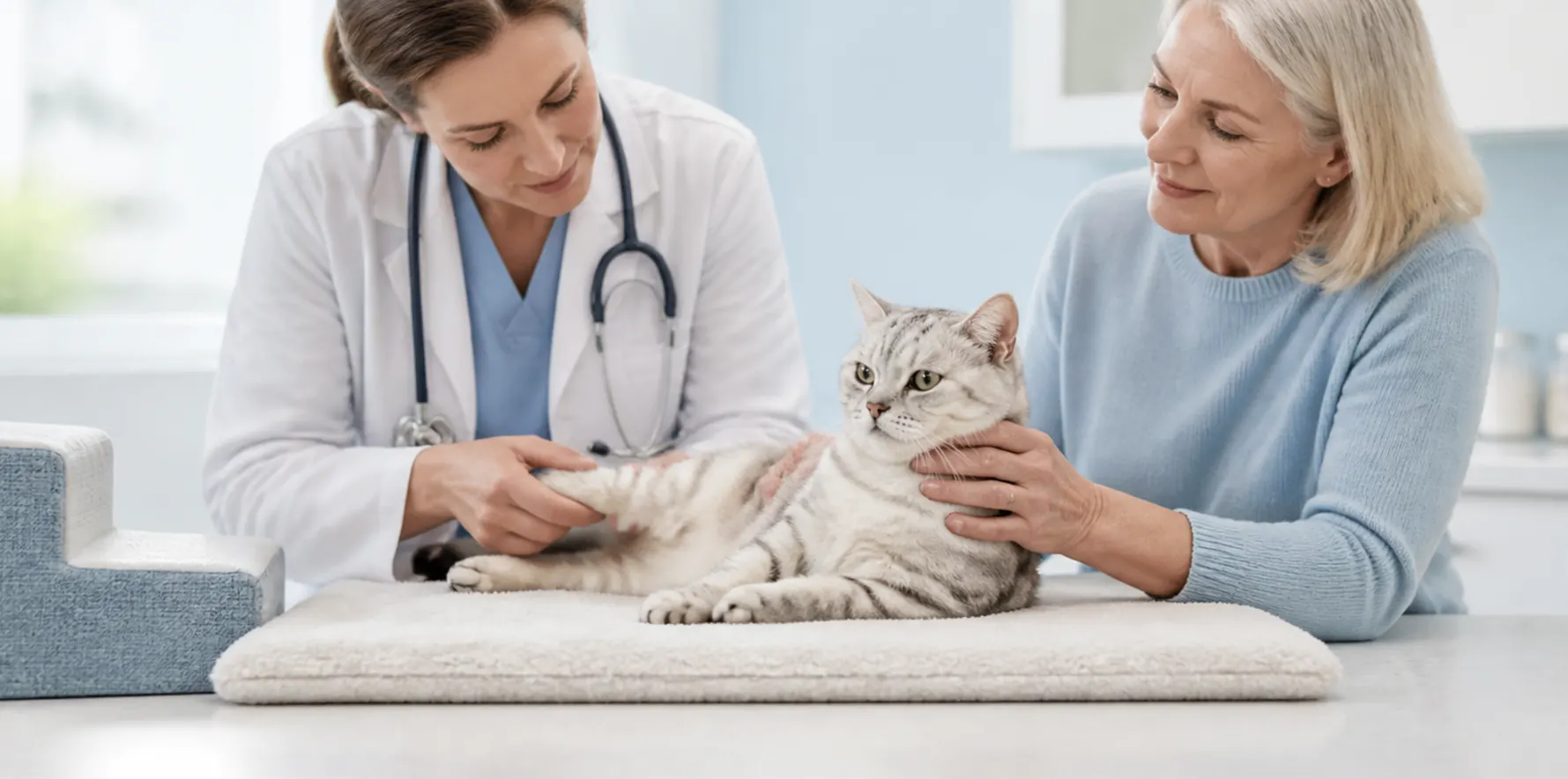
Cats become seniors around age ten, and the diseases of feline old age — chronic kidney disease, hyperthyroidism, diabetes, high blood pressure, and arthritis — all share a crucial trait: they're far more manageable when caught early.
For senior cats we recommend exams every six months with annual or semi-annual lab work and blood pressure checks. Subtle changes owners often chalk up to 'just getting old' — drinking more, sleeping in new places, hesitating before jumps — are frequently treatable medical conditions.
Senior wellness includes
- Twice-yearly comprehensive exams
- Kidney and thyroid screening
- Blood pressure measurement
- Arthritis assessment and pain management
- Weight and muscle condition tracking
- Comfort-focused home adjustments
Old age is not a disease. With attentive care, senior cats routinely enjoy comfortable, engaged lives well into their late teens.
What to expect
Senior visits are more thorough and more frequent: twice-yearly exams with weight and muscle tracking, annual-or-better lab work and blood pressure, arthritis screening, and honest conversations about comfort at home. The goal is catching each age-related disease in its cheap, treatable phase.
Cat Senior Care guides & handouts
Take-home guides from our resource library related to this service.
Frequently asked questions
My older cat is drinking a lot of water. Is that just age?
No — increased thirst is one of the most important symptoms in senior cats, pointing to kidney disease, diabetes, or hyperthyroidism. All three are manageable, and all three reward early detection. Book an exam and lab work promptly.
Do cats get arthritis?
Overwhelmingly yes — studies find arthritis in most cats over 12 — but they don't limp; they hesitate before jumps, sleep in lower places, and groom less. Effective, cat-safe pain management exists and routinely gives seniors a visible new lease on life.
How can I make my home easier for my senior cat?
Low-entry litter boxes on every floor, steps or ramps to favorite perches, night lights, raised food bowls, and warm soft bedding away from drafts. Small changes, outsized comfort — we'll tailor suggestions to your cat's specific stiff spots.
How do my cat's nutritional needs change as they age?
Like dogs, cats have a decreased ability to absorb proteins. We want to ensure they're high-quality protein. We like older cats to eat canned food, so if they haven't been doing that, we'd love to encourage you to get the older cats on canned food and a high-quality protein source. Remember, cats are carnivores, which means they are meat-eaters. So there are other things besides meat in their food sometimes, but, for the most part, we want them on a high-quality, well-balanced diet for a cat.
What are some signs and symptoms that my cat may be slowing down?
How are things changing in your cat's daily life? If they always jump up on the sofa and they're not jumping up anymore, they probably have back pain, and so we'd like to have a look at that. Cats will suffer in silence in many ways until they're ill or in extreme pain. So having us examine them once a year is quite helpful. Lab work is so beneficial with cats, and often x-rays get us a good baseline of where your cat is, and then we have a thorough discussion with you on what a day in their life is like and how we can make that optimal for them.
What are some health complications or diseases that are commonly experienced by seniors?
Senior cats have a particular subset of concerns. Oral health is undoubtedly a concern, as all cats will have dental needs as they age, so if we can keep up on those and not wait until their oral health is terrible as they age, that's ideal. Kidney disease is relatively common in cats, so again, we like canned food for older cats. We also see things like diabetes and liver diseases, especially in cats that are overweight. There should be some changes musculoskeletal-wise. As far as their spines, we start to see some arthritis and such in senior cats, and we would like to know about those so we can help advise you on the best way to keep their quality of life as good as possible.
What kinds of preventative care can help extend the life and health of my cat?
With all pets, keeping their weight down is essential. So keeping an eye on their weight is vital for cats because fat is super inflammatory, so we want to keep them thin, or at least not fat. So I always tell clients, "I'm okay if they're a little bit pudgy, but this fat is terrible for them." So keeping them thin and keeping their mouth healthy is so important. And then you want to keep up on if anything is starting to occur with the kidney or liver because there are so many supplements, there are things we can do to help with if they have infections, and certainly, if they have heart disease, there are things we can do for that as well. So we want to stay up on those things and know what your cat's dealing with so we can treat them as effectively as possible.
Why are wellness exams and regular checkups important for senior cats?
Because there are many things that we're going to find that you may not be aware of, and because of things as simple as flea control, clients often don't know that their cat has fleas, and fleas on an older cat are terrible. So that's an aside, but us having a look in their mouth and getting a good thorough oral exam, palpating them to make sure there are no tumors on them that you may or may not have noticed, listening to their chest to see if they have any heart disease, and getting lab work from a cat are all critical to assess where they are and what can we do to, again, ensure their quality of life is great.
What tests might a senior cat need?
Lab work once a year on a senior cat is essential. We do a full blood panel and urine analysis. Urine tells us so much about the cat's metabolic situation, and the blood certainly does as well. Many cats will develop kidney disease, but also hyperthyroidism is common. That's the thyroid gland with the throat, and they'll get tiny benign tumors on them and secrete excessive amounts of thyroid, which can make them uncomfortable. It can cause heart disease and vomiting, and many other things that are very treatable. My own cat has it, and I treated her, and she's back to normal, and it's great. So there are many things that we're going to find on lab work and in physical exams, and also with the history that you're going to share with us, and we put all that together to ensure your cat's well taken care of.
What is the most important thing to know about caring for a senior cat?
The most important things to know are to keep them inside, get annual exams, make sure they're on good canned food diets, and then partner with us to ensure their quality of life is as good as possible.
When is my cat considered a senior cat?
Any time after the cat is 10 they are considered a senior. Some cats age a little earlier between 8 and 10, but for sure, anytime after 10, a cat is considered senior.
Does my senior cat still need vaccinations?
Every cat's a little bit different. When some cats get quite a bit older, and they're just indoors, we're going to reduce the number of vaccines they need. If a cat is still out catting around and being outside all the time, then they still need to be vaccinated. Certainly, rabies is always critical for everybody to stay up on. I have two senior cats, and I had a bat fly into my son's room one night. We had a door open, and bats carry rabies. So thankfully my cats were vaccinated for rabies, but that's scary. So we want everybody to keep up on rabies vaccines, but it depends on their lifestyle and what they're exposed to.
Should I encourage my senior cat to exercise?
Yeah, for sure. We want to always enrich a cat's life. We don't want to start something new when they're older, but there are many ways of enriching your cat's life. We can share a significant amount of information to enhance your cat's life and make sure they're entertained. Every cat's a little different. Some are couch potatoes, and some are curious until they're 15 years old. So it really depends on the cat.
Ready to schedule?
Request an appointment at our Glendale clinic or call our team — we serve pets and their people across the surrounding communities.