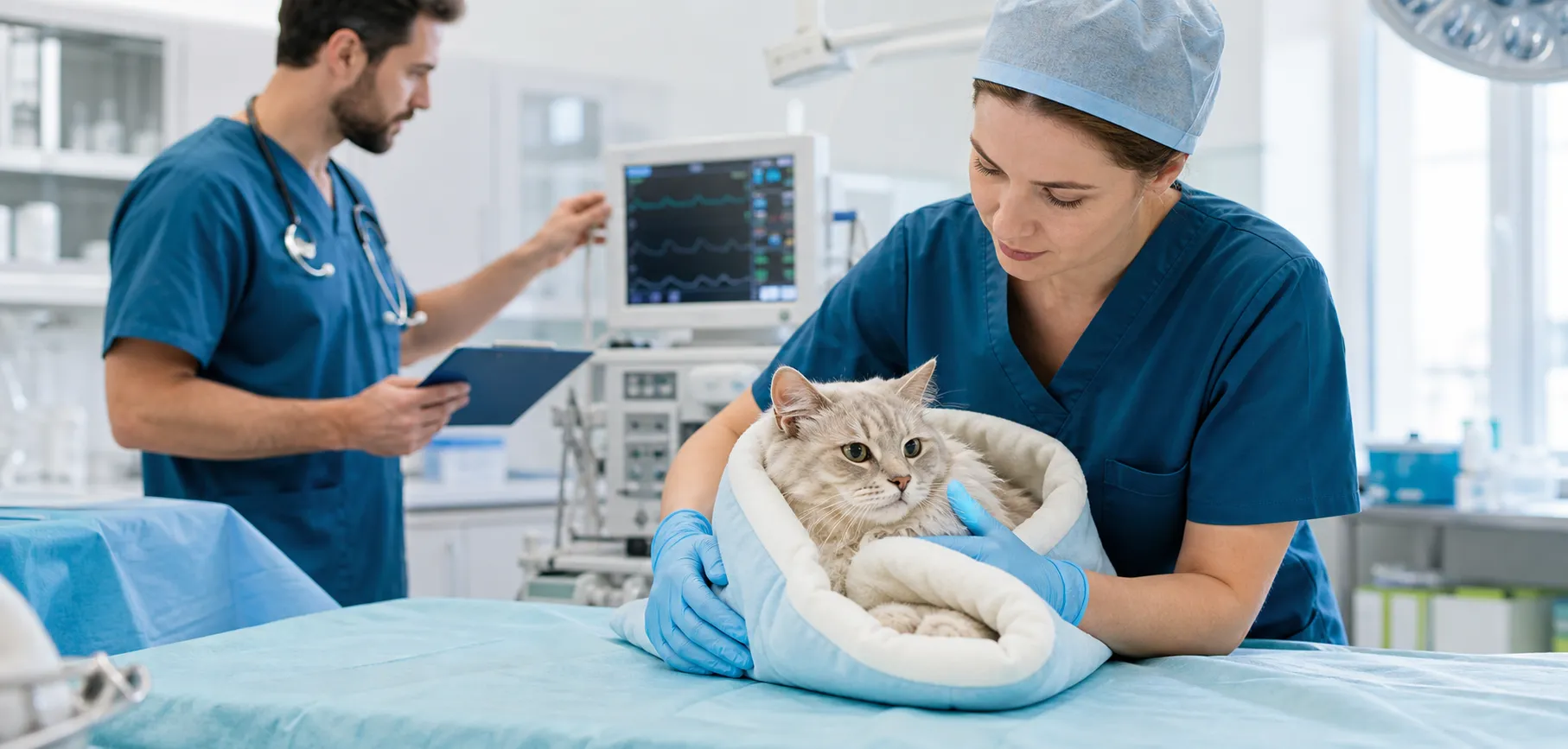
Cats are not small dogs — they metabolize drugs differently and hide illness well, which makes tailored anesthesia essential for their safety. Every anesthetic plan we build starts with your cat's age, health history, and pre-anesthetic bloodwork.
Throughout every procedure, a dedicated team member monitors heart rate, rhythm, blood pressure, oxygenation, and body temperature, and your cat recovers in a quiet, warm space away from barking dogs. We use multi-modal pain management so cats wake up comfortable, not just awake.
Safety measures for every feline patient
- Pre-anesthetic exam and blood testing
- Individualized drug protocols by age and health status
- IV catheter and fluid support
- Continuous monitoring of vital signs
- Warmed, low-stress recovery area
- Proactive pain management before, during, and after
What to expect
Before any anesthetic procedure your cat gets a physical exam and pre-anesthetic bloodwork, and we build a drug protocol around age, health, and temperament. During the procedure a dedicated team member continuously monitors heart rate, blood pressure, oxygen, and temperature; afterward your cat recovers in a warmed, quiet space away from dogs, with pain control on board before they wake.
Cat Anesthesia guides & handouts
Take-home guides from our resource library related to this service.
Frequently asked questions
Is anesthesia safe for my senior cat?
Age alone is not a disease — with pre-anesthetic bloodwork, tailored drug choices, IV fluid support, and vigilant monitoring, senior cats routinely do well under anesthesia. The riskier path is often avoiding needed dental work or mass removal because of age worries.
Why does my cat need bloodwork before anesthesia?
Kidney and liver function determine how anesthetic drugs are processed, and cats hide organ disease well. Bloodwork lets us adjust the protocol — or postpone and treat a problem first — before it can complicate anesthesia rather than after.
Why can't my cat eat before anesthesia?
An empty stomach prevents vomiting and aspiration during anesthesia, which is a serious complication. We'll give exact fasting instructions for your cat's procedure — typically withholding food overnight while allowing water — and kittens get shorter, special instructions.
Why Would Your Cat Need Anesthesia
Anesthesia is used for any type of surgery where the cat needs to be immobilized or during any type of procedure where the cat would otherwise feel pain. Sedation allows us to keep your cat perfectly still and pain free during the surgery. During anesthesia, your cat will be in an unconscious state and will not feel any discomfort.
What To Expect The Day Your Cat Receives Veterinary Anesthesia
You will receive a specific set of instructions from your veterinarian before your cat receives anesthesia or undergoes any surgical procedure. We will discuss with you any risks of veterinary anesthesia. Here are some things to keep in mind as you arrive with your cat for the surgery: Fasting is necessary the night before any sedation is administered Follow any specific directions given to you by your veterinarian Depending on the type of procedure and your cat’s condition, our veterinarian may recommend additional prescription pain medications while your cat recovers Ask any questions you may have and our veterinary staff will provide answers and help to ease your mind before or after the surgery is performed
Monitoring Anesthetized Cats
The veterinary surgical team will monitor your cat very carefully while surgery is performed and throughout the time that they are under the influence of anesthesia. When your cat is under anesthesia, our veterinary staff will: Monitor your cat’s heart rate, body temperature, blood pressure, oxygen levels, and carbon dioxide output levels Keep an IV catheter in place to provide fluid support should there be any fluctuations in blood pressure Make sure your cat is breathing well and resting comfortably _\*The risks of cat anesthesia are very low with proper monitoring._
What To Expect As Cats Come Out Of Anesthesia
The veterinary team at Angelus Pet Hospital will continue to monitor your cat’s vital signs, heart rate, and blood pressure as they come out of surgery, awaken from any sedatives used, and until your cat is ready to return home. Your cat may feel sedated for a period of time after it goes home. Our staff will talk to you about your cat’s pain management plan. Your cat may need pain medication for several days and you will receive specific instructions before your cat is released. If you should have any questions or concerns, please call Angelus Pet Hospital right away. Some cats may not regain their appetite until the next day. Always follow all instructions given to you by your veterinary team to ensure your cat’s full recovery.
Ready to schedule?
Request an appointment at our Glendale clinic or call our team — we serve pets and their people across the surrounding communities.