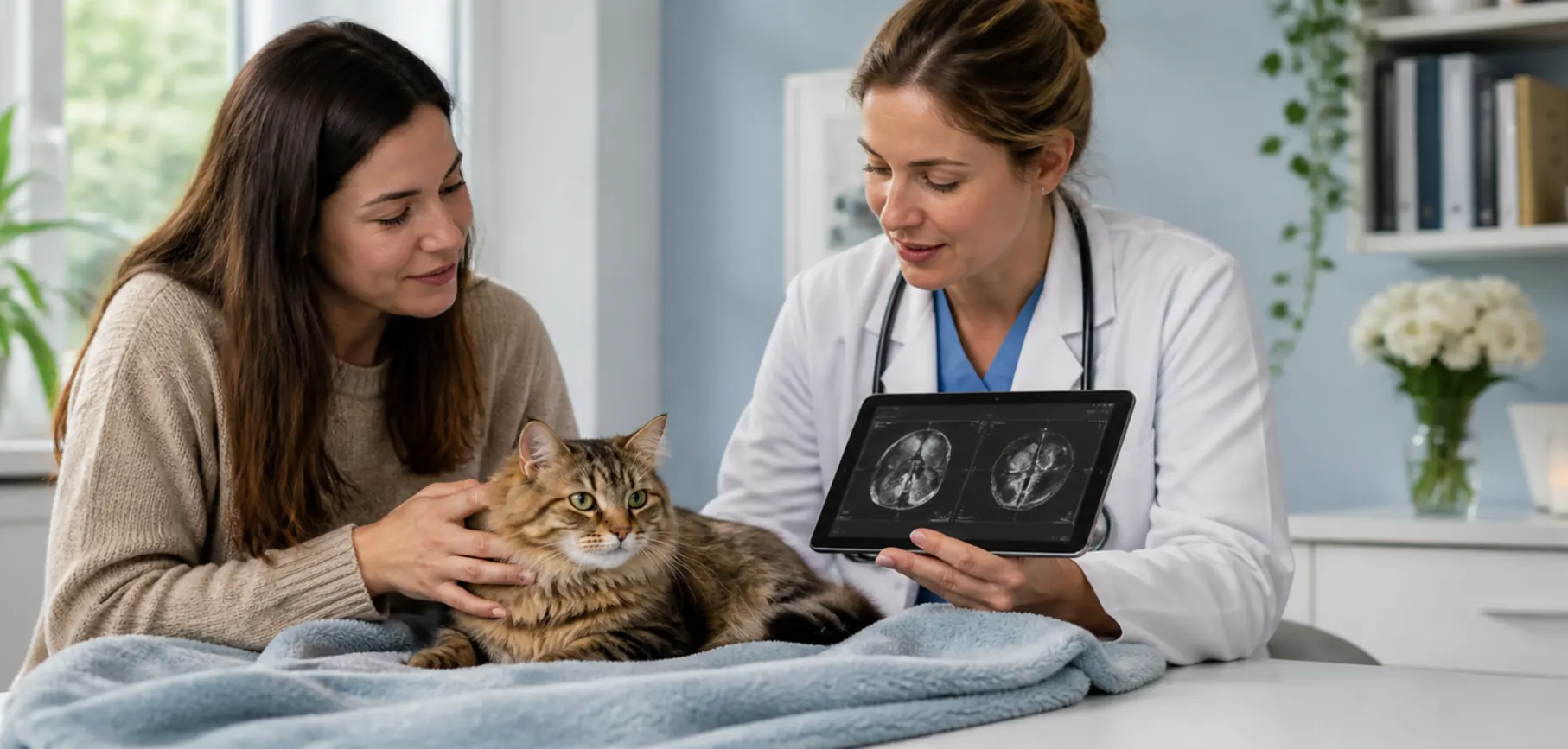
A cancer diagnosis is frightening, but many feline cancers can be treated — and some cured — when caught early. Lumps, unexplained weight loss, mouth odor, or changes in appetite all warrant a prompt exam.
Our team performs the initial workup — fine needle aspirates, biopsies, lab work, and imaging — to identify and stage the disease. From there we discuss every reasonable option honestly, from surgery and referral for chemotherapy or radiation to palliative care focused purely on comfort. Whatever path you choose, your cat's quality of life guides every decision.
Oncology support includes
- Lump and mass evaluation
- Biopsy and cytology
- Staging with lab work and imaging
- Surgical removal of accessible tumors
- Referral coordination with veterinary oncologists
- Palliative and hospice care planning
What to expect
The first visit focuses on answers: examining the mass or symptoms, sampling cells (often a same-visit needle aspirate), and mapping out staging tests. When results are in, we sit down and go through every reasonable path — surgery here, oncology referral, or comfort-focused care — with honest expectations and costs for each, and your cat's quality of life as the deciding vote.
Cat Cancer Care guides & handouts
Take-home guides from our resource library related to this service.
Frequently asked questions
What are common signs of cancer in cats?
New lumps, unexplained weight loss, appetite changes, mouth odor or drooling, non-healing sores, and vomiting or diarrhea that persists. Because cats mask illness, subtle changes — sleeping more, grooming less — justify an exam rather than waiting.
Is chemotherapy cruel to put a cat through?
Veterinary chemotherapy is dosed for quality of life, not maximum attack — most cats have mild or no side effects, and vomiting or severe illness is the exception, not the rule. If a treatment ever costs more comfort than it buys, we change the plan.
What if I choose not to treat the cancer?
That is a legitimate, loving choice, and we'll support it fully with palliative care: pain control, appetite support, and regular quality-of-life check-ins. Comfort care done well can give cats genuinely good months.
What is cat cancer?
Cat cancer is similar to human cancer in that it's a cell type that has kind of gone crazy and multiplying and causing a problem in your pet.
What are some of the most common types of cat cancer, and what are their symptoms?
Lymphoma is probably one of the more common cat cancers that we see; it's intestinal lymphoma in cats. They can have it in other places, but it's generally intestinal. Skin cancers or squamous cell carcinoma, which are usually from the sun, are cancers that we’ll see on their face, their ears, anywhere in their throats, or on their tongues. We see bone cancer, lung cancer, and occasionally mast cell disease, which can be in the skin or even the spleen. So there are quite a few cancers, but those are some of the most common ones that we see in cats.
Why is early detection and diagnosis of cancer in cats so important?
Early detection is always helpful. I think we all know in humans why it's crucial, as it's better to find a small tumor than it is to find a large tumor. The same goes for cats, so during an oral exam, I might find a tiny bump on your cat's tongue or somewhere on the roof of their mouth or something, and that may be a very early sign of cancer. I'd much rather find it that way than have it show up a year later, and now they're drooling, and they have a huge mass on their tongue, and our options are more limited. If your cat's vomiting and they have lymphoma, we can actually put some kitties in remission and even sometimes cure it. So it really does help if we can catch things earlier. So the annual exam is super important (twice a year for older cats), and certainly, if you see anything out of the ordinary, bring your cat in for an exam.
Why is it so important to avoid self-diagnosing cancer in your cat?
Well, I always tell people, I can't look at a tumor and tell you what type it is, so I certainly don't think owners can do that. So if you're self-diagnosing that way, by looking at something and saying whether you think it's benign or not benign, you're unable to do that, because I'm not able to do that, either. We have to get a diagnosis, requiring x-rays, biopsies, lab work, and sometimes abdominal ultrasounds. Getting a diagnosis is the first step in our ability to cure it. It's certainly going to help with the quality of life.
What happens after my cat is diagnosed with cancer?
It depends on the type of cancer your cat has. Let's say it's a squamous cell carcinoma of the nose or the ear. Then we're probably going to proceed with surgery, and sometimes, depending on the depth of it or its severity, we may even consider some radiation. We may or may not do surgery with intestinal cancer, which we most likely diagnose based on weight loss, vomiting, or diarrhea. We may just go straight to some chemotherapy, and chemotherapy in cats and dogs is a little different from humans. We use a lot of the same drugs. Many of these drugs are well-tolerated. Some are not as well-tolerated. And some are oral medications that you give at home, so don't be afraid of the word chemotherapy. It just means using chemical agents to attack the cancer cells. It can be in the form of IVs, but it can also be in the form of oral medications at home.
Have there been advancements in the treatment of cat cancer?
Yeah, for sure. I think we learn more about cancer all the time, and in my career, which has been a pretty lengthy one so far, I've learned a lot more about cancers and how to treat them. We have more and more tools at our disposal to use. Chemotherapy is continuously being studied to know what's the best way to go. Surgery options change depending on when we do studies, and we realize what is a better way to go, whether surgery first versus chemotherapy, and so things do change all the time.
What is the cure rate of cats with cancer?
The cure rate for cat cancer varies tremendously with the type of cancer and the stage that we find it in. Just like with people, if we catch something super early, the outcome is generally better. You may have a melanoma on your skin, and if we catch it early and get it off, that may be the end of it. You may have a melanoma in your skin that sits there for five years, and it's already metastasized to the lungs, so it does depend on the time when we catch it, but really, there are many cancers that we can completely cure in cats. Make sure to have an annual cat wellness exam, and get in early if you find a funny lump or bump on your cat.
How does a veterinarian know what kind of cancer my cat has?
The way we diagnose cancer depends on where it starts or what the symptoms are. If your cat came to see me and they were vomiting a bunch, I may start with an abdominal ultrasound and some lab work, and likely some x-rays. Those would be the three things that would start, and I may get a diagnosis just from that, or I may have to do a biopsy in addition. It depends on the type of cancer. I may find something on your cat's skin. I may stick a tiny needle in it and get some cells and determine what the cancer type is from that. Again, it depends on the type and location as to how we're going to collect information and get a diagnosis.
Is a cat cancer diagnosis a death sentence?
Definitely not. I have had many cats that we've cured of cancer and have gone on to live a quality life. Quality of life is hugely important in pets. We're not trying to extend the life of a cat that's going to be suffering. Quality of life's vital to this discussion. That, and, if we can get a good quality of life and extend it, that's just great if we can do both those things.
Ready to schedule?
Request an appointment at our Glendale clinic or call our team — we serve pets and their people across the surrounding communities.