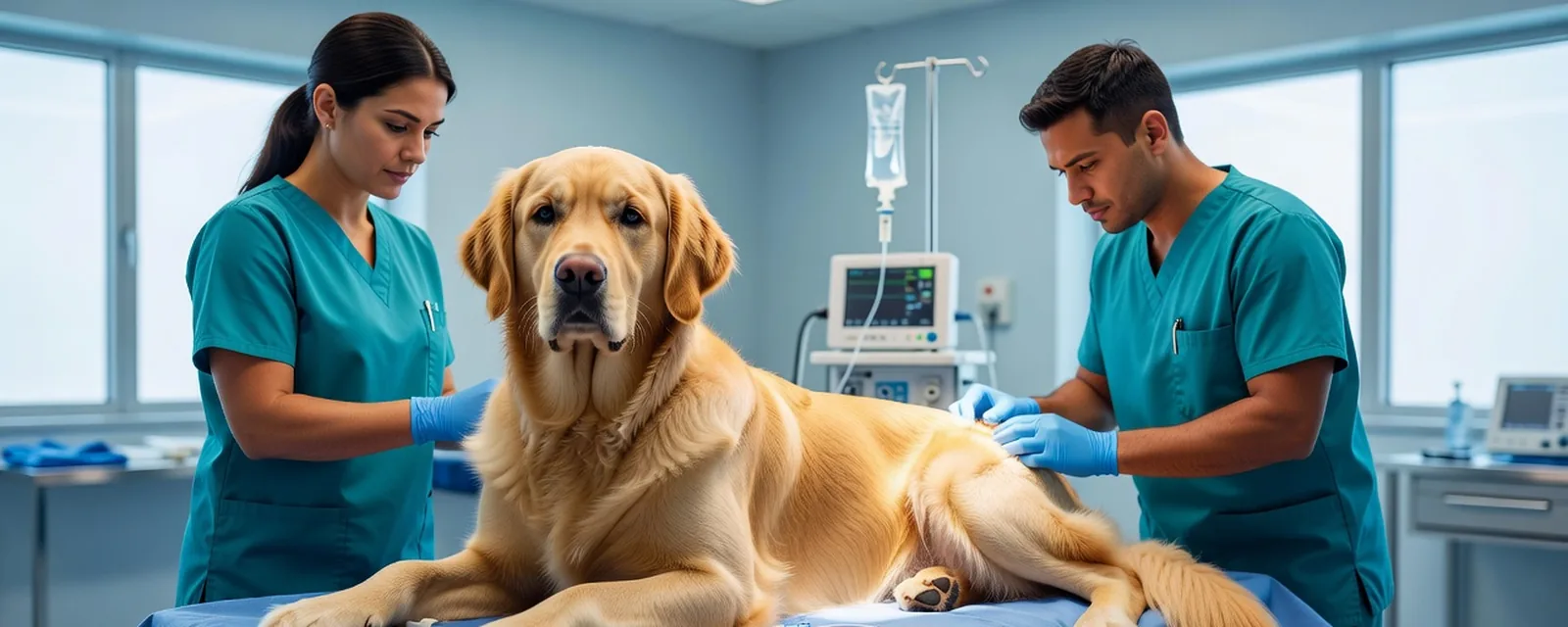
A torn cranial cruciate ligament (CCL) — the canine equivalent of an ACL tear in people — is the most common orthopedic injury we see in dogs. TPLO (tibial plateau leveling osteotomy) is the modern standard for repairing it: instead of trying to replace the torn ligament, it changes the geometry of the knee so the joint is stable without one.
We perform TPLO surgery in-house at our Glendale hospital, which means the veterinarians who diagnose your dog's knee are the same team that operates, takes the recheck X-rays, and walks you through every week of recovery — no referral hospital handoffs.
Our TPLO service includes
- Sedated orthopedic exam and digital knee X-rays
- TPLO performed in our in-house surgical suite
- Pre-anesthetic bloodwork and dedicated anesthesia monitoring
- Pain management before, during, and after surgery
- Recheck X-rays to confirm bone healing
- Week-by-week recovery plan and direct team access
What to expect
A surgical consultation with a sedated knee exam and X-rays, a clear recommendation and estimate, then surgery day: morning drop-off, TPLO with dedicated anesthetic monitoring, and typically an overnight stay or same-evening discharge with a week-by-week recovery plan and recheck X-rays around week eight.
TPLO Surgery for Dogs guides & handouts
Take-home guides from our resource library related to this service.
Dog ACL & CCL Tears: A Complete Guide to TPLO Surgery
The cranial cruciate ligament (CCL) stabilizes a dog's knee (stifle) the same way the ACL stabilizes a human knee. When it frays or tears, the shin bone slides forward with every step, causing pain, inflammation, and — if left untreated — progressive arthritis and damage to the meniscus cartilage.
Unlike people, dogs usually don't tear the ligament in one dramatic injury. In most dogs the CCL degenerates slowly and then fails, which is why a dog can go from occasional stiffness to suddenly refusing to bear weight after nothing more than a jump off the couch.
Signs Your Dog May Have a Torn CCL
CCL injuries can look different depending on whether the ligament is partially or completely torn. Common signs include:
- Sudden hind-leg limping, especially after exercise or play
- Sitting with one leg kicked out to the side instead of tucked
- Stiffness after rest that improves as your dog warms up
- Difficulty rising, jumping into the car, or climbing stairs
- Swelling or thickening on the inside of the knee
- Toe-touching or carrying the leg entirely
Because 40-60% of dogs that tear one CCL eventually tear the other, a dog who has had one knee repaired should be monitored closely for early signs in the opposite leg.
How a CCL Tear Is Diagnosed
Diagnosis starts with a hands-on orthopedic exam. Your veterinarian feels for two telltale signs of instability — cranial drawer motion and tibial thrust — often with light sedation so the muscles relax and the joint can be assessed accurately.
Digital X-rays confirm the picture: while ligaments themselves don't show on X-ray, we look for joint swelling, the position of the tibia, and early arthritis, and we rule out other causes of hind-limb lameness such as hip disease or bone lesions. X-rays also provide the precise measurements needed to plan the TPLO cut.
How TPLO Surgery Works
In a dog with a torn CCL, the sloped top of the tibia (the tibial plateau) lets the femur slide backward down the slope every time weight is applied. TPLO eliminates that slide rather than replacing the ligament:
- A curved cut is made in the top of the tibia
- The plateau segment is rotated to level out its slope
- A bone plate and screws hold the new position while it heals
- The joint is inspected and damaged meniscus, if present, is treated
The result is a knee that is mechanically stable the moment your dog stands on it, which is why TPLO patients typically start touching the toe down within days of surgery.
Recovery and Aftercare
Recovery is an eight-to-twelve-week process, and following the plan matters as much as the surgery itself:
- Weeks 1-2: strict rest, incision care, and pain medication; short leash walks for bathroom breaks only
- Weeks 3-6: gradually longer controlled leash walks; no running, jumping, or stairs
- Around week 8: recheck X-rays to confirm the bone has healed
- Weeks 8-12: progressive return to normal activity once healing is confirmed
Most dogs are using the leg well within a few weeks, which is exactly when owners have to be most disciplined — the bone still needs time to heal under that plate.
Expected Outcomes
TPLO has one of the best track records in veterinary orthopedics: the large majority of dogs return to full, comfortable, athletic function, and studies consistently show better long-term limb use compared to non-surgical management in medium and large dogs. Arthritis that has already started doesn't disappear, but stabilizing the knee dramatically slows its progression.
Without surgery, an unstable knee grinds cartilage and typically develops significant arthritis within months — which is why we generally recommend repair for most dogs beyond the smallest, lowest-activity patients.
Why Choose Angelus Pet Hospital for TPLO Surgery
TPLO is often treated as a referral-only procedure that sends Glendale-area families to a specialty hospital across town with a separate doctor and a separate bill structure. We keep it under one roof: diagnosis, surgery, anesthesia, recheck imaging, and every recovery question handled by the team that already knows your dog.
- TPLO performed in-house — no referral hospital required
- Pre-anesthetic bloodwork and an individualized anesthetic plan for every patient
- A dedicated team member monitoring anesthesia from induction through recovery
- Digital X-rays on-site for planning and healing rechecks
- Transparent estimates and financing options for larger procedures
Frequently asked questions
Does my dog really need surgery for a torn ACL?
For most dogs over about 25-30 pounds, yes — the knee stays unstable without it, and arthritis progresses quickly. Very small, low-activity dogs occasionally do acceptably with strict rest and rehab. We'll examine your dog, show you the X-rays, and give you an honest recommendation either way.
How much does TPLO surgery cost?
TPLO is one of the larger investments in veterinary surgery, though performing it in-house typically costs meaningfully less than a specialty referral hospital. We provide a written estimate covering surgery, anesthesia, hospitalization, medication, and recheck X-rays before you commit, and financing options are available.
Can my dog wait a few weeks for surgery?
A short, rested wait is usually fine and sometimes unavoidable — but months of instability damage the meniscus and accelerate arthritis. If the knee is diagnosed, scheduling sooner protects the joint you're paying to save.
Will my dog tear the other ACL too?
Unfortunately it's common — roughly half of dogs eventually injure the opposite knee, because the same ligament degeneration affects both sides. Keeping your dog lean is the best prevention, and we'll check both knees at every recheck.
Ready to schedule?
Request an appointment at our Glendale clinic or call our team — we serve pets and their people across the surrounding communities.
Need help with the cost? Explore financing options