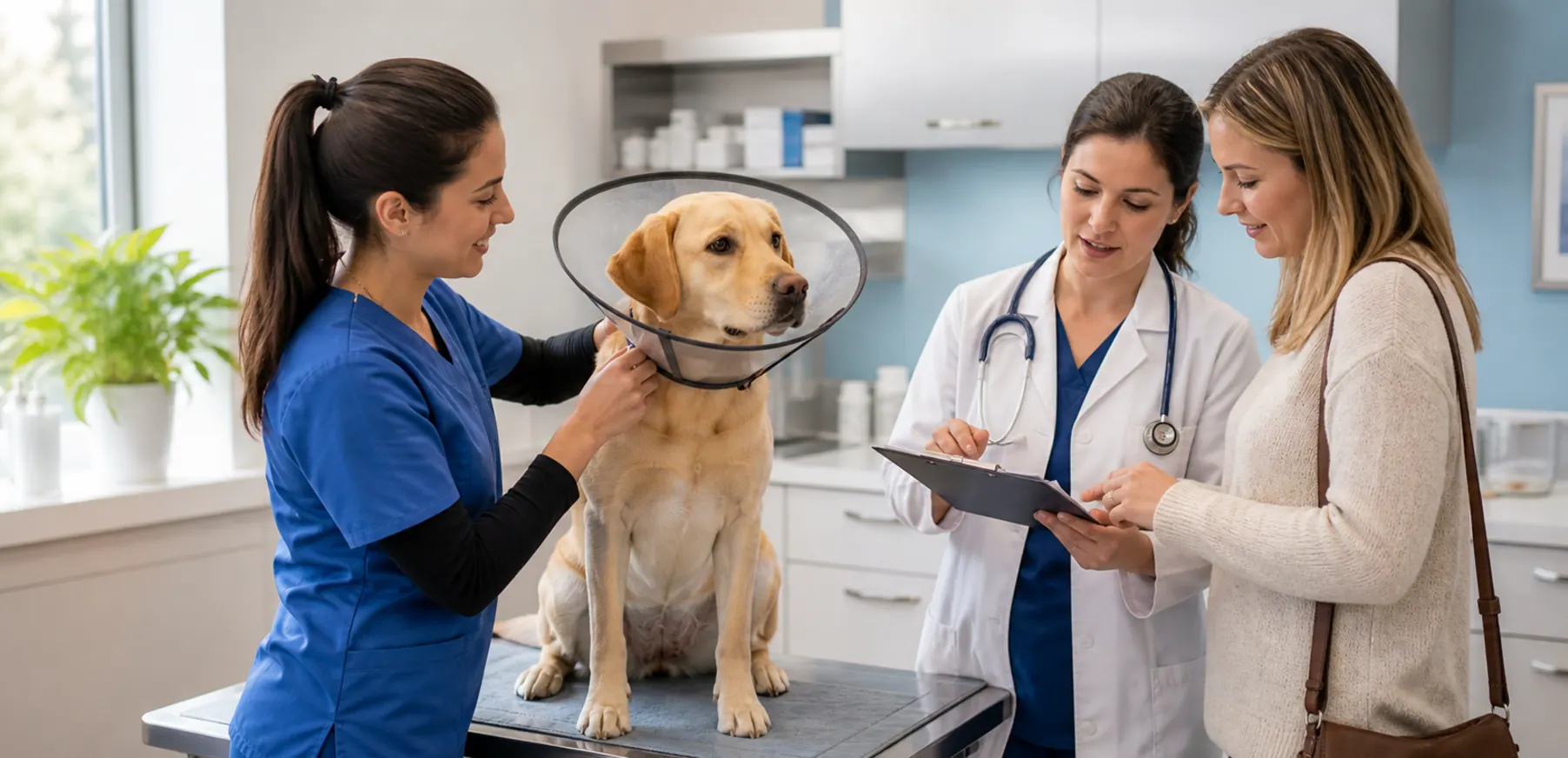
Spaying and neutering prevent unwanted litters and meaningfully reduce disease risk — spaying before the first heat nearly eliminates mammary cancer risk and prevents life-threatening uterine infection (pyometra), while neutering prevents testicular cancer and reduces roaming and marking.
Timing matters, and it isn't the same for every dog: for large breeds, waiting until skeletal maturity may benefit joint health. We'll give you an evidence-based recommendation for your dog's breed and size. Every procedure includes pre-anesthetic bloodwork, dedicated monitoring, and multi-modal pain control.
What's included
- Breed-specific timing consultation
- Pre-anesthetic exam and bloodwork
- Continuous anesthetic monitoring
- Pain medication before, during, and after
- Recovery instructions and follow-up support
What to expect
A day procedure: morning drop-off with exam and bloodwork review, surgery with dedicated anesthetic monitoring and pain control that starts before the incision, and same-evening discharge with written aftercare. Recovery is typically 10-14 days of restricted activity and incision protection.
Related procedure guides
Spaying and Neutering Your Dog: Timing, the Procedure, and Recovery
Spaying (removing the ovaries and uterus of a female) and neutering (removing the testicles of a male) are the most common surgeries in veterinary medicine — and among the most consequential for long-term health. Done at the right time for the individual dog, they prevent several serious diseases outright.
Health Benefits Beyond Preventing Litters
- Spaying before the first heat nearly eliminates mammary (breast) cancer risk
- Spaying entirely prevents pyometra — a life-threatening uterine infection that affects roughly a quarter of unspayed females by age ten
- Neutering prevents testicular cancer and most prostate enlargement
- Hormone-driven behaviors — roaming, marking, some aggression — typically fade
Why Timing Depends on Breed and Size
The old one-size-fits-all "six months" rule has given way to better evidence. Small breeds mature early and generally do well spayed or neutered around six months. For many large and giant breeds, waiting until skeletal maturity — often 12 to 18 months — appears to benefit joint development and may lower the risk of certain orthopedic injuries.
There's no single right answer for every dog, which is exactly why we give a breed- and size-specific recommendation rather than a calendar default.
What Happens on Surgery Day
- Morning drop-off after an overnight fast
- Pre-anesthetic exam and bloodwork review
- Pain medication on board before the procedure begins
- Anesthesia monitored continuously by a dedicated team member
- The spay or neuter itself — typically under an hour
- Warm, monitored recovery and same-evening discharge for most dogs
Recovery at Home
Plan on 10 to 14 days of taking it easy: leash-only walks, no swimming or baths, and a cone or recovery suit so the incision can't be licked. Most dogs feel normal within a couple of days — keeping a good-feeling dog quiet is honestly the hardest part of the whole process.
Watch the incision daily. Mild bruising early on is normal; discharge, spreading redness, swelling, or a gap in the incision means call us.
Common Concerns, Answered Honestly
- Personality doesn't change — hormone-driven behaviors fade, the dog you love stays
- Metabolism dips slightly afterward; we'll adjust food portions so weight stays healthy
- Modern anesthesia with screening and monitoring makes routine sterilization very low-risk
- An adult or senior dog can still be safely spayed or neutered — the benefits don't expire
Frequently asked questions
When is the right age to spay or neuter my dog?
It depends on breed and size: small breeds generally do well around six months, while for many large and giant breeds, waiting until skeletal maturity (12-18 months) benefits joint health. We'll give you an evidence-based recommendation for your specific dog.
Will spaying or neutering change my dog's personality?
Core personality, no. What typically fades are hormone-driven behaviors — roaming, marking, some dog-directed aggression in males. Watch weight afterward: metabolism dips slightly, so we'll adjust portions at the recovery recheck.
What does recovery actually involve?
Ten to fourteen days of leash-only activity, no swimming or baths, and absolutely no licking the incision (cone or recovery suit). Most dogs feel normal within days — which is why the restriction discipline, not the healing, is the hard part.
Ready to schedule?
Request an appointment at our Glendale clinic or call our team — we serve pets and their people across the surrounding communities.