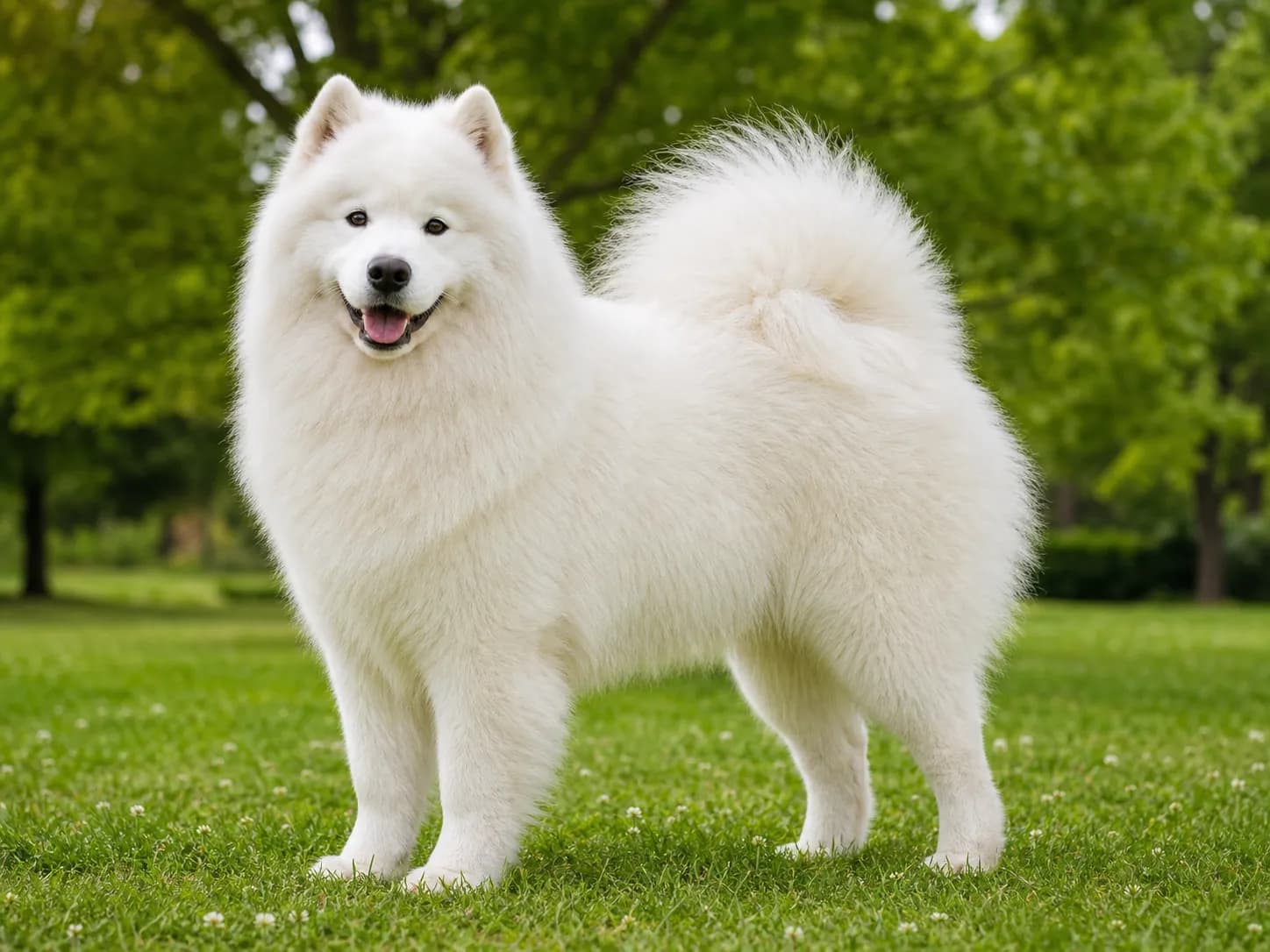
If you live with a Samoyed, you live with the famous smile — that upturned mouth (which, fun fact, evolved partly to keep drool from freezing into icicles) attached to seventy pounds of gleaming white enthusiasm. Sammies don't have owners. They have teams, and you're on it.
Care rhythm
What to keep on the calendar
- Coat
- Plan brushing, bathing, and grooming around this breed’s coat type and seasonal shedding.
- Movement
- Match exercise to age, conditioning, weather, and any orthopedic concerns.
- Veterinary flag
- Bring up breed-specific risks before procedures, diagnostics, or new medications.
The Best Bits of Samoyeds
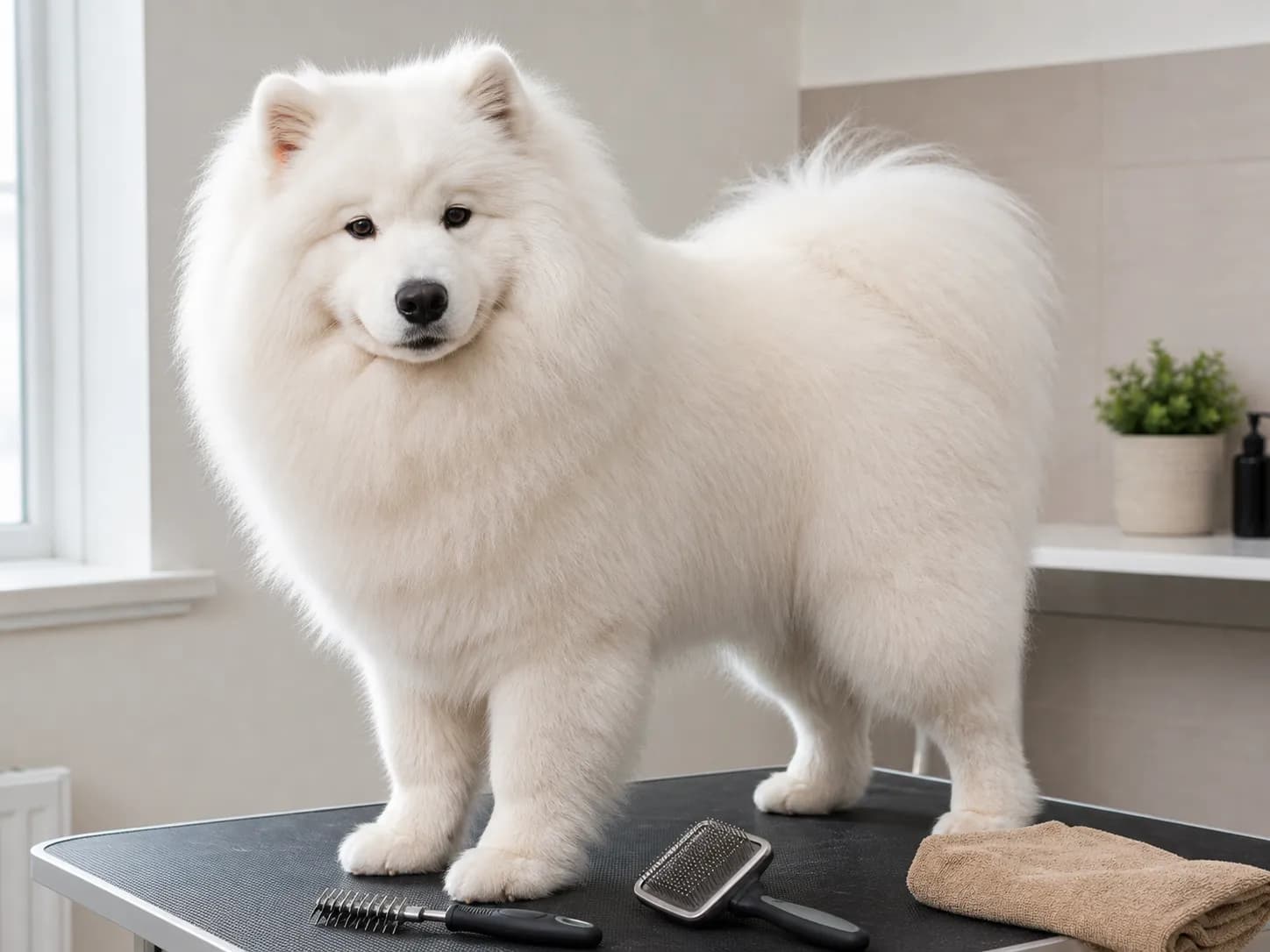
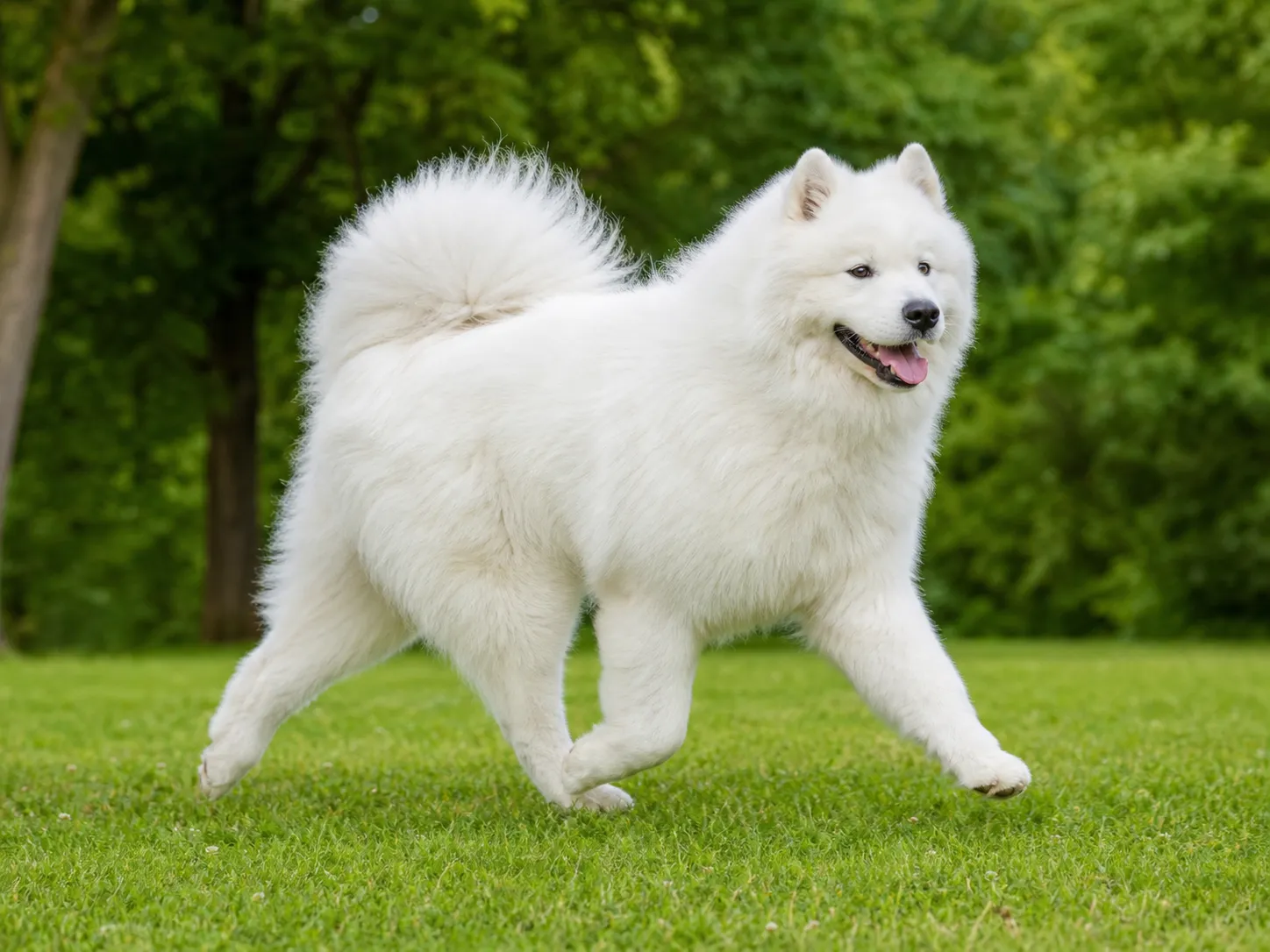
Samoyeds are genuinely people-loving dogs — bred for millennia to work beside and sleep against humans, they're gentle with children, sociable with strangers, and miserable when excluded from family life. They're intelligent, willing workers who thrive with jobs: hiking, pulling a cart or sled, obedience, or supervising every household activity at close range. And the coat — that dazzling, weatherproof double coat with its silver-tipped sparkle — is the breed's crown. It's also a part-time job: thorough brushing several times a week, daily during the twice-yearly coat blows that will redecorate your home in white.
The Quirks That Make Us Love Them More
Sammies talk. Woos, howls, grumbles, and full arguments — this is a vocal breed with opinions, and a bored or lonely Samoyed will share them with the entire neighborhood. They're also diggers (permafrost genetics), mischievous when under-employed, and world-class food negotiators whose smile has broken stronger diets than yours. Sunny Southern California note: this Arctic athlete overheats easily — summer exercise belongs in the early morning, and no, shaving the coat doesn't help (it ruins the insulation that actually protects them, and exposes pink skin to sunburn).
A Little History
The Samoyede people of Siberia bred these dogs for thousands of years to herd reindeer, pull sleds, and warm the family tent at night — which is why the breed is hardwired for human closeness. Polar explorers, including Amundsen's South Pole expedition, ran Samoyed teams, and nearly all modern Sammies descend from a small number of those imported working dogs.
Veterinary focus
Genetic predispositions and care notes
Genetic Predispositions for Samoyeds
The Samoyed is a sound working breed, but it carries a few well-documented genetic concerns — including one kidney disease that's specific enough to carry the breed's name.
The Name-Brand One: Samoyed Hereditary Glomerulopathy
This inherited kidney disease damages the filtering membranes of the kidneys. It's X-linked, which means affected males develop progressive kidney failure young — typically showing protein in the urine by a few months of age and serious disease by early adulthood — while carrier females usually show milder, slower disease. There's no cure, but early detection (a simple urine protein screen) allows kidney-protective diets and medications to slow the course. When acquiring a Samoyed puppy, ask breeders directly about this disease and their lines' kidney history; for the Sammy already on your sofa, routine urinalysis is cheap surveillance that earns its keep in this breed.
Diabetes Mellitus
Samoyeds top the breed risk lists for canine diabetes, typically appearing in middle age. The early signs are unmistakable in hindsight: drinking buckets, urinating more, losing weight despite a fine appetite. Diabetic dogs need insulin (unlike some cats, dogs essentially never reverse it), but well-regulated diabetic Sammies live full, happy lives. Keeping your dog lean is the best prevention available, and annual (then bi-annual senior) lab work catches it early — which makes regulation far easier.
Eyes: PRA, Cataracts, and Glaucoma
Progressive retinal atrophy — a slow, painless degeneration of the retina ending in blindness — runs in the breed, and a genetic test exists for the Samoyed form (one more question for breeders). Hereditary cataracts and glaucoma appear as well; glaucoma is the urgent one, announcing itself with a red, painful, cloudy eye that needs same-day care to save vision. Annual eye evaluation, with veterinary ophthalmologist referral when indicated, keeps watch.
The Frame: Hip Dysplasia
Standard working-breed issue, well documented in Sammies: malformed hips leading to early arthritis. Buy from hip-certified (OFA) parents, grow puppies slowly on large-breed puppy food, and keep adults lean. For dogs already stiff — hesitating at the car, bunny-hopping stairs, slowing on walks — weight loss plus modern pain management reliably restores real quality of life.
The Heart: Murmurs Worth Chasing
Samoyeds show elevated rates of certain congenital heart defects, including pulmonic stenosis and septal defects — which is why a murmur in a Samoyed puppy is never brushed off. Most are innocent; the exam, and an echocardiogram when warranted, tells us which. Adult-onset murmurs get the same respect at annual visits.
Hypothyroidism
Middle-aged Sammies are candidates for underactive thyroid: unexplained weight gain, coat deterioration (conspicuous in this breed), lethargy, and recurring skin trouble. Bloodwork diagnoses it; an inexpensive daily pill treats it, and the transformation back to sparkling is one of our favorite fixes.
The Basics: Weight, Teeth, Heat
Every concern above worsens with weight, and the Samoyed smile is a professional-grade treat-extraction tool — hold the line at measured meals. Dental disease advances quietly behind the smile; brushing plus professional cleanings as recommended. And respect the heat: shade, water, early-morning exercise, and never a shaved coat.
Screen the urine, guard the waistline, chase every puppy murmur, and brush like it's your religion. In exchange, the smiling sled dog gives you a decade-plus of woos, warmth, and wholehearted teamwork — exactly as advertised for the last five thousand years.
Questions about Samoyeds?
We can talk through preventive care, symptoms worth watching, and what is normal for your individual pet.
Contact our team