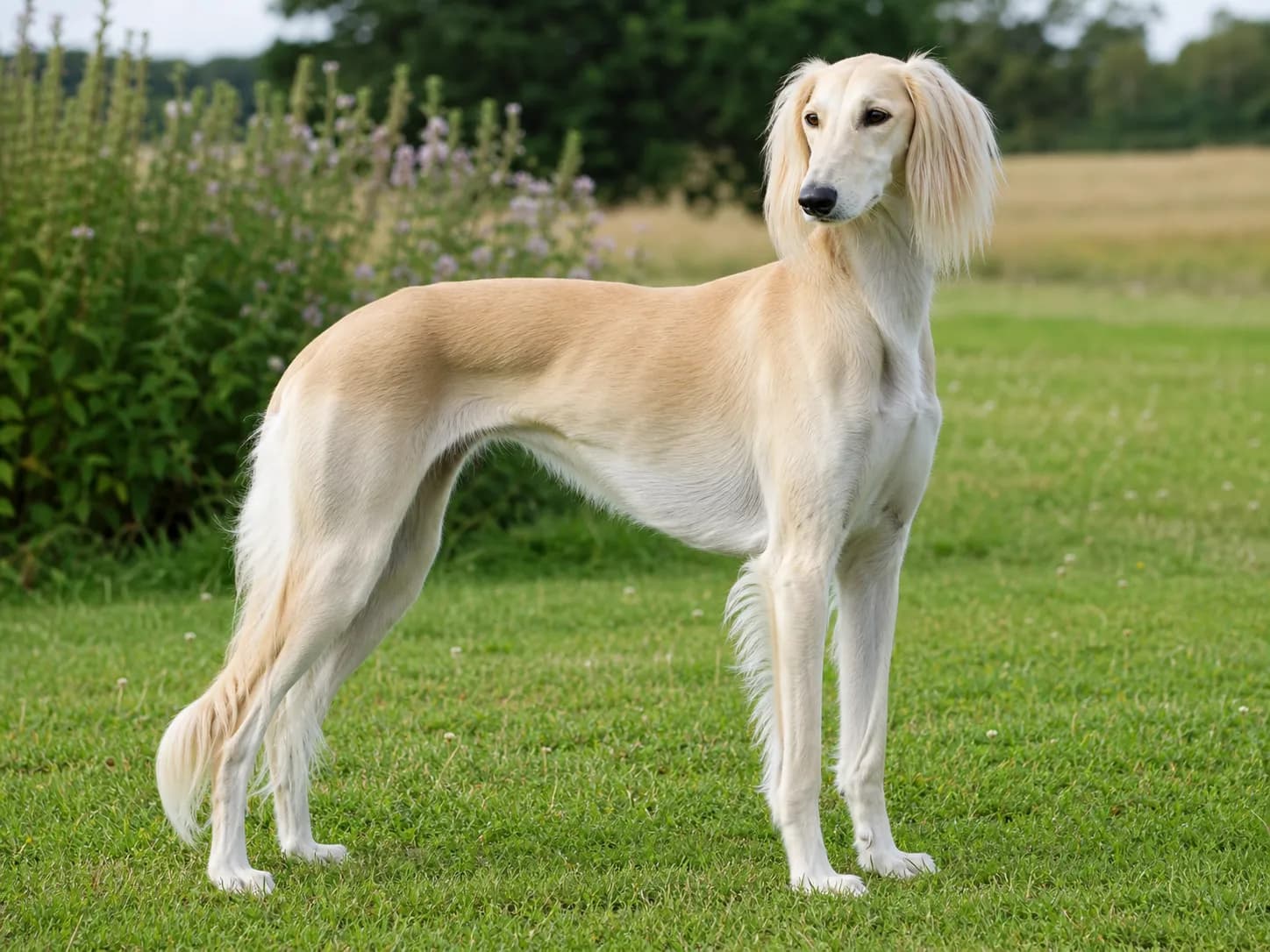
If a Saluki graces your home — and "graces" is the only verb that fits — you live with one of the oldest dog breeds on earth: a desert wind wearing silk ears, aloof as a cat, gentle as a lamb, and faster than nearly anything on four legs.
Care rhythm
What to keep on the calendar
- Coat
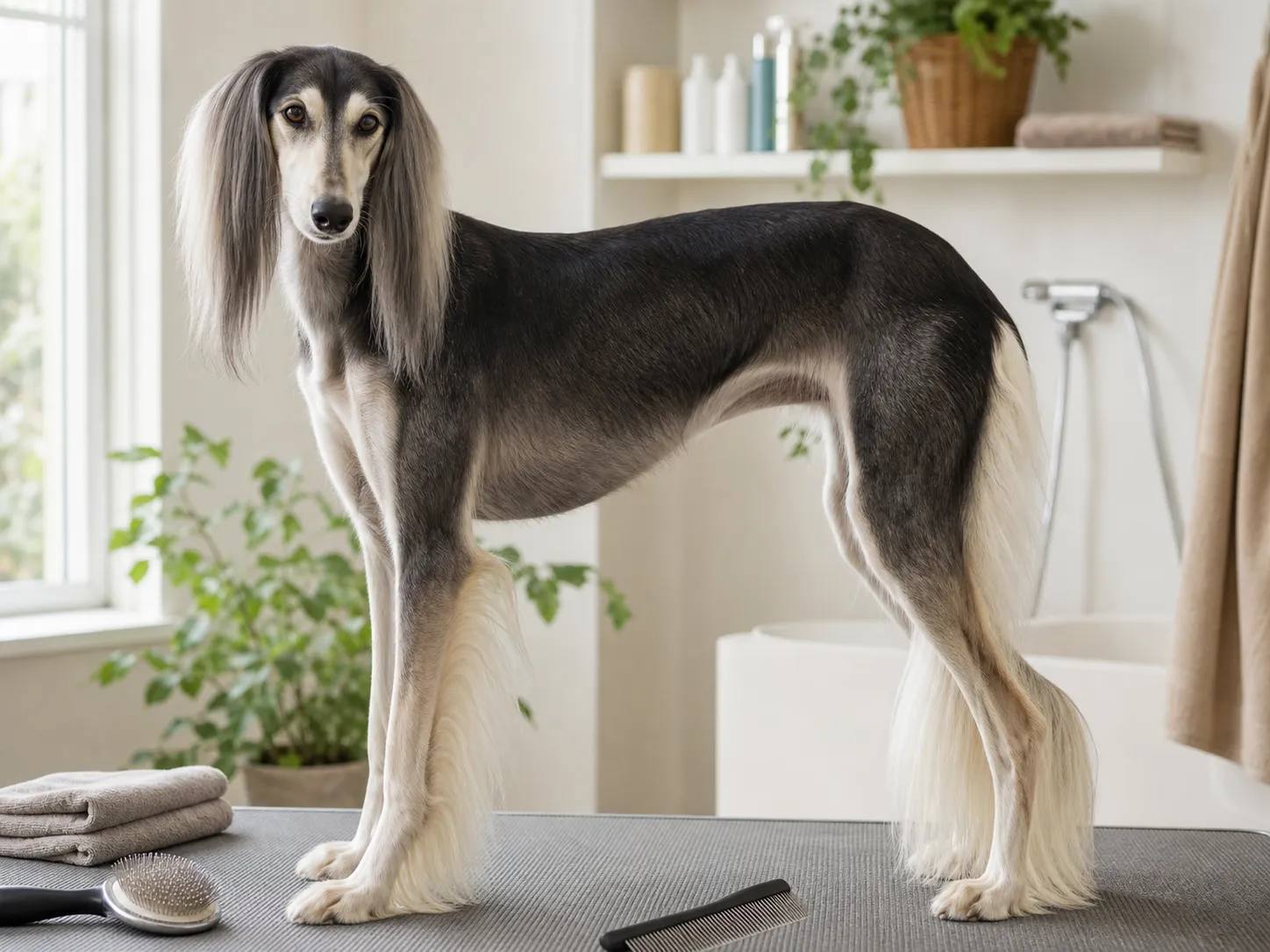
- Plan brushing, bathing, and grooming around this breed’s coat type and seasonal shedding.
- Movement
- Match exercise to age, conditioning, weather, and any orthopedic concerns.
- Veterinary flag
- Bring up breed-specific risks before procedures, diagnostics, or new medications.
The Best Bits of Salukis
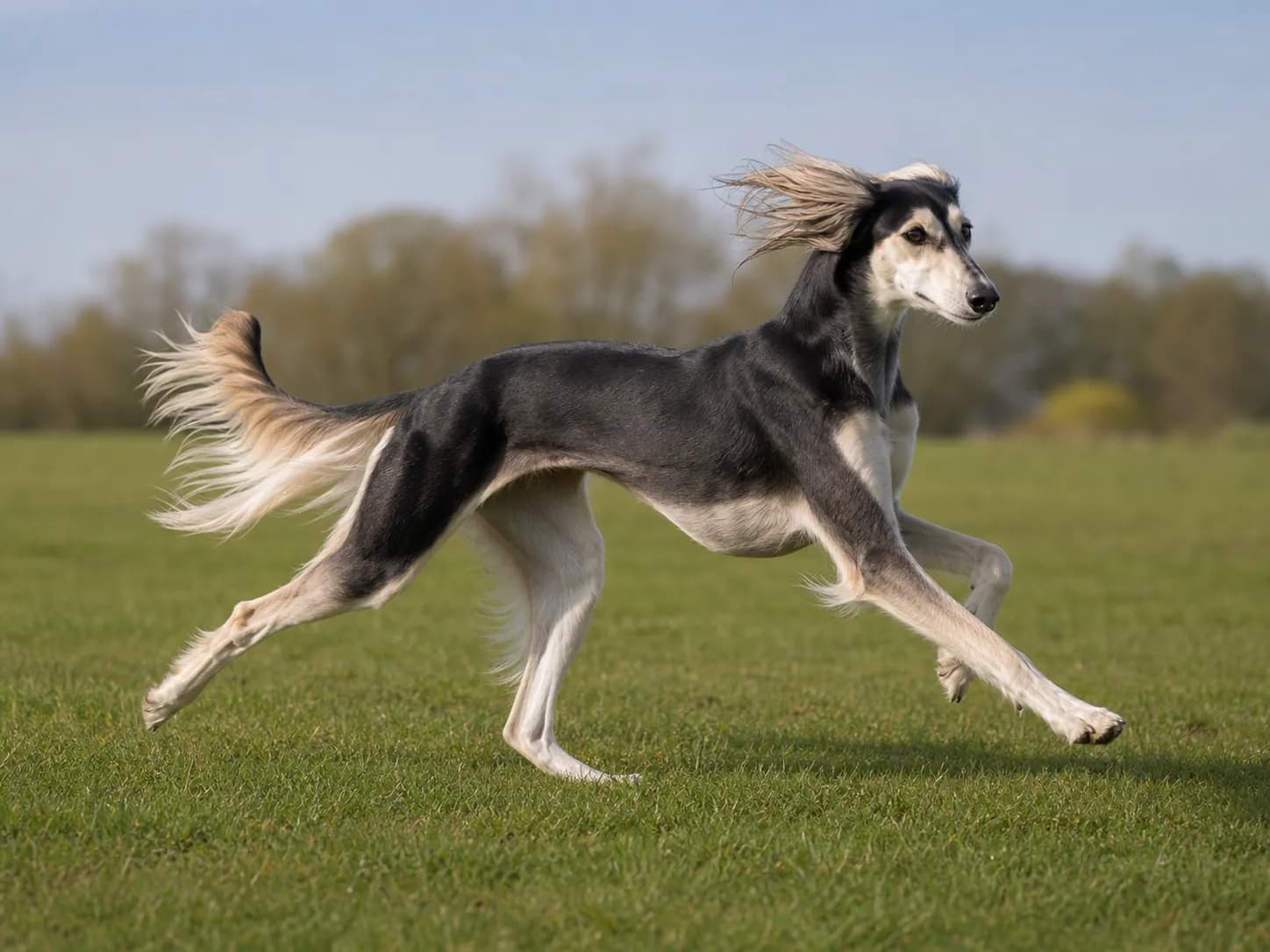
Salukis are quiet, clean, and deeply devoted in their reserved way. They're gentle housemates who rarely bark, shed lightly, and spend most of the day arranged decoratively on the softest furniture available (they have little body padding of their own — cushions are medically justified, they'll tell you). With their families they're affectionate and sensitive; with strangers, politely distant. Bred to course gazelle across desert terrain, they can exceed forty miles per hour — and then sleep for the remaining twenty-three hours, which makes them surprisingly easy company.
The Quirks That Make Us Love Them More
The prey drive is not negotiable. A Saluki who spots a squirrel is a Saluki already forty yards away, deaf to your calls — which is why off-leash time belongs only in securely fenced areas, full stop. They're also sensitive souls: harsh corrections shut them down, and they respond instead to soft-handed, reward-based training. And they're independent thinkers. A Saluki knows the command; whether the command is relevant right now is a separate question they'll consider on the merits.
A Little History
Salukis appear on pottery and tombs across the Middle East going back thousands of years — mummified Salukis have been found honored alongside pharaohs. Bedouin tribes prized them beyond price, calling them "the noble one," never sold them, and gifted them only as marks of the highest honor. Your Saluki knows all of this history, which explains a certain something in the posture.
Veterinary focus
Genetic predispositions and care notes
Genetic Predispositions for Salukis
Millennia of function-first breeding left the Saluki remarkably sound. Their health story is less about long disease lists and more about understanding the lean-bodied sighthound package — plus a couple of genuine breed concerns.
The Sighthound Rulebook: Anesthesia and Drug Sensitivity
This is the one to make sure every veterinary team knows: sighthounds handle certain drugs differently. Very low body fat changes how anesthetics distribute, their livers clear some drugs (notably older barbiturate-type agents) slowly, and they lose body heat quickly under anesthesia. None of this makes dentals or surgeries unsafe — it makes tailored protocols, monitoring, and active warming essential. We plan for it; just make sure "Saluki" is on the chart anywhere your dog is treated.
Also on the Sighthound Rulebook: Unusual Lab Values
A healthy Saluki's bloodwork looks alarming if you don't know sighthounds: naturally higher red blood cell counts, lower thyroid values, and other quirks that can mimic disease on paper. This matters most for thyroid testing — a "low" result in a Saluki may be completely normal for the breed and needs sighthound-aware interpretation before anyone reaches for supplements.
The Heart: Cardiomyopathy and Murmurs
Heart disease is the Saluki's most significant documented breed concern. Cardiomyopathy — weakening of the heart muscle — and associated rhythm disturbances appear in the breed, often silently at first. Exercise intolerance in a dog built like this is never normal; neither is fainting, a new cough, or labored breathing at rest. We listen carefully at every exam, and any murmur or arrhythmia in a Saluki earns an echocardiogram and ECG promptly. Annual exams are the surveillance program.
The Deep Chest: Bloat (GDV)
That aerodynamic deep chest carries the giant-breed emergency risk: gastric dilatation-volvulus, where the stomach twists and cuts off its own blood supply. Memorize the signs — unproductive retching, a tight swelling belly, sudden restlessness and drooling — and treat them as a drive-now emergency. Feeding smaller meals and resting after eating reduce risk.
Sun, Skin, and Thin Coats
A fine coat over minimal body fat means Salukis sunburn (especially light-colored dogs), scrape easily at speed, and genuinely feel the cold — a coat in winter isn't costume, it's equipment. Running injuries deserve attention too: what looks like a minor skin nick on a sighthound leg can involve structures that matter, so have wounds from full-speed mishaps checked.
Hypothyroidism
True low thyroid does occur in Salukis — weight gain without diet change, coat thinning, lethargy, and skin problems are the signals. The trick, per above, is breed-aware testing so we treat actual disease rather than a normal sighthound number.
The Basics: Weight, Teeth, and Age
You should always see a hint of the last ribs on a Saluki — this is one of the few breeds owners are more likely to over-feed into problems than to keep too thin, because a correct Saluki looks skinny to neighbors who will comment. Hold the line; leanness protects the heart and joints. Dental disease is the standard silent tax (long elegant muzzle, standard plaque), and senior labs from age seven catch the kidney and thyroid issues of age early.
Fence the yard, flag the sighthound rules at every clinic visit, guard the heart with annual exams, and ignore the neighbors who say your perfectly conditioned dog is too thin. In return you get fifteen-ish years of the quietest, oldest, fastest roommate you'll ever have — the noble one, resting between miracles of speed.
Questions about Salukis?
We can talk through preventive care, symptoms worth watching, and what is normal for your individual pet.
Contact our team