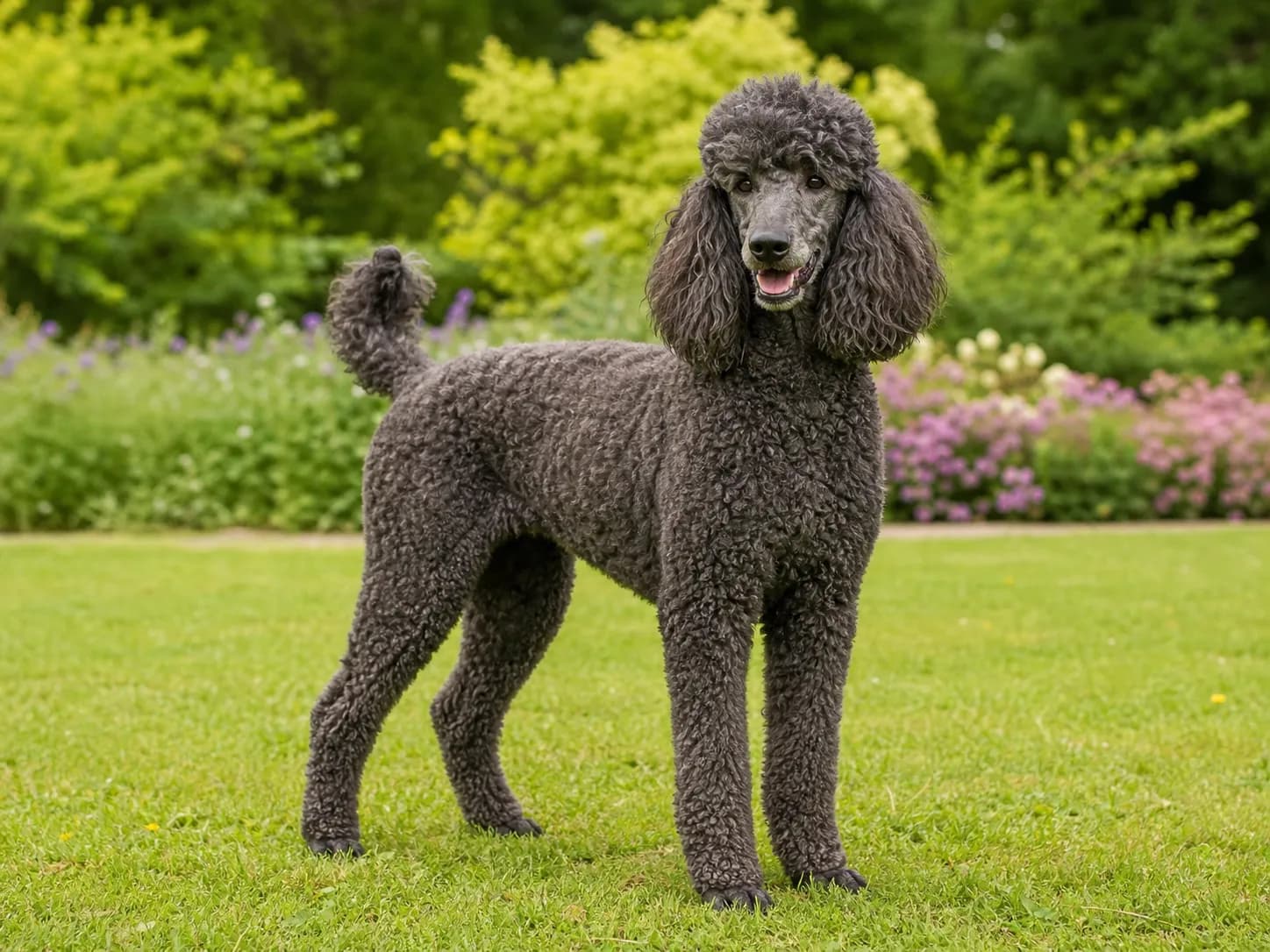
If a Poodle runs your household (and make no mistake — the Poodle is running it), you already know the breed's best-kept secret: under the show-ring stereotype is one of the smartest, most athletic, most versatile dogs ever bred. The haircut is optional. The brain is standard equipment.
Care rhythm
What to keep on the calendar
- Coat
- Plan brushing, bathing, and grooming around this breed’s coat type and seasonal shedding.
- Movement
- Match exercise to age, conditioning, weather, and any orthopedic concerns.
- Veterinary flag
- Bring up breed-specific risks before procedures, diagnostics, or new medications.
The Best Bits of Poodles
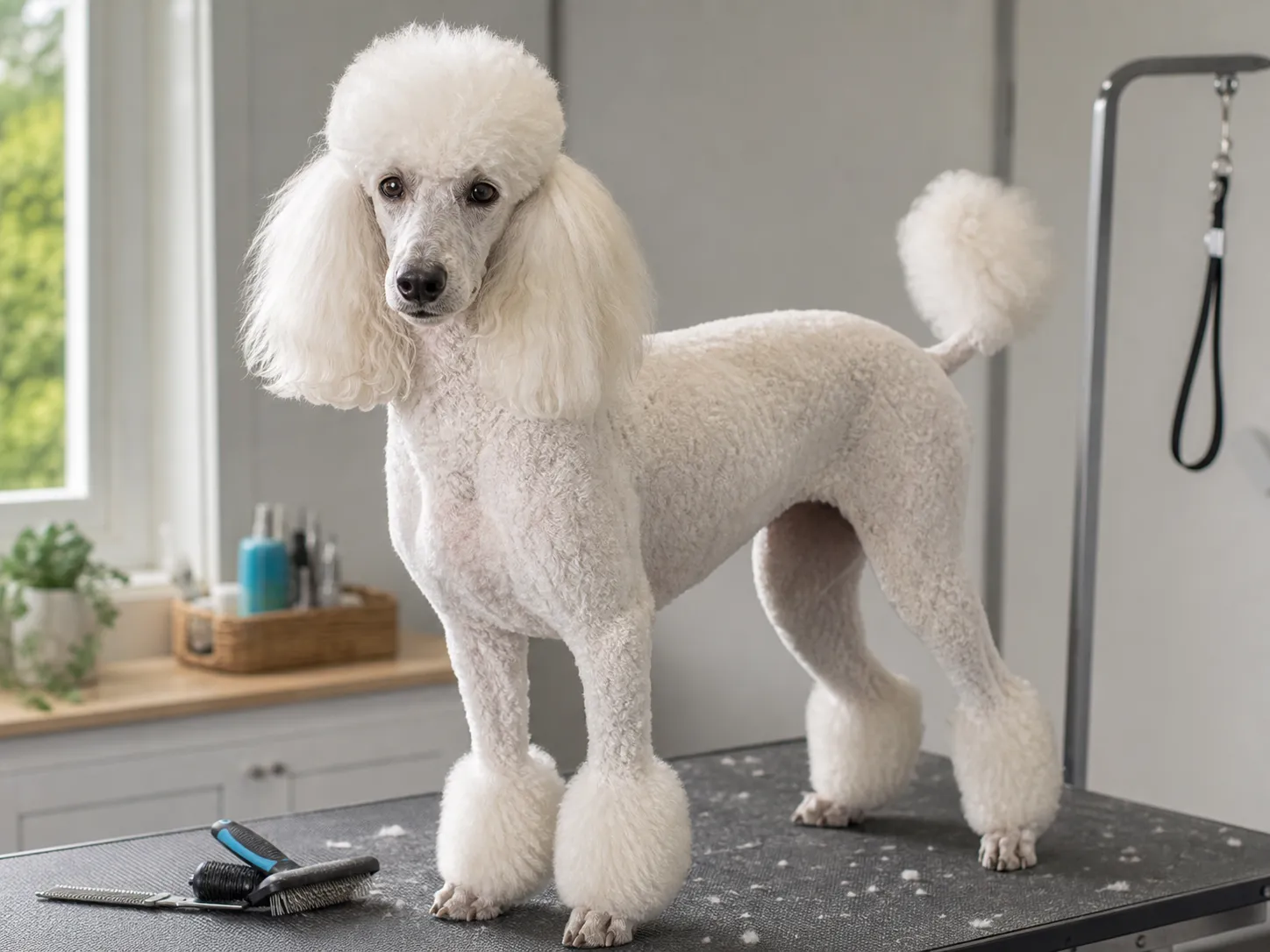
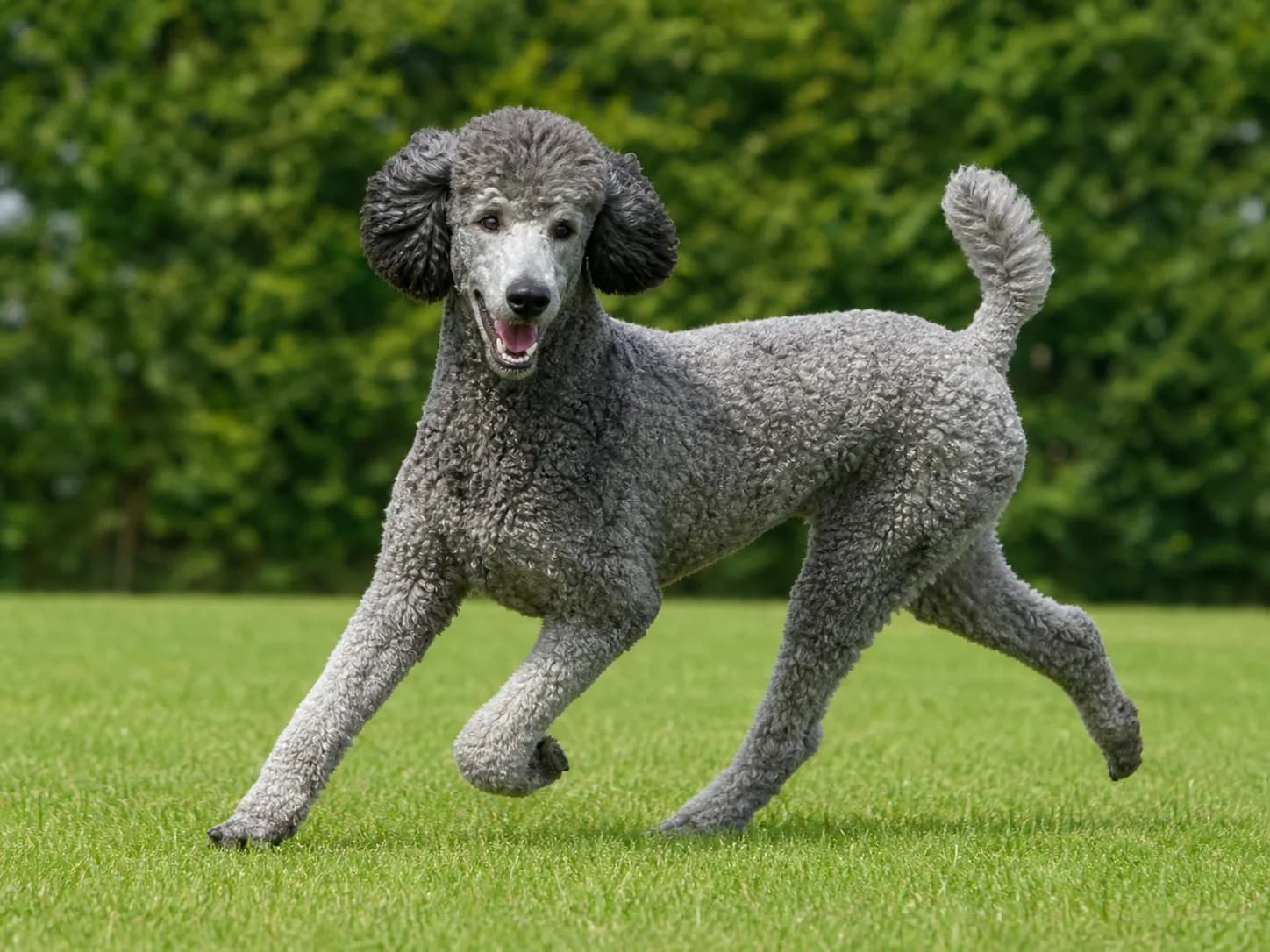
Poodles come in three sizes — standard, miniature, and toy — and one temperament: clever, attentive, eager, and funny. They routinely rank among the two or three most intelligent breeds, learn anything worth learning in a handful of repetitions, and excel at everything from retrieving (the standard's original job — "Poodle" comes from the German pudeln, to splash) to agility, therapy work, and elaborate household surveillance. The tight curly coat sheds almost nothing, which is why allergy-prone families often do well with Poodles — though "low-shedding" means the hair grows continuously instead, and professional grooming every four to six weeks is part of the deal.
The Quirks That Make Us Love Them More
A Poodle's brain is a utility that never switches off: unemployed Poodles invent jobs, and you won't like their business plan. Daily mental work — training games, puzzle feeders, new tricks — matters as much as physical exercise. They're also velcro dogs who take family membership literally and personally; long lonely days are hard on them. And they have opinions, delivered with theatrical timing. You'll be laughed at by your dog. Adjust.
A Little History
Despite the French national-dog status, the Poodle began as a German duck-retrieving water dog, and even the famous show clip started as function: shaved hindquarters lightened the swim while coat left over joints and chest kept them warm in cold water. Miniature and toy versions were bred down for city companions, circus work, and truffle hunting. Same dog, three sizes, all of them convinced they're the smartest one in the room — usually correctly.
Veterinary focus
Genetic predispositions and care notes
Genetic Predispositions for Poodles
Poodle health depends a great deal on which size you have, so we'll flag who carries what. All three varieties are long-lived when well bred — toys and minis routinely into the mid-teens.
Standards' Signature Concern: Addison's Disease
Standard Poodles are the poster breed for hypoadrenocorticism — Addison's disease — in which the adrenal glands stop producing vital hormones. It's nicknamed "the great pretender" because it presents as vague, waxing-and-waning illness: intermittent vomiting or diarrhea, lethargy, poor appetite, weight loss, sometimes collapse in a crisis. If a young-to-middle-aged standard Poodle keeps getting mysteriously, mildly sick, Addison's belongs on the list — a specific blood test rules it in or out, and diagnosed dogs live full lives on hormone replacement. Knowing this disease exists is genuinely most of the battle.
Standards, Especially: Bloat (GDV)
Deep-chested standard Poodles carry real risk of gastric dilatation-volvulus — the stomach twisting shut on itself, fatal within hours untreated. Memorize the signs: unproductive retching, a swelling drum-tight belly, sudden restless pacing and drooling. That's a drive-now emergency, day or night. Smaller meals, rest after eating, and a conversation about preventive gastropexy at spay/neuter time all reduce risk.
Standards Again: Sebaceous Adenitis
An inflammatory skin disease with a strong standard-Poodle signature: the sebaceous glands are destroyed, producing scaling, coat loss along the top line, and a musty odor. It's diagnosed with skin biopsies and managed (not cured) with medicated soaks, oils, and medications — earlier diagnosis means better coats, so persistent dandruff in a standard deserves a workup, not a shampoo carousel.
Toys and Minis: Kneecaps and Hips
The small varieties carry classic small-dog orthopedics: patellar luxation (the skip-hop stride as the kneecap slips) and Legg-Calvé-Perthes disease (degeneration of the hip's ball joint in young small dogs, causing progressive hind-leg lameness). Both are gradeable, both worsen with excess weight, and both have excellent surgical fixes when severe. We check knees and hips at puppy visits and spay/neuter time as a matter of routine.
All Sizes: Eyes — PRA and Cataracts
Progressive retinal atrophy — painless, gradual retinal degeneration ending in blindness — runs in miniature and toy lines especially, and a DNA test exists (ask breeders for it). Hereditary cataracts appear across sizes. Night-vision hesitation, reluctance on evening walks, or a clouding pupil earn an ophthalmic exam; cataract surgery restores vision in good candidates, and even blind Poodles, being Poodles, memorize the house and carry on impressively.
All Sizes: Epilepsy
Idiopathic epilepsy appears in all three varieties, typically starting between one and five years of age. A first seizure is frightening and always warrants a workup; the reassuring truth is that most epileptic dogs achieve good control on modern medications and live normal lifespans. Video any episode if you safely can — it's diagnostic gold.
All Sizes: Thyroid, Ears, and Teeth
Hypothyroidism (weight gain, coat loss, lethargy — cheap to test, cheap to treat) appears across the breed. Those glorious drop ears grow hair in the canal and trap moisture, making ear infections a Poodle specialty; regular checks and cleaning as recommended head them off. And the small varieties have some of the worst dental disease in dogdom — crowded teeth in tiny jaws — making home brushing plus regular professional cleanings with X-rays a genuine lifespan intervention for toys and minis.
Know Addison's if you have a standard, guard the knees and teeth if you have a toy or mini, test the eyes at any size, and keep that magnificent brain employed. Do that, and you get the whole Poodle package for a very long time: the athlete, the comedian, the scholar, and the best haircut in the building — all in whichever size fits your sofa.
Questions about Poodles?
We can talk through preventive care, symptoms worth watching, and what is normal for your individual pet.
Contact our team