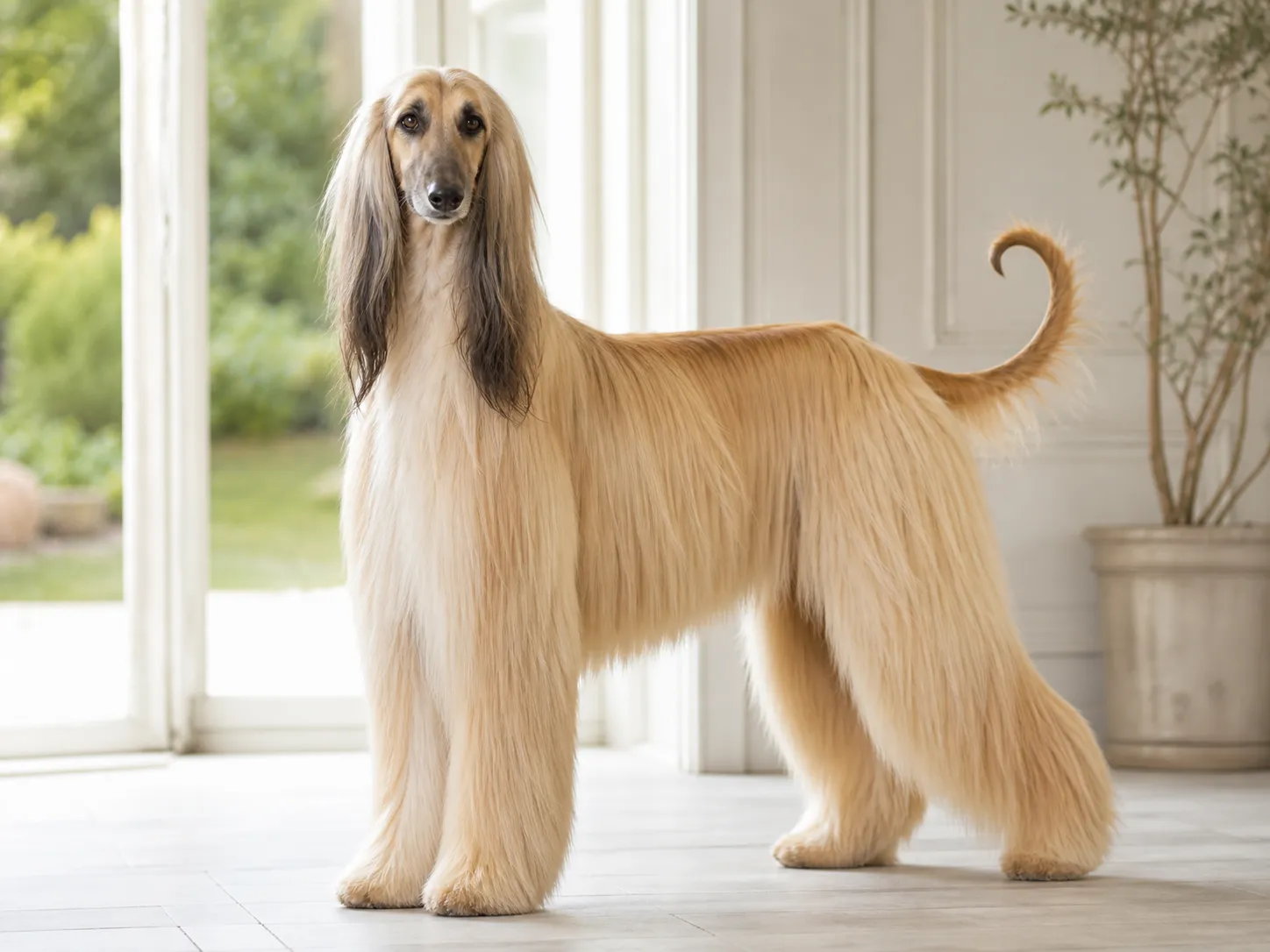
If an Afghan Hound resides with you — "resides" is correct; they don't merely live places — you share quarters with the supermodel of the dog world: floor-length silk, cheekbones for days, and a private inner life you will never fully be briefed on.
Care rhythm
What to keep on the calendar
- Coat
- Plan brushing, bathing, and grooming around this breed’s coat type and seasonal shedding.
- Movement
- Match exercise to age, conditioning, weather, and any orthopedic concerns.
- Veterinary flag
- Bring up breed-specific risks before procedures, diagnostics, or new medications.
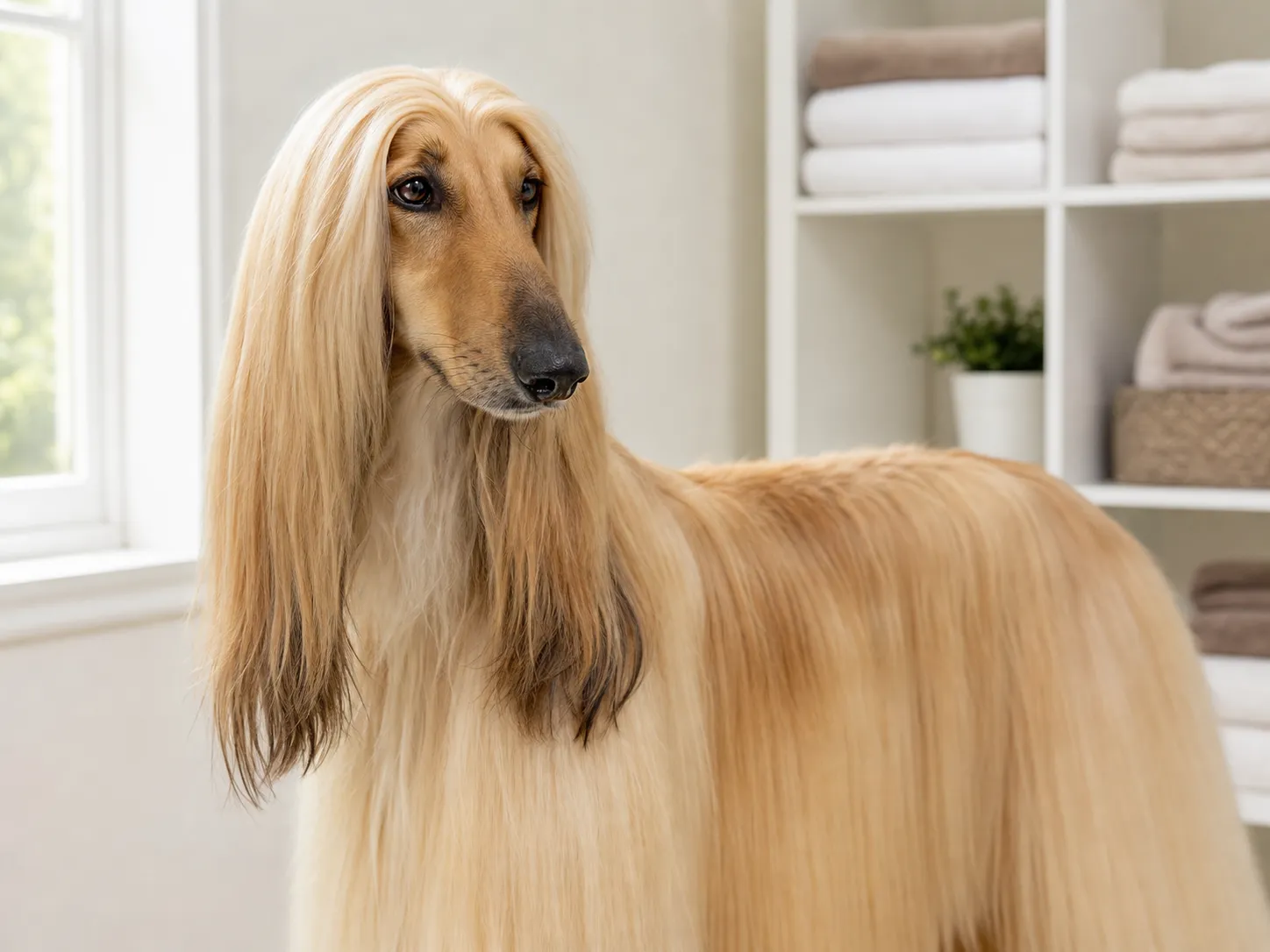
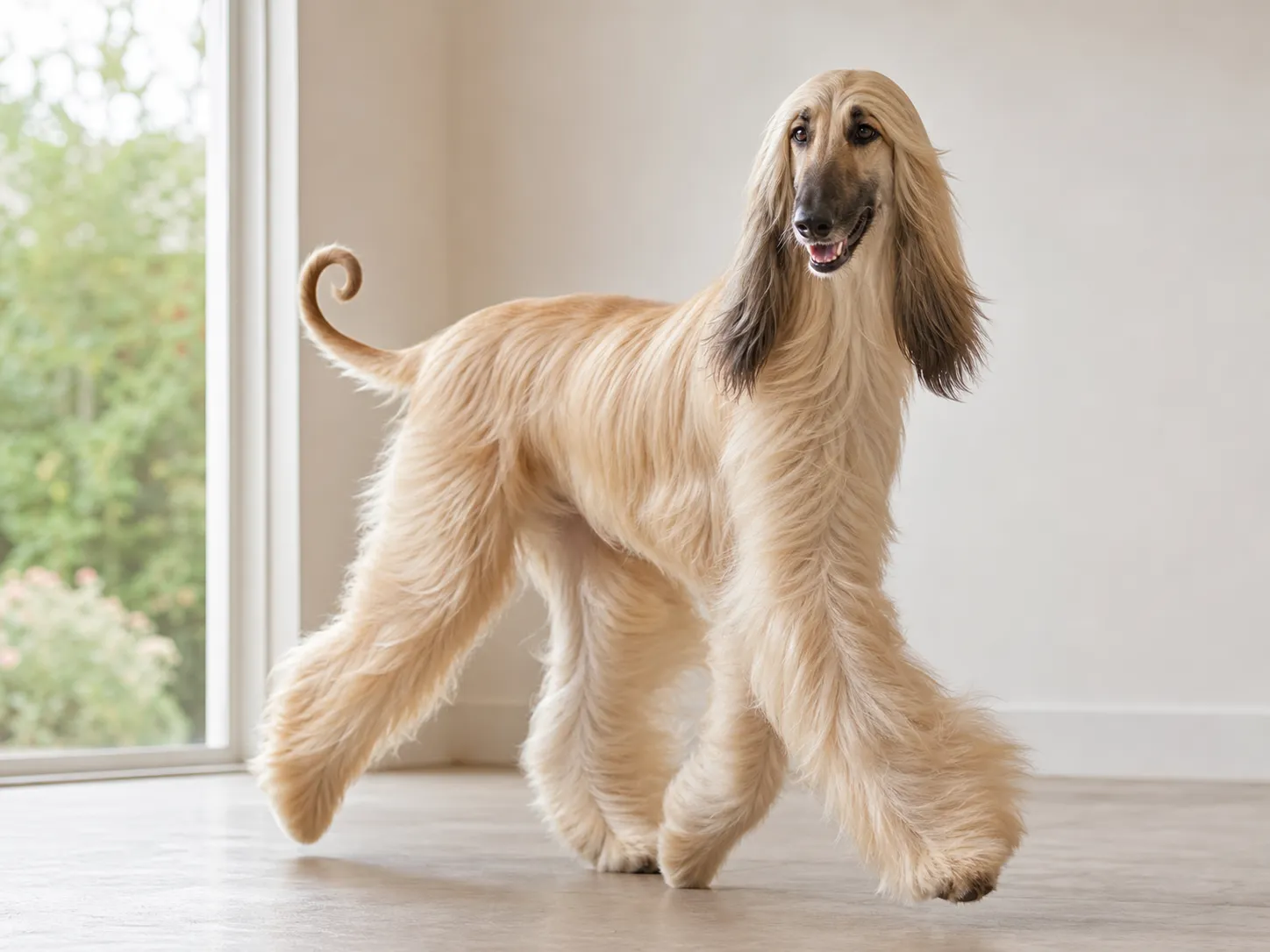
The Best Bits of Afghan Hounds
Afghans are quiet, clean, gentle housemates with a famously dignified reserve. With their families they're affectionate, silly in private (the sudden solo sprint-and-spin sessions are a privilege to witness), and surprisingly clownish once trust is established; with strangers they offer polite indifference. Under the glamour is a serious athlete — a mountain-country courser built to turn and sprint over rough terrain at speeds few breeds can touch. Indoors, they're calm to the point of decorative; outdoors, given a safe fenced space, they're airborne.
The Quirks That Make Us Love Them More
The coat is a lifestyle. That silk mats if neglected, and keeping an Afghan in flowing glory means several hours of brushing a week plus regular baths — or an honest conversation with a groomer about a shorter pet trim. The independence is also structural, not trainable-around: Afghans consider commands, weigh alternatives, and get to you eventually. And the prey drive is absolute — a fenced yard and a leash are permanent equipment, because an Afghan in pursuit hears nothing and outruns everything.
A Little History
One of the most ancient dog types, the Afghan's ancestors coursed game across the mountains and deserts of Afghanistan for thousands of years, prized by tribal chieftains and later smuggled out past export bans by British officers in the early 1900s. The breed's glamour-icon era came later; the mountain hunter underneath never left.
Veterinary focus
Genetic predispositions and care notes
Genetic Predispositions for Afghan Hounds
Afghans are a generally healthy, function-built breed, but the sighthound package comes with rules, and a few specific conditions deserve a place on your radar.
The Sighthound Rulebook: Anesthesia Sensitivity
Rule one for every Afghan owner: make sure any veterinary team treating your dog knows sighthound protocols. Minimal body fat changes how anesthetic drugs distribute and clear, and these dogs chill quickly under anesthesia. Routine procedures — dentals, spays, lump removals — are perfectly safe with tailored drug choices, monitoring, and warming. It's a planning note, not a warning; we plan for it, and "Afghan Hound" on the chart is the trigger.
Also in the Rulebook: Deceptive Lab Values
Healthy sighthounds run naturally higher red blood cell counts and naturally lower thyroid values than other dogs. This matters most when thyroid disease is on the table — a "low" thyroid number in an Afghan may be breed-normal, and treatment decisions need sighthound-aware interpretation, not just a flagged lab value.
The Real Thyroid Disease: Hypothyroidism
Genuinely underactive thyroid is one of the Afghan's documented breed problems, typically in middle age: weight gain without menu changes, a coat that loses its silk and thins, lethargy, and recurring skin or ear trouble. Careful testing separates true disease from the breed's funny numbers, and an inexpensive daily supplement restores the dog — and the coat.
The Deep Chest: Bloat (GDV)
That elegant deep chest carries the classic risk: gastric dilatation-volvulus, where the stomach twists and cuts off its own circulation. It kills in hours. Memorize the signs — unproductive retching, a tightening or swelling belly, sudden pacing and drooling — and treat them as a drive-immediately emergency. Multiple smaller meals and post-meal rest reduce risk; preventive gastropexy is worth discussing at spay/neuter for deep-chested breeds.
A Breed-Specific Rarity: Chylothorax
Afghans appear disproportionately in case reports of chylothorax — a slow leak of lymphatic fluid into the chest cavity that gradually compresses the lungs. It's rare, but in this breed a subtle, progressive story of effortful breathing, exercise intolerance, or a soft cough should prompt chest imaging sooner rather than later. Caught early, medical and surgical options exist.
Eyes: Juvenile Cataracts
Hereditary cataracts can appear in young Afghans, clouding the lens well before old age. Any bluish-white change in the pupil, bumping into things in dim light, or hesitation on stairs earns an eye exam; surgical cataract removal by a veterinary ophthalmologist restores vision in suitable candidates.
Hips and Motion
Hip dysplasia rates are lower in Afghans than in stockier breeds, but a courser's career lives in its hindquarters, so any persistent stiffness, shortened stride, or reluctance to jump deserves X-rays rather than watchful waiting. Lean body condition — always visible hint of ribs on this breed — is the lifelong joint-protection plan, and no one needs to tell an Afghan owner that their dog should look slim. Ignore sidewalk commentary; correct is lean.
The Basics: Skin, Teeth, and the Coat Underneath
All that hair hides skin — check it during brushing sessions for mats (which cause sores), foxtails (a Southern California specialty that burrows through silk into skin, ears, and paws), and lumps that deserve early attention. Dental disease runs its usual silent course behind the long muzzle; brushing plus professional cleanings as recommended. Post-bath, dry thoroughly — damp undercoat breeds hot spots.
Flag the sighthound rules at every clinic, memorize the bloat signs, budget honestly for the coat, and keep the fence tall and the leash on. In return you get the full Afghan experience: a decade-plus of beauty, comedy behind closed doors, and the ancient, wordless dignity of a hunter who has decided — after due consideration — that you are theirs.
Questions about Afghan Hounds?
We can talk through preventive care, symptoms worth watching, and what is normal for your individual pet.
Contact our team