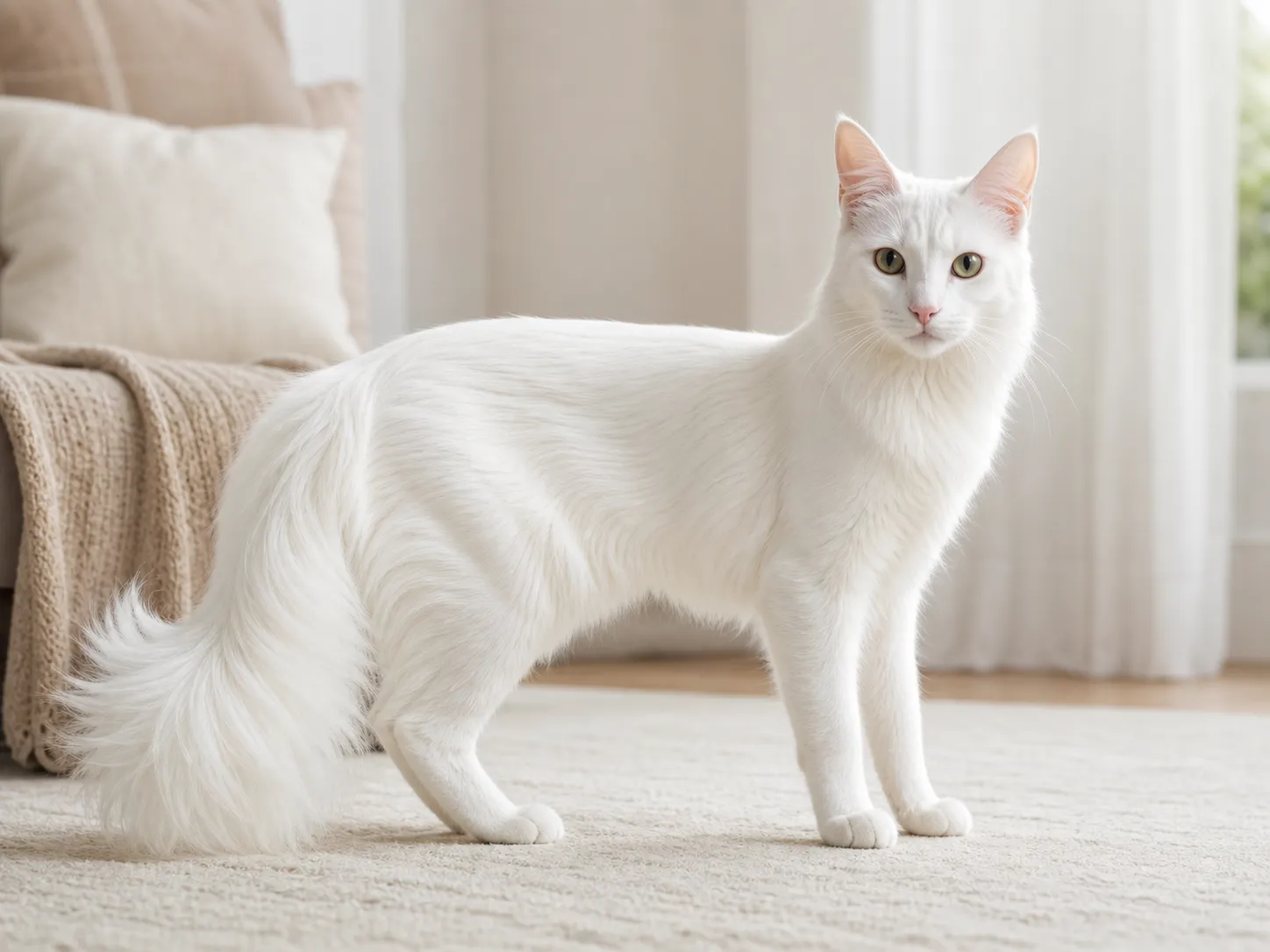
If you live with a Turkish Angora, you live with a silk scarf that has opinions. These are the ballerinas of the cat world — long, graceful, impossibly light on their feet — with the energy of a kitten and the confidence of a monarch.
Care rhythm
What to keep on the calendar
- Coat
- Plan brushing, bathing, and grooming around this breed’s coat type and seasonal shedding.
- Movement
- Match exercise to age, conditioning, weather, and any orthopedic concerns.
- Veterinary flag
- Bring up breed-specific risks before procedures, diagnostics, or new medications.
The Best Bits of Turkish Angoras
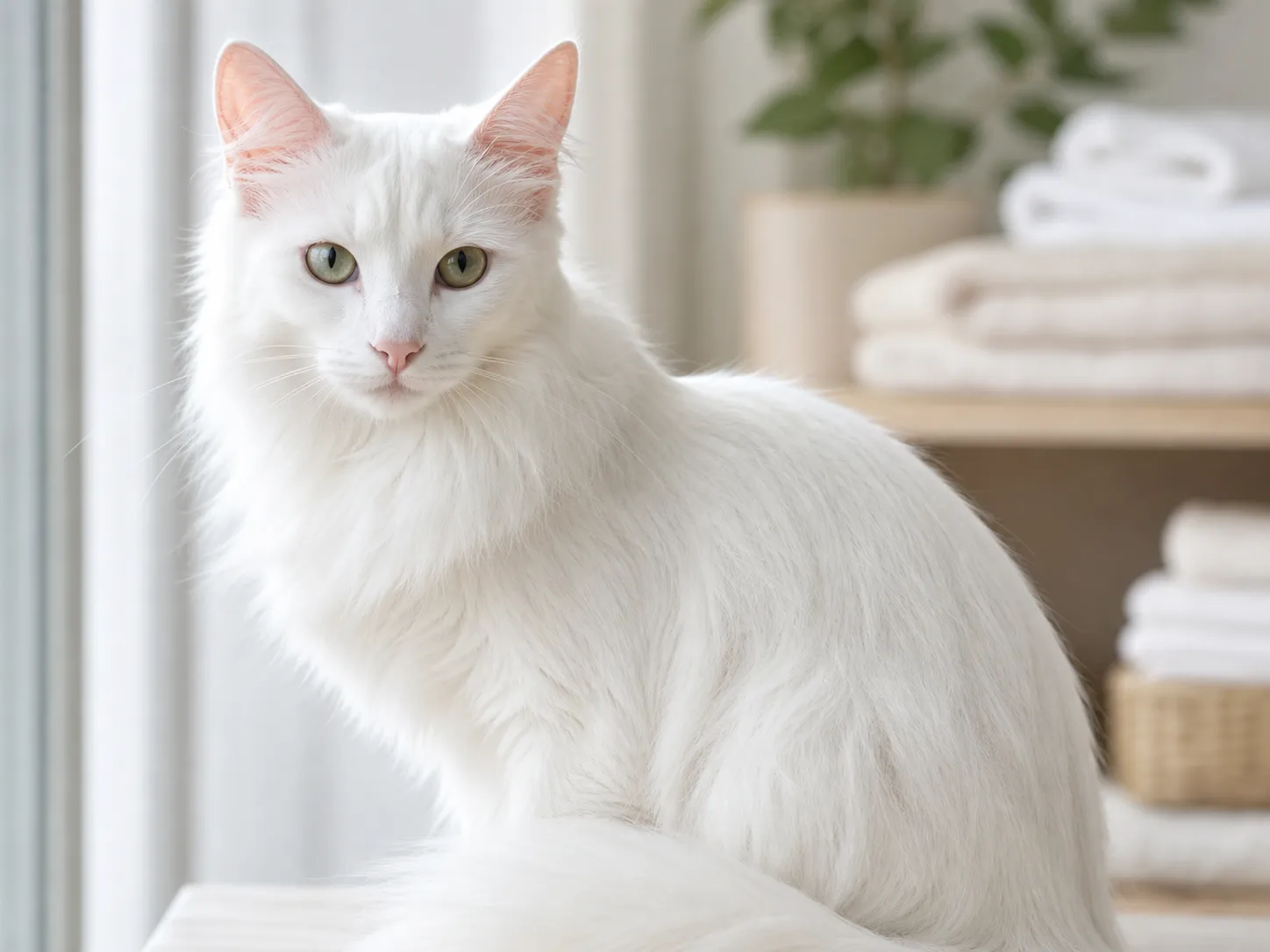
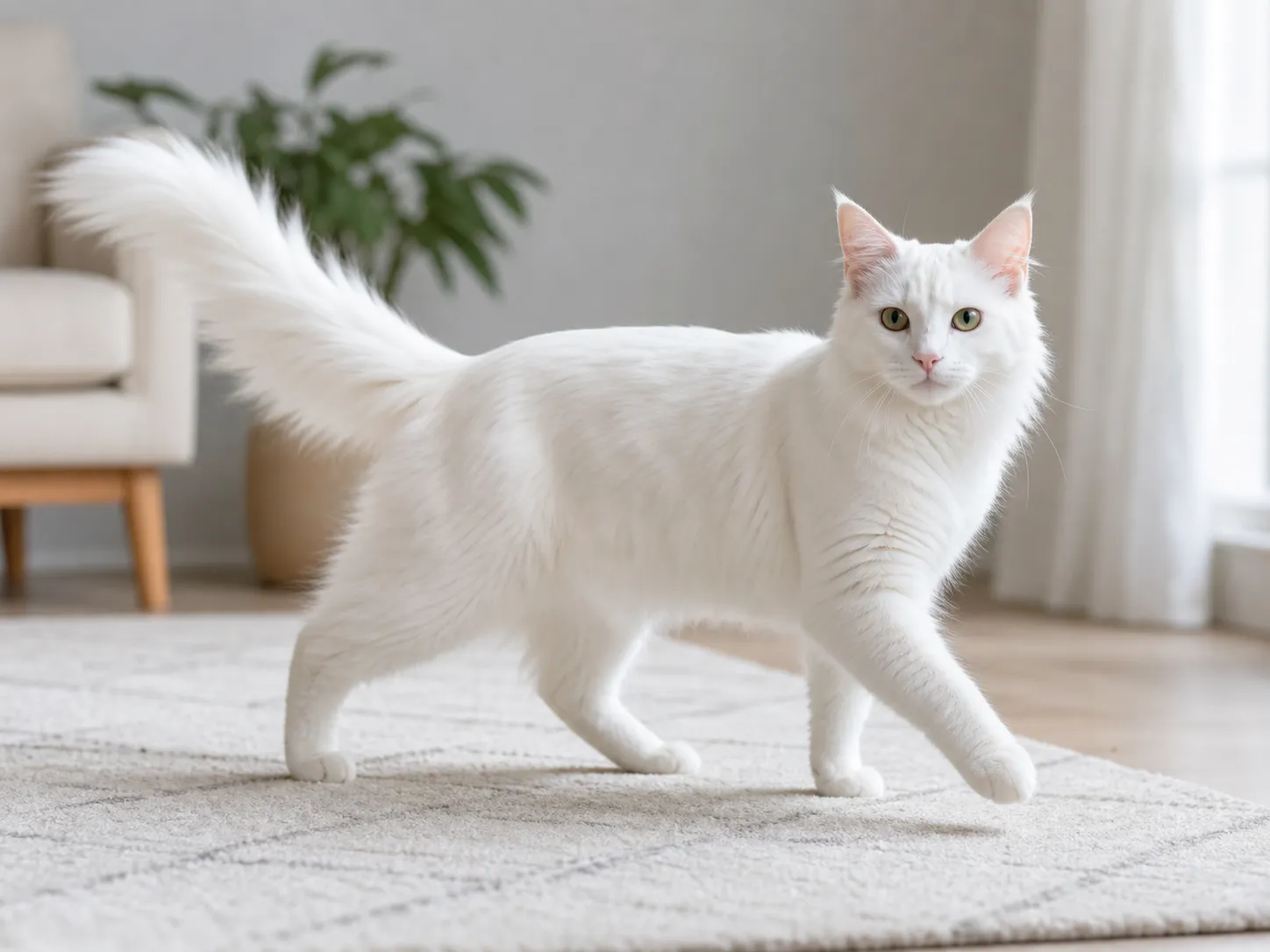
Angoras are affectionate, clever, and busy. They want to be involved: in your typing, your cooking, your phone calls, and especially your undivided attention. They tend to bond with the whole family while electing one favorite human, and many keep their playful streak deep into their senior years. That gorgeous single coat — silky, shimmering, with no woolly undercoat — mats far less than you'd expect and usually needs just a weekly comb.
The Quirks That Make Us Love Them More
An Angora bored is an Angora redecorating. These cats need vertical space, toys, and genuine daily interaction, or they will invent projects you won't approve of. Many are also fascinated by water — don't be surprised by a cat who dips a paw in your glass or supervises your shower. And they're determined: once an Angora decides the top of the bookcase is theirs, the bookcase has a new owner.
A Little History
This is one of the oldest natural cat breeds, arising centuries ago in the mountains of Turkey around Ankara (formerly Angora). Prized in Europe since the 1600s, the breed was nearly absorbed into Persian breeding programs and saved in part by the Ankara Zoo, which ran a careful breeding program for the classic white Angora. Today's Angoras come in many colors, but the white, odd-eyed cat remains the breed's icon — and carries its most famous health note.
Veterinary focus
Genetic predispositions and care notes
Genetic Predispositions for Turkish Angoras
Turkish Angoras are a robust natural breed, but a few conditions deserve special attention.
The White Cat Question: Congenital Deafness
Here's the one every Angora owner should know: the same genetics that produce a solid white coat with blue eyes are linked to deafness in one or both ears. A blue-eyed white Angora may be deaf on the blue-eyed side (odd-eyed cats are often deaf in one ear only), and many are completely deaf. Deaf cats live wonderful lives indoors — they compensate brilliantly with vibration and sight — but they must never roam outdoors, and they startle more easily, so approach where they can see you. If you're unsure, we can assess hearing, and specialized BAER testing is available through referral.
Heart Health: Hypertrophic Cardiomyopathy
HCM, the slow thickening of the heart muscle that tops the feline heart-disease list, is documented in Turkish Angoras. It hides well: the first sign is often a murmur we hear at a routine exam, which is one more argument for never skipping the annual visit (bi-annual for seniors). Rapid breathing at rest, lethargy, or sudden hind-leg weakness are urgent signals. Screening with a proBNP blood test and echocardiogram catches it early, when medication helps most.
A Kitten Concern: Hereditary Ataxia
A rare but breed-associated condition: some Angora kittens are born with hereditary ataxia, a neurologic disorder causing wobbly, uncoordinated movement that becomes obvious once kittens start walking. There's no treatment, and responsible breeders work to eliminate it from their lines. If you're buying a kitten, ask the breeder about it directly — and about the health of related litters.
Dental Disease
Fine-boned, elegant muzzles still hide the same plaque and tartar as every other cat's. Periodontal disease is painful, silently progressive, and hard on the heart and kidneys over time. Bad breath, drooling, or one-sided chewing mean it's time for an exam; home brushing and professional cleanings as recommended are the maintenance plan.
Keeping the Athlete Lean
Angoras are naturally slender and athletic — which makes weight gain easy to spot and important to prevent. Extra pounds on that fine frame stress joints and set up diabetes risk. Measured meals and genuine daily play (these cats will actually fetch) keep the ballerina in ballerina shape.
Stress and the Busy Mind
Smart, social breeds feel household stress keenly. In Angoras that can surface as overgrooming, urinary flare-ups (feline idiopathic cystitis), or door-darting escape attempts. Enrichment is preventive medicine here: climbing space, window perches, puzzle feeders, and daily interactive play. A busy Angora is a healthy Angora — and a much better roommate.
Keep your Angora lean, engaged, and heart-checked, respect the white-cat hearing question, and you'll have a silky supervisor gracing your bookshelf tops well into her teens. Just accept now that the top shelf was never really yours.
Questions about Turkish Angora?
We can talk through preventive care, symptoms worth watching, and what is normal for your individual pet.
Contact our team