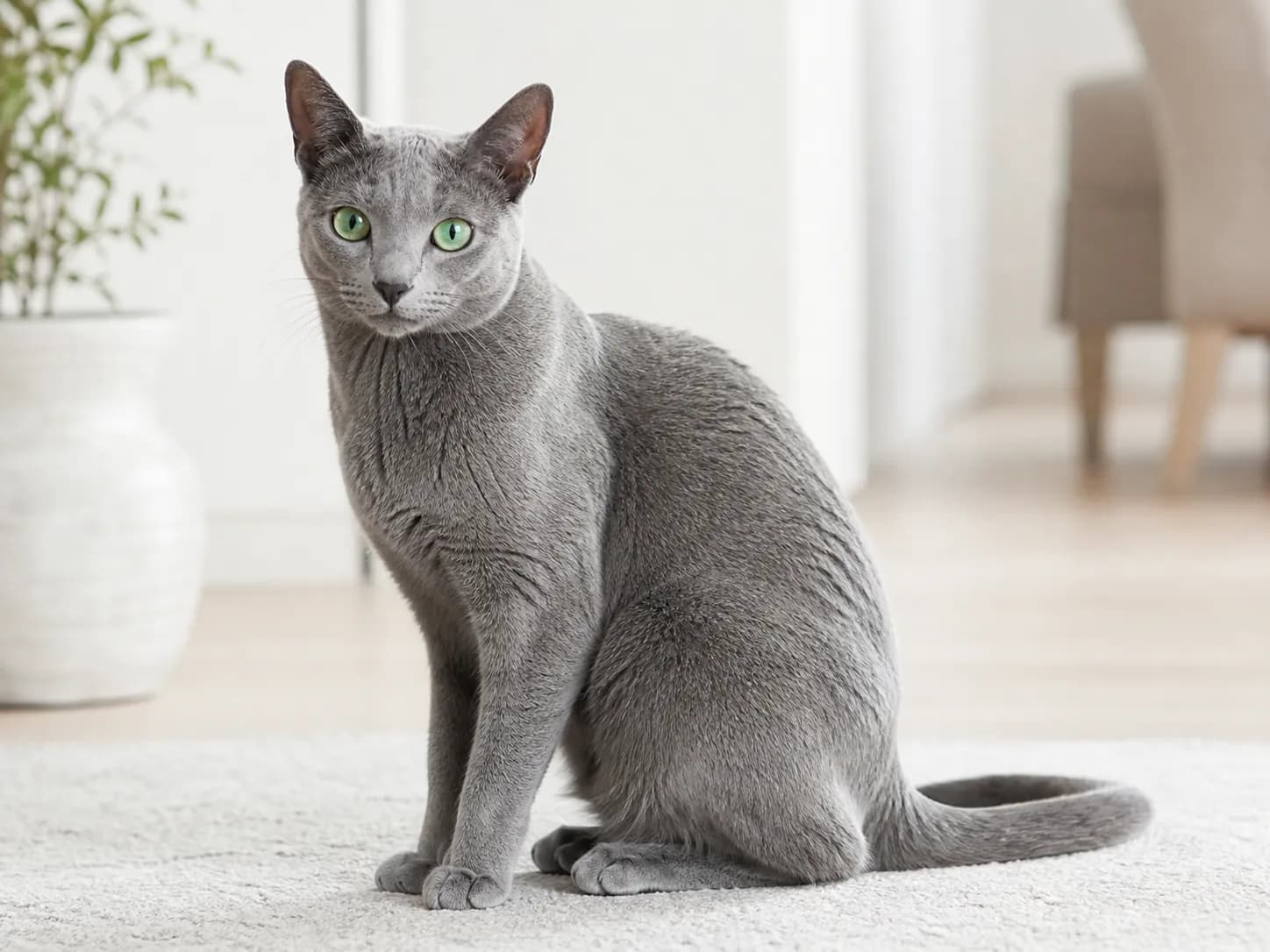
If a Russian Blue has chosen you — and make no mistake, they do the choosing — you already know the routine: aloof and dignified with visitors, then a purring, chirping shadow the moment the door closes. That double life is the whole charm of this breed.
Care rhythm
What to keep on the calendar
- Coat
- Plan brushing, bathing, and grooming around this breed’s coat type and seasonal shedding.
- Movement
- Match exercise to age, conditioning, weather, and any orthopedic concerns.
- Veterinary flag
- Bring up breed-specific risks before procedures, diagnostics, or new medications.
The Best Bits of Russian Blues
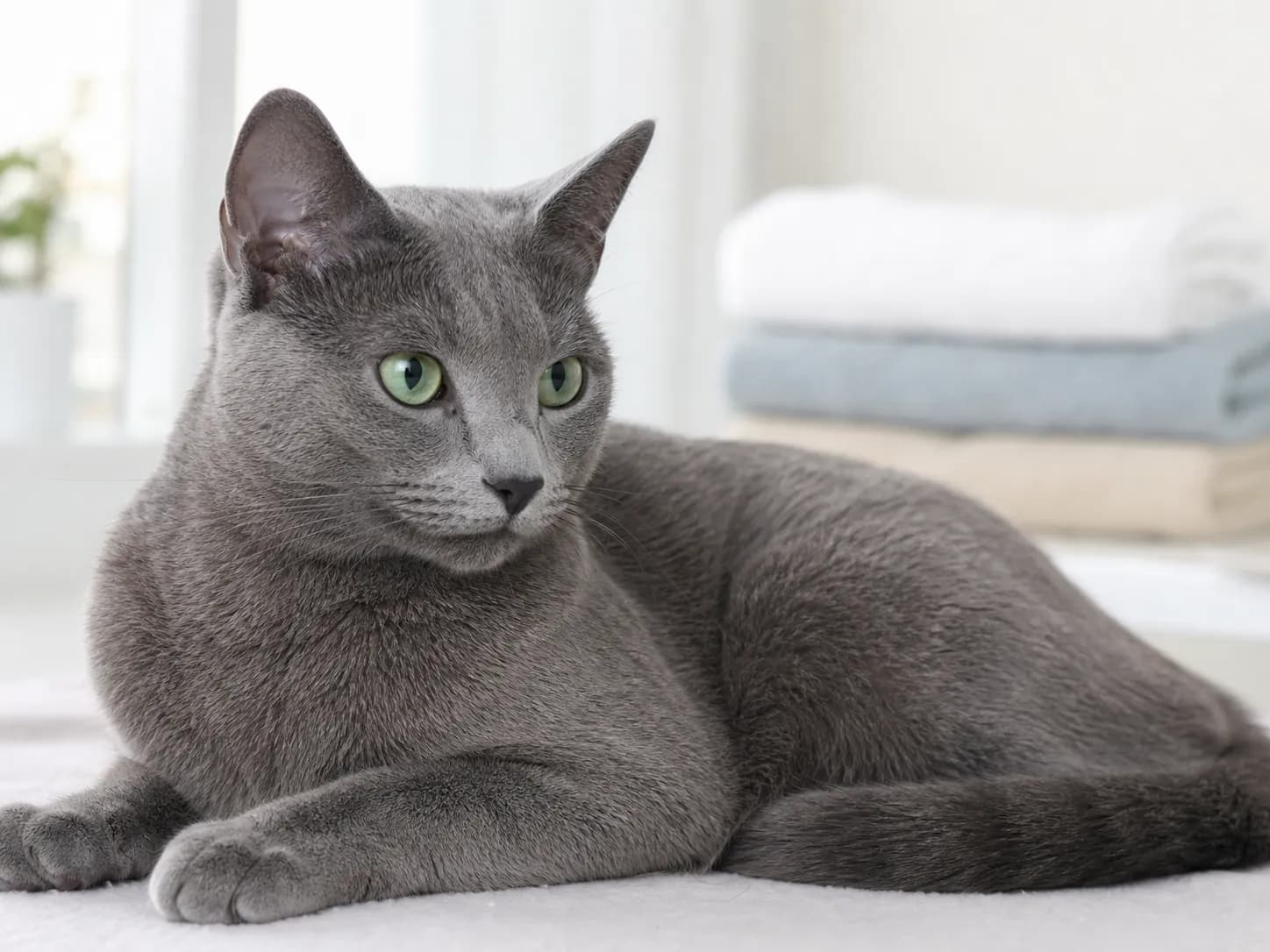
Russian Blues are the gentle intellectuals of the cat world. They're quiet, observant, and deeply loyal to their chosen people, often picking one favorite human and following them from room to room like a silver ghost. They tend to be fastidious about their litter box, easy on the furniture, and content to entertain themselves with a fetch toy or a sunbeam while you're at work. Their plush double coat — that famous shimmering blue with silver tipping — barely sheds compared to most breeds, and many allergy-prone owners report doing better with a Russian Blue than with other cats.
The Quirks That Make Us Love Them More
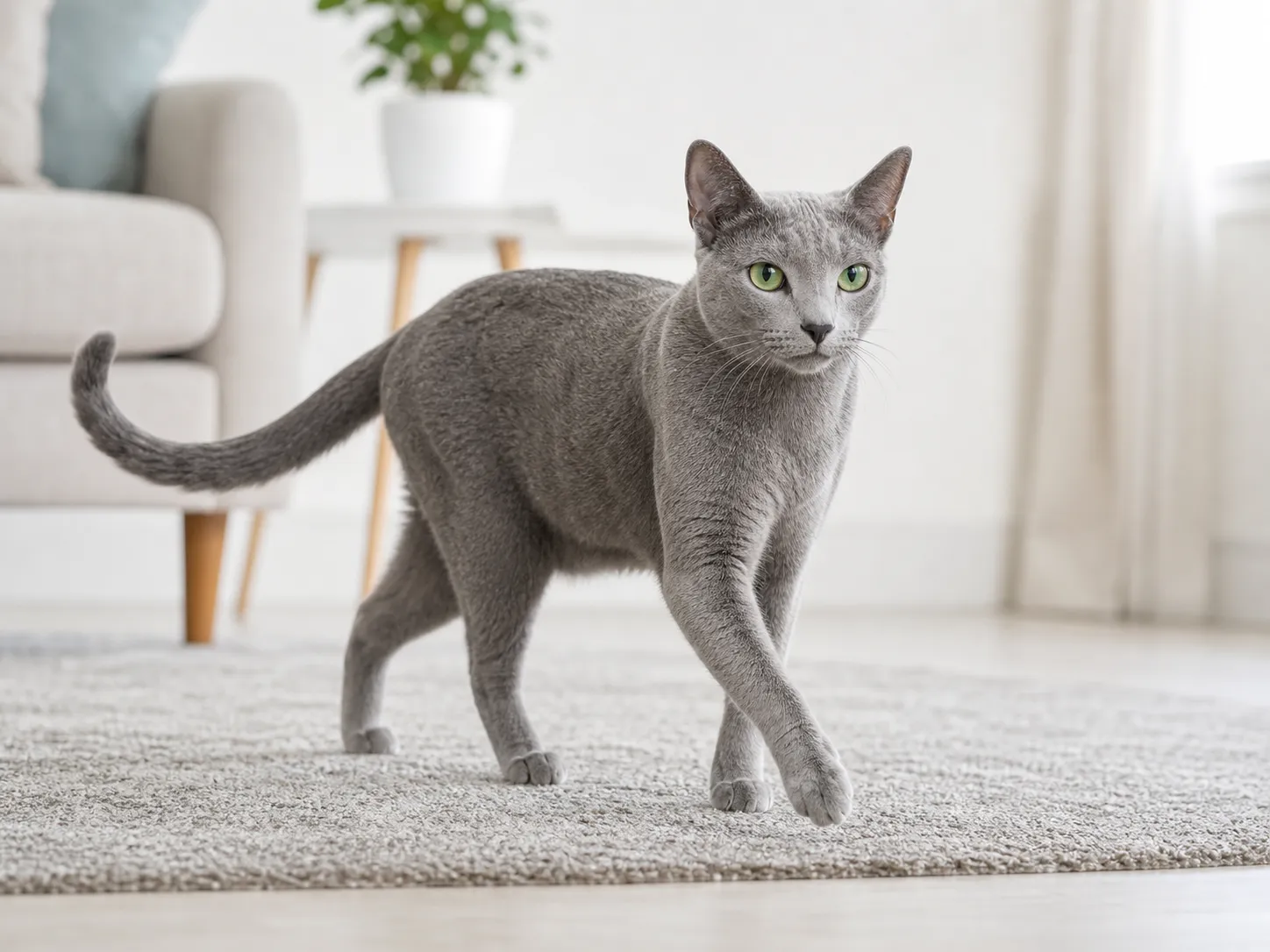
That reserve with strangers? It's genuine. A Russian Blue may spend an entire dinner party under the bed and then reappear, tail high, the instant the last guest leaves. They also like their routines: dinner late, furniture rearranged, a new brand of litter — expect polite but pointed feedback. And don't let the elegant build fool you; these are athletic cats who will find the highest point in any room and claim it.
A Little History
As the story goes, these cats sailed out of the port of Arkhangelsk in northern Russia with merchant sailors — which is why they're sometimes called Archangel Blues. They arrived in England in the 1860s, nearly vanished during World War II, and were rebuilt by breeders crossing the survivors with Siamese and British Shorthairs. The modern breed keeps the plush coat and green eyes that made them famous.
Veterinary focus
Genetic predispositions and care notes
Genetic Predispositions for Russian Blues
The good news up front: Russian Blues are one of the healthier pedigreed breeds, with a lifespan that regularly stretches into the mid-to-late teens. But "healthy breed" never means "skip the checkups." Here's what we keep an eye on.
The Battle of the Bulge: Obesity
Russian Blues love food with an enthusiasm that outpaces their calorie needs, and their dense coat is very good at hiding a thickening waistline. Obesity is the single most preventable health problem we see in this breed, and it drives diabetes, arthritis, and urinary disease downstream. Measured meals beat free feeding, and we're happy to do a body-condition check at every visit — under all that plush fur, your hands (and ours) are better judges than your eyes.
Feline Diabetes Mellitus
Partly because of that food enthusiasm, Russian Blues show up on the diabetes-prone list. Watch for the classic triad: weight loss despite a great appetite, excessive thirst, and more frequent (or heavier) trips to the litter box. Caught early, many diabetic cats can be managed — and some even go into remission — with a high-protein, low-carbohydrate diet, weight control, and insulin when needed.
Bladder Business: Urinary Stones and FLUTD
Bladder and kidney stones are reported more often in Russian Blues than in the average cat. Straining in the box, frequent small urinations, blood in the urine, or urinating outside the box are all signals worth a same-day call — and a male cat who's straining without producing urine is an emergency, full stop. Routine urinalysis lets us spot crystals before they become stones, and diet is a powerful preventive tool here.
Heart Health: Hypertrophic Cardiomyopathy
Hypertrophic cardiomyopathy (HCM) — a silent thickening of the heart muscle — is the most common heart disease of all cats, and Russian Blues aren't exempt. The frustrating part is how quietly it progresses: a murmur or an abnormal rhythm at a routine exam is often the first clue. If we hear something, a cardiac blood test (proBNP) and an echocardiogram give us the full picture, and early medication can buy good years.
Dental Disease
Periodontal disease affects most cats by age three, and the fastidious Russian Blue is no exception — they just hide the discomfort beautifully. Bad breath, drooling, or a sudden preference for soft food all point to a mouth that needs attention. Home brushing (yes, it's trainable) plus professional cleanings as recommended keep the mouth, and the heart and kidneys downstream of it, healthier.
Eyes on the Prize: Retinal Health
Progressive retinal atrophy has been documented in some Russian Blue lines. It's painless and slow — most owners first notice hesitation in dim light or reluctance to jump. There's no cure, but affected cats adapt remarkably well indoors, and responsible breeders screen for it. If you notice night-vision changes, mention it at your next exam so we can take a look.
Anxiety and the Sensitive Soul
This isn't a disease, but it's real: Russian Blues are sensitive, routine-loving cats, and stress can show up physically — overgrooming (psychogenic alopecia), hiding, or urinary flare-ups. Environmental enrichment, predictable routines, and safe high perches go a long way. If your quiet cat suddenly becomes a licked-bald cat, let's rule out medical causes first, then talk stress.
A Russian Blue who stays lean, gets bi-annual exams as a senior, and has a mouth and urinary tract we're monitoring is set up beautifully for a long life of following you from room to room. And they will — just don't tell your dinner guests they're friendly. The Blue prefers to keep that secret.
Questions about Russian Blue?
We can talk through preventive care, symptoms worth watching, and what is normal for your individual pet.
Contact our team