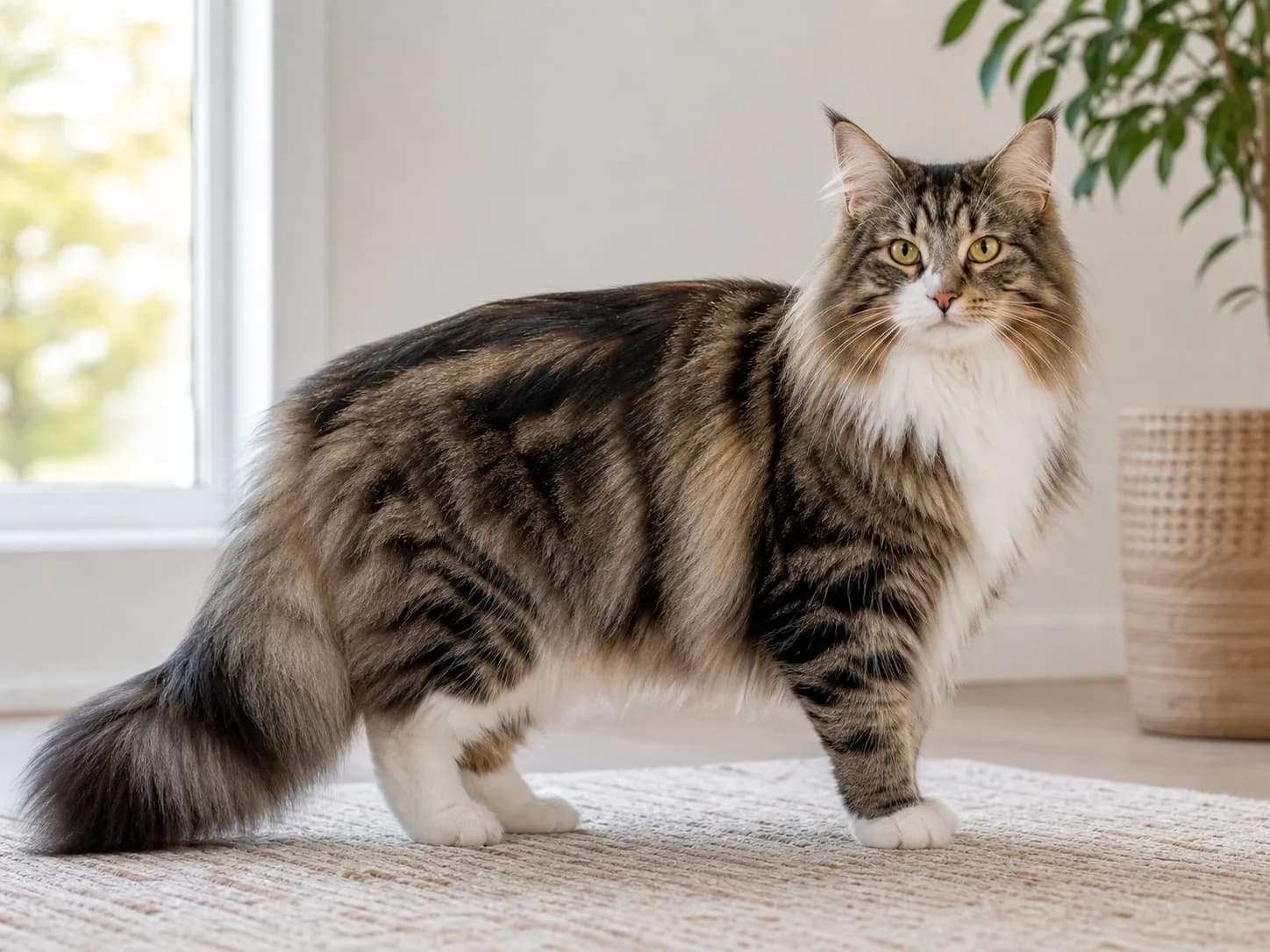
If you share your home with a Norwegian Forest Cat — a "Wegie," to friends — you live with a small, benevolent lynx. Tufted ears, a magnificent ruff, snowshoe paws, and a plumed tail: this is what happens when nature designs a cat for Scandinavian winters and then gives it the temperament of a golden retriever.
Care rhythm
What to keep on the calendar
- Coat
- Plan brushing, bathing, and grooming around this breed’s coat type and seasonal shedding.
- Movement
- Match exercise to age, conditioning, weather, and any orthopedic concerns.
- Veterinary flag
- Bring up breed-specific risks before procedures, diagnostics, or new medications.
The Best Bits of Norwegian Forest Cats
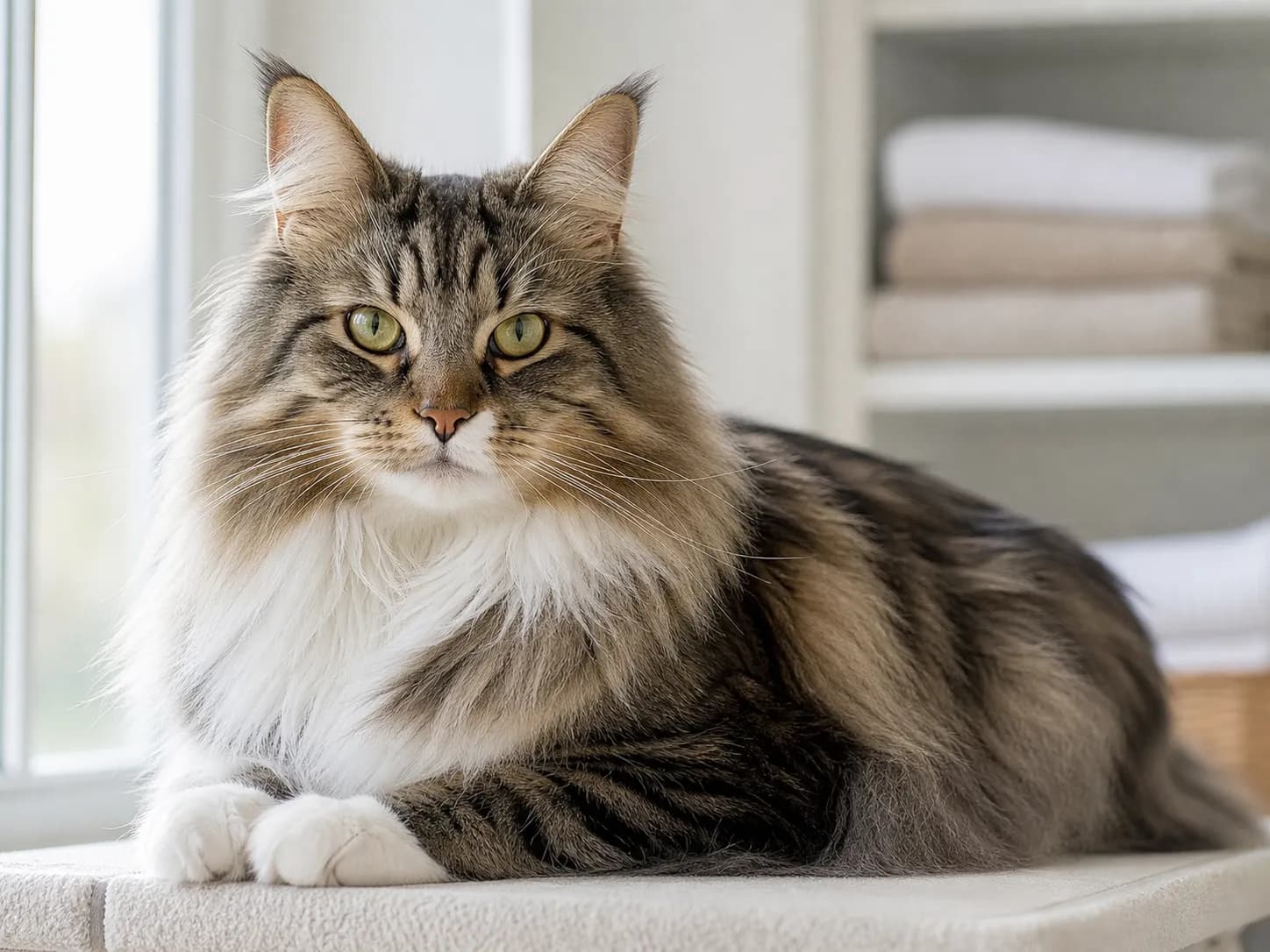
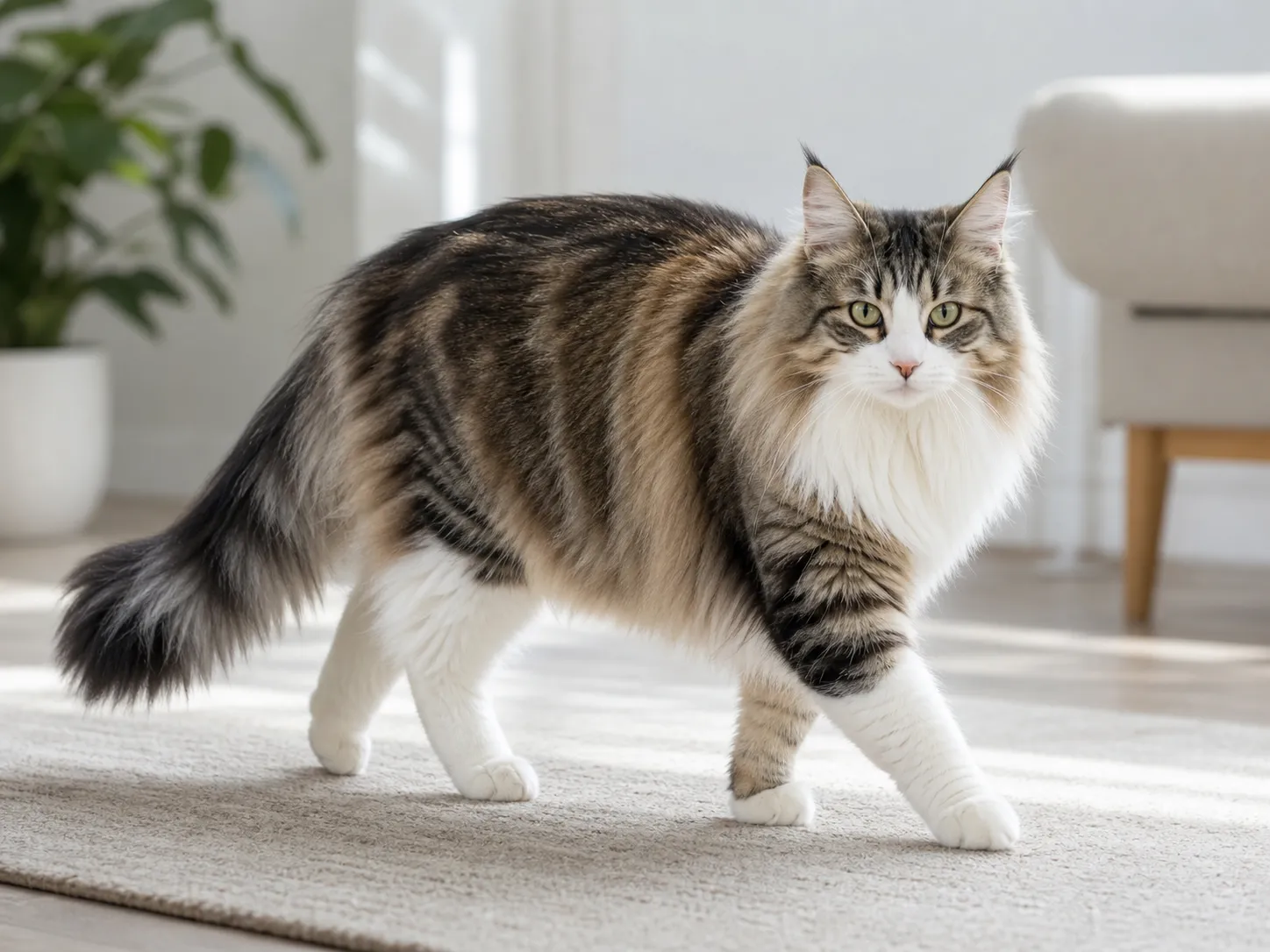
Wegies are calm, confident, and quietly affectionate. They like to be near their people — same room, adjacent cushion — without demanding constant handling, and they're famously patient with children, dogs, and household chaos. They are also, and this cannot be overstated, climbers. In the Norwegian forests they descended trees headfirst like squirrels; in your home, the tallest cat tree you can find is not a luxury but infrastructure. That glorious double coat (woolly undercoat, water-shedding guard hairs) needs a weekly comb most of the year and daily attention during the spectacular spring molt.
The Quirks That Make Us Love Them More
Wegies mature slowly — full size and coat take up to five years — so you get an extended kittenhood in an increasingly enormous package. They're independent problem-solvers: doors, cabinets, and zippers are puzzles, not obstacles. And while they're sturdy enough for gentle roughhousing, they prefer to come to you; a Wegie summoned is a Wegie who suddenly has other plans.
A Little History
This is the skogkatt of Norse legend — the fairy cat so large even Thor couldn't lift it, and the companion said to have pulled the goddess Freya's chariot. In reality, these cats mousekept Viking farms and ships for a thousand years. Nearly lost to crossbreeding by the mid-20th century, the breed was rescued by Norwegian fanciers (with royal encouragement) and is today the official cat of Norway.
Veterinary focus
Genetic predispositions and care notes
Genetic Predispositions for Norwegian Forest Cats
A thousand years of natural selection built a robust cat, but the modern breed carries a few specific concerns worth knowing — including one with an excellent genetic test.
The Tested One: Glycogen Storage Disease Type IV
GSD IV is the Norwegian Forest Cat's signature inherited disease: a missing enzyme prevents normal glycogen processing, and affected kittens either die around birth or develop progressive, fatal neuromuscular weakness in their first year. The crucial good news: a reliable DNA test identifies carriers, and responsible breeders test their lines. Two tested-clear parents cannot produce an affected kitten — so when you're acquiring a Wegie, asking for the parents' GSD IV results is the single most useful question you can ask.
Heart Health: Hypertrophic Cardiomyopathy
HCM — gradual thickening of the heart muscle — is documented in the breed, as it is in most large cats. It progresses silently; a murmur or gallop at a routine exam is often the first sign, and rapid breathing, lethargy, or sudden hind-leg weakness are emergencies. Breeding cats should be echo-screened, and for the cat on your sofa, annual exams (bi-annual as a senior) plus proBNP testing when indicated are the safety net.
Big Cat, Big Joints: Hip Dysplasia
Heavy-boned breeds put real load through their hips, and hip dysplasia is well documented in Wegies. Cats hide lameness expertly — look instead for shorter jumps, hesitation on the cat tree, stiffness after naps, or crankiness about the hindquarters. X-rays confirm it; weight control, joint supplements, and modern feline pain medication keep affected cats climbing. Which, for this breed, is quality of life defined.
Kneecaps Too: Patellar Luxation
Slipping kneecaps occur in the breed and often travel with hip issues. That intermittent skip or bunny-hop in the hind end deserves an orthopedic check — mild cases just need monitoring and a lean body weight; severe ones have surgical options.
The Coat and the Calories: Obesity
Under that triple-decker coat, weight gain is invisible until it's substantial — and every extra pound multiplies the joint concerns above. A slow-maturing, moderately active indoor cat with Viking-sized food enthusiasm needs measured meals and honest body-condition checks by hand. Muscle should be what you feel under the wool.
Hairballs and the Gut
A coat this productive means serious grooming ingestion, especially during molts. Frequent hairballs aren't just tidiness complaints — vomiting more than occasionally always warrants a look, since it can mask gut disease. Regular combing (you remove it so they don't swallow it) and hairball-control nutrition manage the normal traffic.
Dental Disease
The universal cat problem, hidden behind a magnificent ruff. Bad breath, drooling, or careful chewing are the tells; home brushing plus professional cleanings with dental X-rays as recommended is the fix.
Ask the GSD IV question, guard the joints with a lean body weight, comb the coat before they swallow it, and give them something tall to conquer. Do that, and your household lynx will patrol the top of the bookcase well into their teens — exactly as Freya intended.
Questions about Norwegian Forest Cat?
We can talk through preventive care, symptoms worth watching, and what is normal for your individual pet.
Contact our team