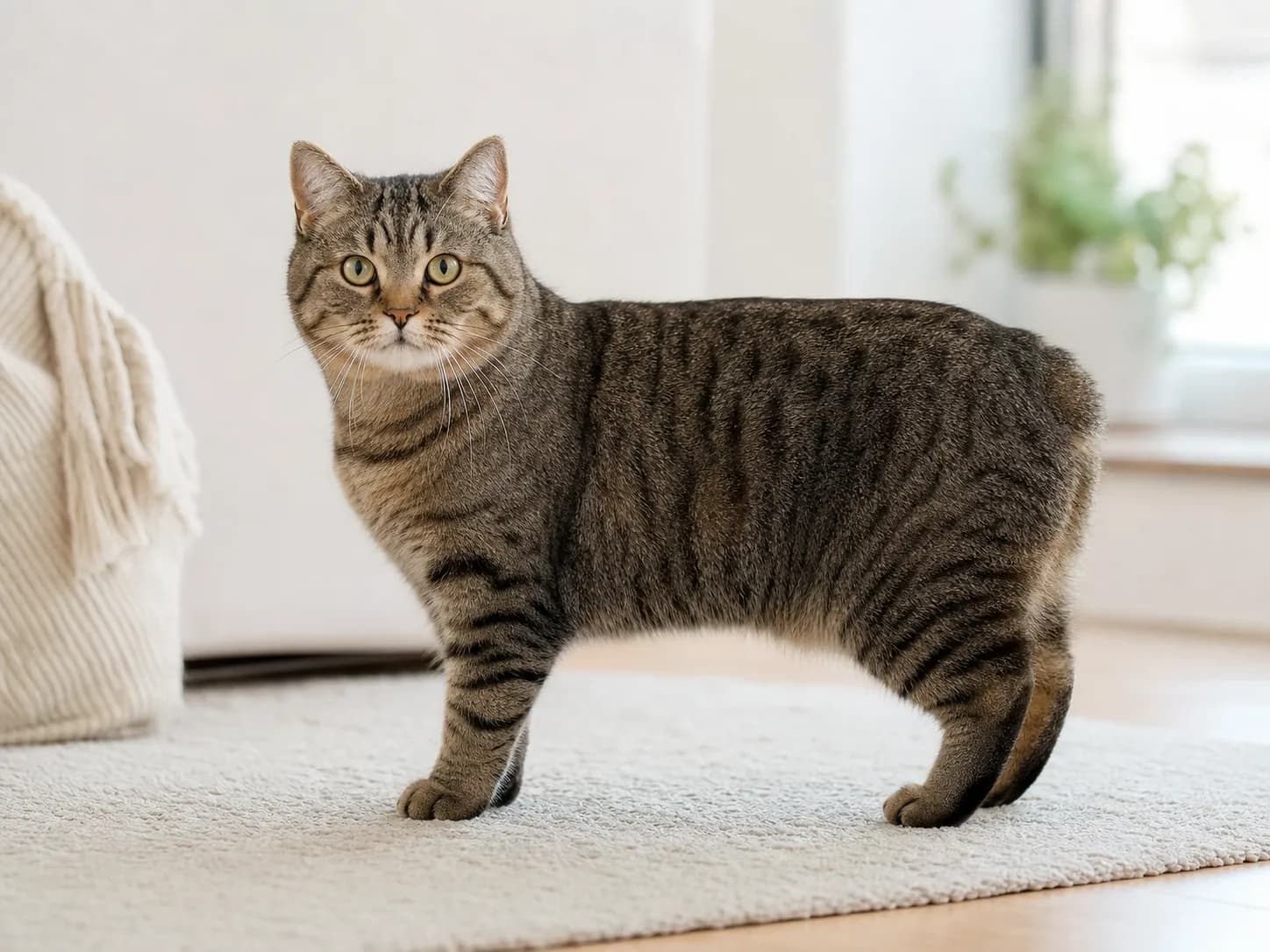
If you share your home with a Manx, you've fielded the question a hundred times: "Where's the tail?" And you've given the proud answer: never had one, never needed one. What the Manx lacks in tail it makes up for in personality — these are round, sturdy, dog-like cats who fetch, follow, and supervise.
Care rhythm
What to keep on the calendar
- Coat
- Plan brushing, bathing, and grooming around this breed’s coat type and seasonal shedding.
- Movement
- Match exercise to age, conditioning, weather, and any orthopedic concerns.
- Veterinary flag
- Bring up breed-specific risks before procedures, diagnostics, or new medications.
The Best Bits of Manx Cats
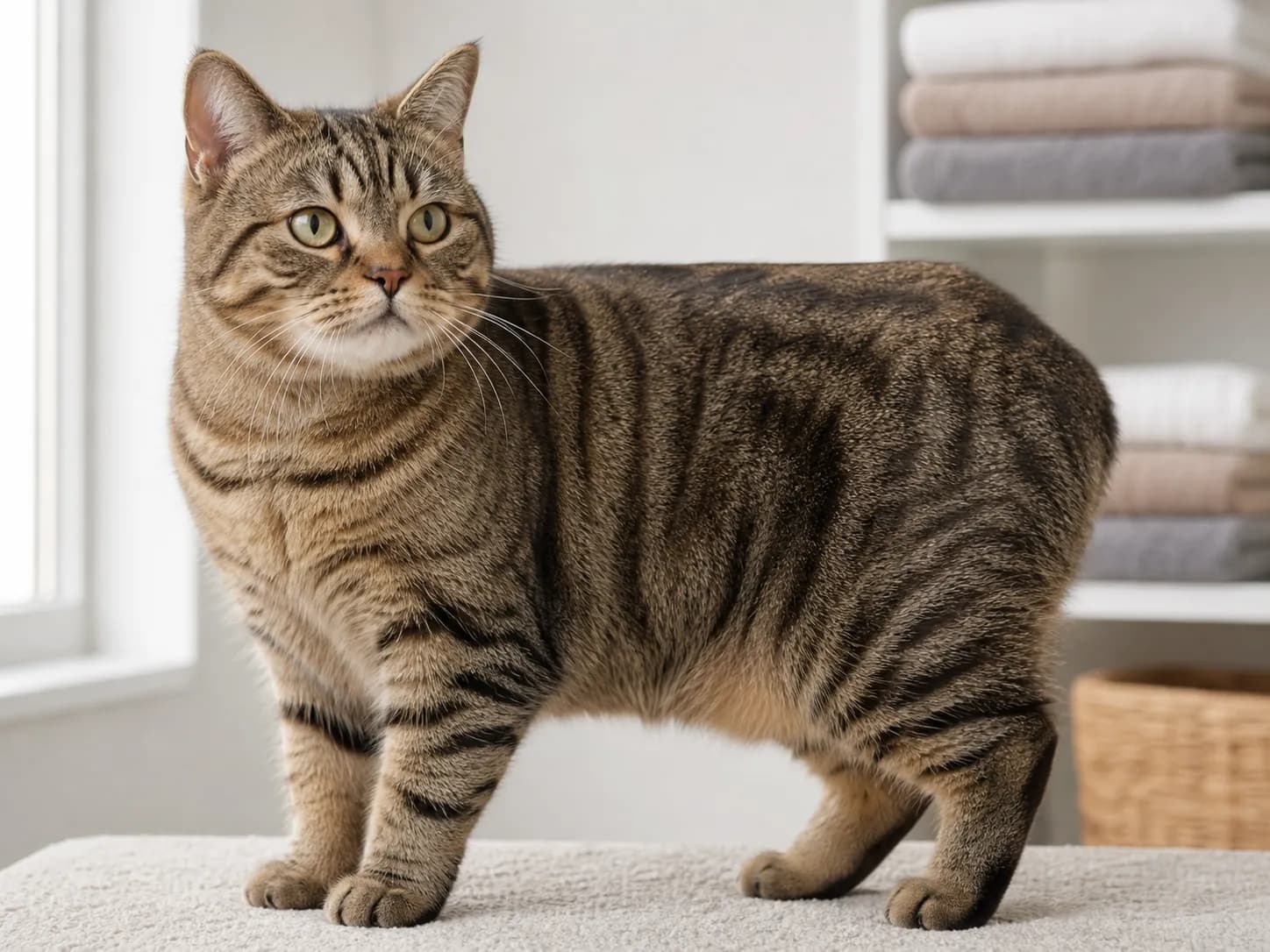
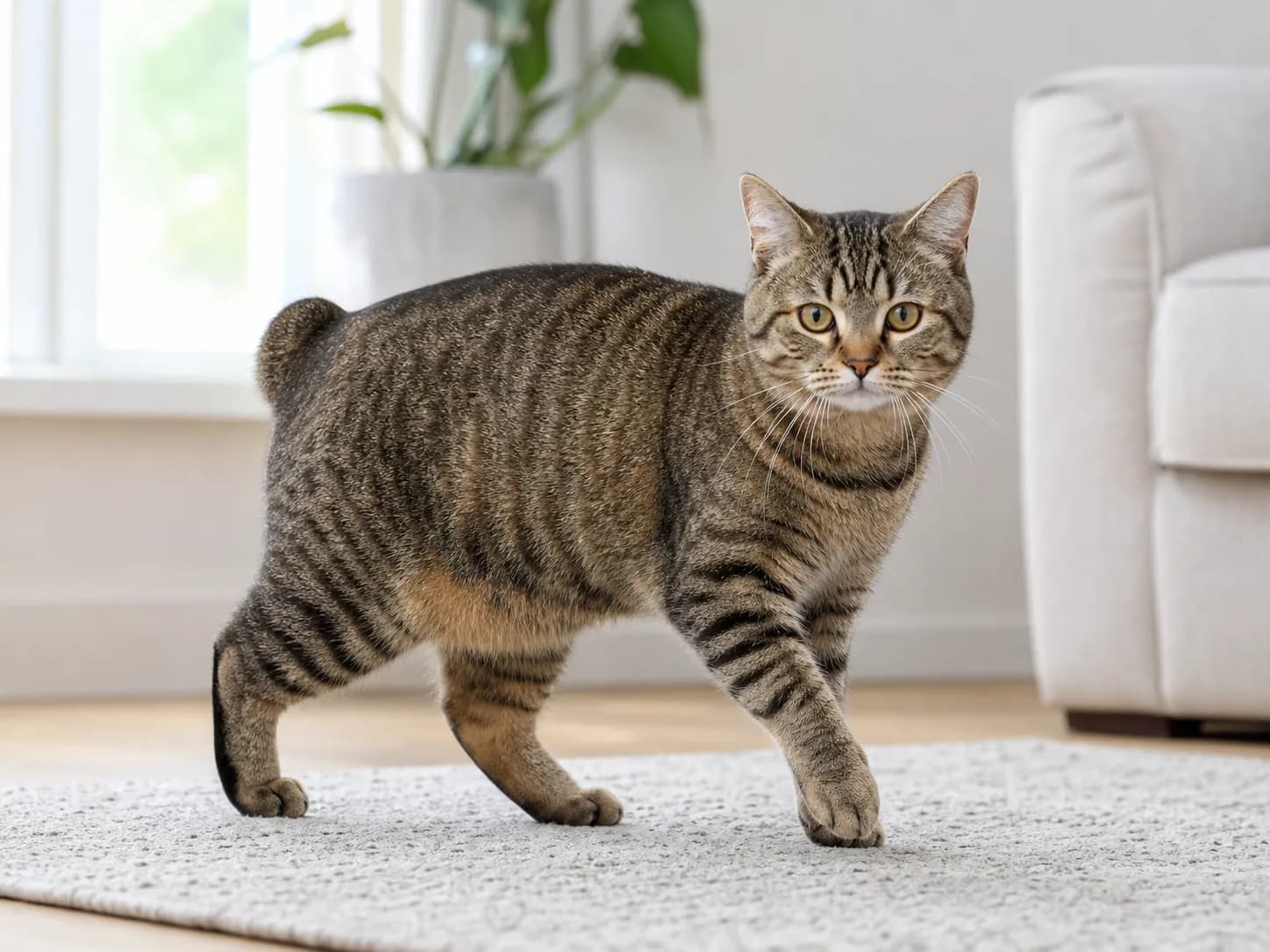
Manx cats are famously companionable. They attach firmly to their families, get along with respectful dogs and children, and many learn to fetch and come when called. They're powerful little athletes with heavily muscled hindquarters — watch one rocket across the room in that distinctive rabbit-like hop and you'll understand why islanders swore they were part hare. Coats come in shorthair and longhair (the longhair is sometimes called a Cymric), both with a dense double coat that appreciates a weekly brush.
The Quirks That Make Us Love Them More
Not every Manx is completely tailless. The breed comes in "rumpy" (no tail at all), "rumpy riser" (a small rise of bone), "stumpy" (a partial tail), and "longy" (nearly full tail) — and a single litter can include all of them. They're also talkers-adjacent: expect a distinctive trill rather than a meow, usually delivered while herding you toward the food bowl.
A Little History
The Manx arose centuries ago on the Isle of Man, where a spontaneous genetic mutation for taillessness spread through the island's isolated cat population. Island folklore offers more colorful explanations (a late boarding of Noah's Ark features prominently), but the genetics are the real story — and they matter for health, so let's get into it.
Veterinary focus
Genetic predispositions and care notes
Genetic Predispositions for Manx Cats
The tailless gene is the defining feature of this breed and also its defining medical issue. A well-bred Manx is a hardy, long-lived cat; the key is understanding what the gene can do.
The Big One: Manx Syndrome
The mutation that shortens the tail actually shortens the spine, and when it takes too much, the result is Manx syndrome — a form of spina bifida with damage to the spinal cord and the nerves that control the hind legs, bladder, and bowel. Affected kittens may show hind-limb weakness, a hopping or stilted gait beyond the normal Manx bounce, urinary or fecal incontinence, or chronic constipation. Signs are usually evident by four months of age. There is no cure, though supportive care helps milder cases live good lives. This is why responsible breeding matters enormously in this breed — two completely tailless cats are never bred together — and why a Manx kitten should come from a breeder who can discuss this openly. If you're adopting, we can assess a kitten's neurologic function during the first visits.
Bathroom Business: Megacolon and Constipation
Even without full Manx syndrome, some Manx cats have reduced nerve function in the hind gut and develop chronic constipation, which over time can stretch the colon into megacolon — a colon too dilated to work properly. Watch litter habits closely in this breed: straining, infrequent stools, or accidents deserve early attention. Diet, hydration, stool softeners, and prokinetic medications manage most cases well when we start early; advanced megacolon can require surgery.
Bladder Signals: Incontinence and Infections
The same nerve supply issue can weaken bladder control. Dribbling, wet spots where the cat sleeps, or recurrent urinary tract infections are the signals. Many affected cats are managed comfortably with medication and monitoring — but the earlier we characterize the problem, the better the plan.
The Tail Stump: Arthritis
Manx cats with partial tails ("stumpies") can develop painful arthritis in the shortened tail vertebrae as adults. If your partially-tailed Manx resents having the rump touched or seems suddenly grumpy, that little tail may be the reason — and it's treatable pain, not attitude.
Corneal Dystrophy
Some Manx lines carry corneal dystrophy, a clouding of the cornea that typically appears young. Many cases don't significantly affect vision, but any cloudiness, squinting, or eye discomfort deserves an exam to sort it from more urgent eye disease.
The Usual Suspects: Weight, Teeth, Heart
Beyond the breed-specific list, the Manx faces every cat's big three. That sturdy round build hides weight gain easily — and extra pounds are especially unkind to a cat whose spine and hips are doing nonstandard engineering. Periodontal disease advances silently and painfully; bad breath means exam time. And as with all breeds, we listen carefully for the murmurs that flag early heart disease at every visit.
Choose a Manx from thoughtful breeding (or adopt with open eyes and a good vet), watch the litter box like it's telling you secrets — because it is — and keep them lean. Do that, and you'll enjoy years of trilling, fetching, rabbit-hopping company from a cat who never once misses the tail everyone keeps asking about.
Questions about Manx?
We can talk through preventive care, symptoms worth watching, and what is normal for your individual pet.
Contact our team