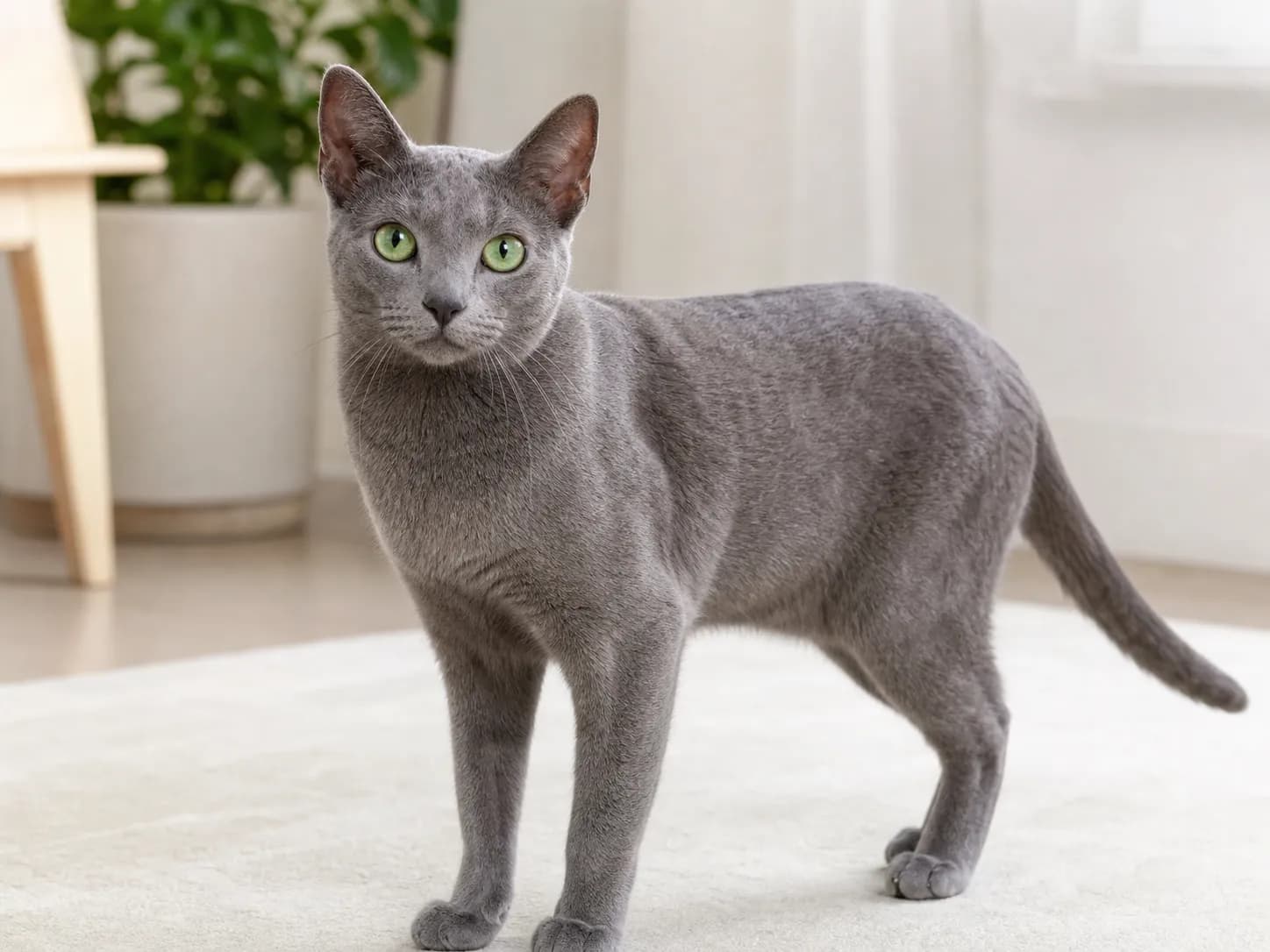
If a Korat runs your household, you know two things: you are deeply loved, and you are being watched. This ancient Thai good-luck cat bonds to its people with an intensity that makes most other breeds look casual about the relationship.
Care rhythm
What to keep on the calendar
- Coat
- Plan brushing, bathing, and grooming around this breed’s coat type and seasonal shedding.
- Movement
- Match exercise to age, conditioning, weather, and any orthopedic concerns.
- Veterinary flag
- Bring up breed-specific risks before procedures, diagnostics, or new medications.
The Best Bits of Korats
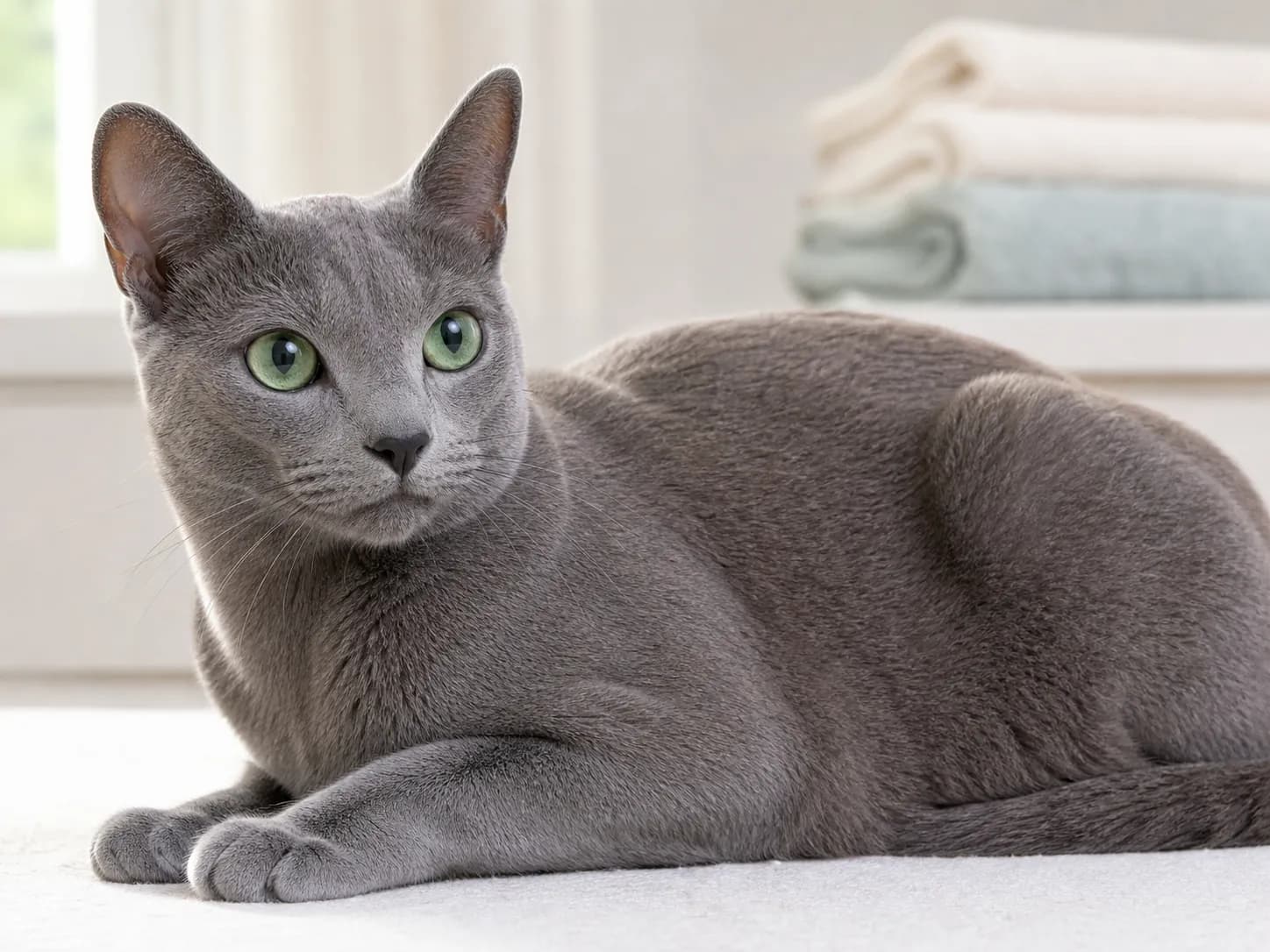
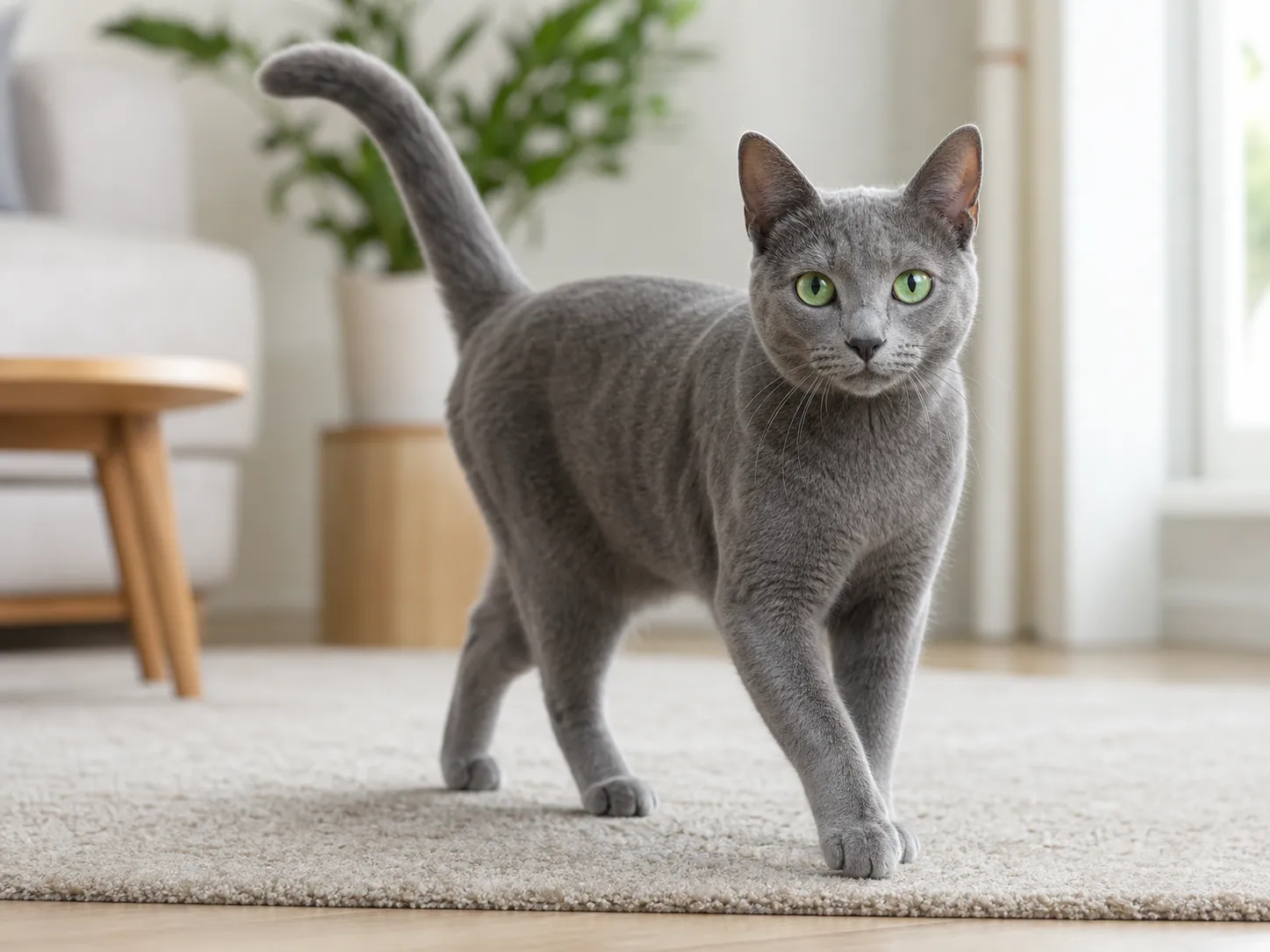
Korats are devoted, brilliant, and present. They follow their people everywhere, learn routines instantly, and hold eye contact like they're reading your thoughts (they might be). The look is unmistakable: a heart-shaped face, enormous peridot-green eyes, and a silver-tipped blue coat that shimmers like moonlight — Thai tradition compares it to rain clouds and its silver sheen to wealth, which is why pairs of Korats were traditional wedding gifts. They're moderate-energy but sharp: puzzle toys, fetch, and trick training are all on the table.
The Quirks That Make Us Love Them More
Korats want to be with you, on you, and consulted about you. Left alone too long or shuffled aside, they don't sulk quietly — they campaign. They also like to be the top cat and do best with cat-savvy households; sharing their humans requires negotiation. And they're sensitive to noise and chaos: a Korat home tends to become a calmer home, because the cat insists.
A Little History
The Korat (named for the Nakhon Ratchasima province, called Korat, in Thailand) appears in the ancient Thai "Cat-Book Poems" describing lucky cats — making this one of the oldest documented breeds on earth. Korats arrived in the West in 1959 and remain relatively rare, kept intentionally close to their ancient type: no outcrosses, no new colors, just the silver-blue original.
Veterinary focus
Genetic predispositions and care notes
Genetic Predispositions for Korats
Centuries as a natural breed left the Korat sturdy, but there is one genuinely important breed-specific condition to know, plus the usual feline fundamentals.
The One to Know: Gangliosidosis (GM1 and GM2)
Korats are one of the few breeds that can carry gangliosidosis, an inherited storage disease in which a missing enzyme lets material build up in nerve cells. Affected kittens develop tremors, wobbliness, and progressive neurologic decline starting at a few months of age, and the disease is fatal. Here's the good news, and it's genuinely good: reliable DNA tests exist for both GM1 and GM2, and responsible Korat breeders worldwide test their breeding cats — which has made affected kittens rare. If you're acquiring a Korat kitten, ask to see the parents' gangliosidosis test results. A kitten from two tested-clear parents cannot be affected. This is one of the cat fancy's real genetic-testing success stories.
The Low-Body-Fat Note: Anesthesia Sensitivity
Korats are muscular but carry notably little body fat, which affects how they process some anesthetic drugs and how well they hold body temperature under anesthesia. This isn't a reason to fear dental cleanings or spays — it's a reason they should be done somewhere that tailors anesthetic protocols to the individual cat, with monitoring and warming throughout. Mention the breed at any anesthetic event; we plan for it.
Heart Health: Hypertrophic Cardiomyopathy
The universal feline heart concern applies to Korats too. HCM thickens the heart muscle over years, typically silent until a murmur turns up at a routine exam. Annual visits (bi-annual for seniors) are the surveillance program; proBNP testing and echocardiography confirm and stage it when suspicion arises. Rapid breathing at rest or sudden hind-limb weakness are emergencies — go immediately.
The Sensitive Stomach and the Sensitive Soul
Korats' intensity has a flip side: stress shows up in their bodies. Stress-related cystitis (straining, out-of-box urination), overgrooming, and appetite dips can all trace back to household changes this breed takes personally — new pets, moves, absent favorite humans. Environmental stability, enrichment, and gradual introductions are preventive medicine. Any urinary signs still get a medical workup first; a male cat straining without producing urine is an emergency.
Dental Disease
As with every breed: periodontal disease is nearly universal, painful, and quiet. The Korat's expressive face won't tell you about a sore tooth — the bad breath, drooling, or careful chewing will. Home brushing (Korats train well, use that brain) plus professional cleanings with dental X-rays as recommended.
Keeping the Silver Sleek: Weight
A Korat should feel like coiled muscle under silver silk. Their moderate energy plus real devotion to mealtimes can quietly add ounces, and this fine-framed breed doesn't wear extra weight well. Measured meals and daily interactive play — which doubles as the together-time they demand anyway — keep them in ancient-good-luck-cat condition.
Buy or adopt from tested lines, tell us it's a Korat before any anesthesia, keep the heart checked and the household calm, and your silver-blue shadow will supervise your good fortune for fifteen-plus years. In Thailand they say the Korat brings luck to its household. Korat owners say the luck was getting the cat.
Questions about Korat?
We can talk through preventive care, symptoms worth watching, and what is normal for your individual pet.
Contact our team