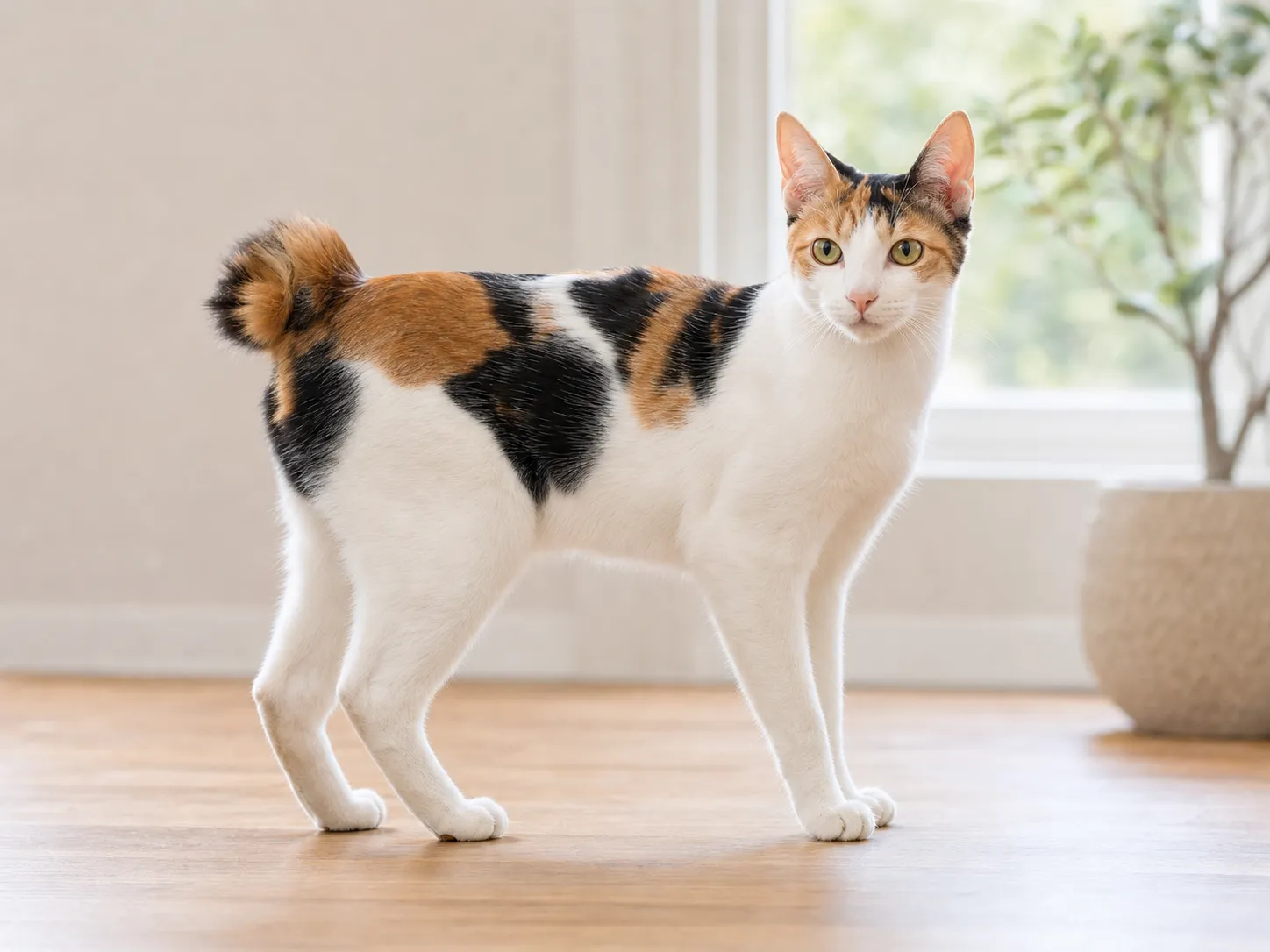
If you live with a Japanese Bobtail, you live with the original good-luck cat — the breed behind the beckoning maneki-neko figurine in every sushi restaurant window. And you know their secret: the luck is real, but it comes with commentary. These cats talk.
Care rhythm
What to keep on the calendar
- Coat
- Plan brushing, bathing, and grooming around this breed’s coat type and seasonal shedding.
- Movement
- Match exercise to age, conditioning, weather, and any orthopedic concerns.
- Veterinary flag
- Bring up breed-specific risks before procedures, diagnostics, or new medications.
The Best Bits of Japanese Bobtails
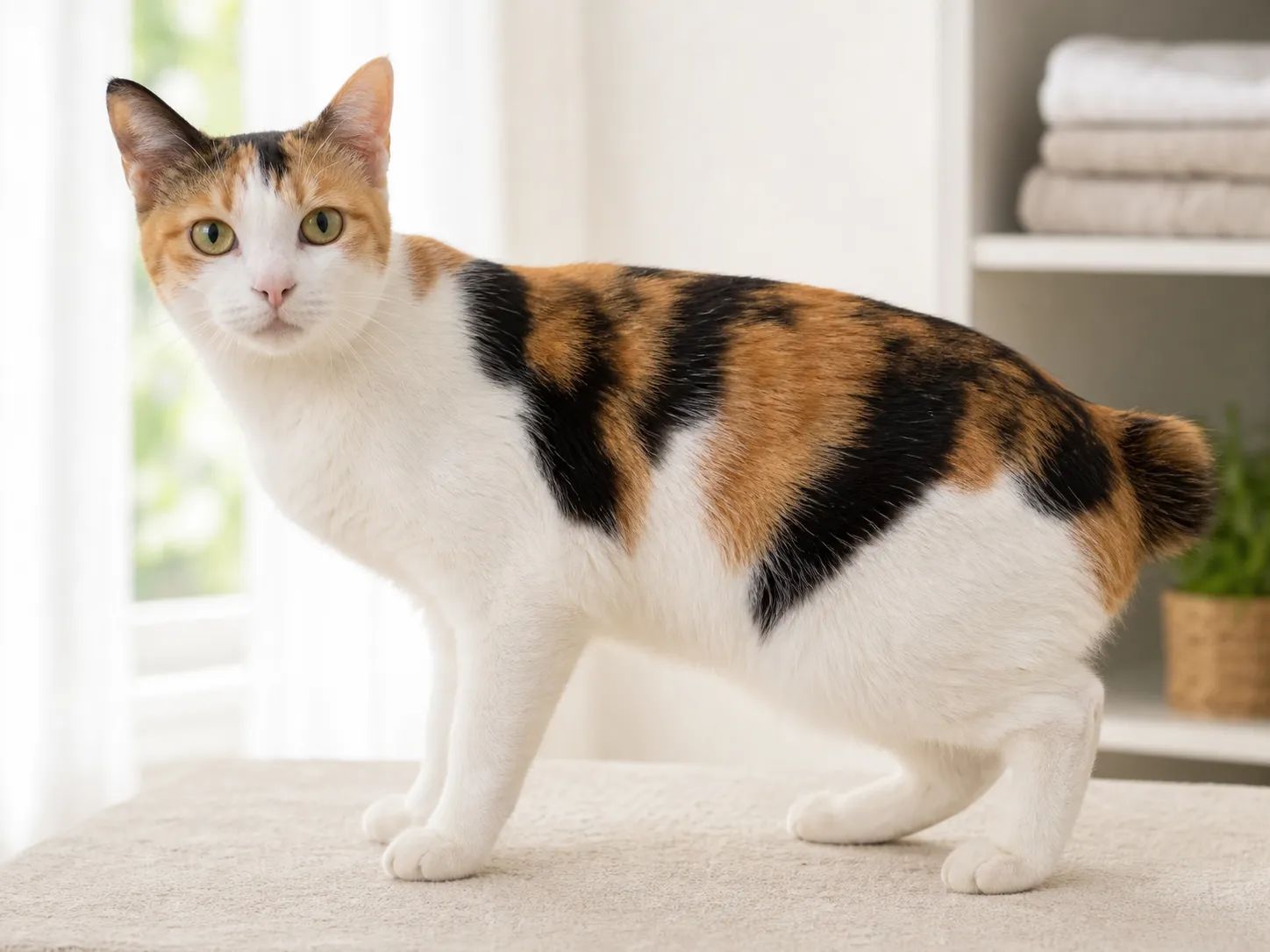
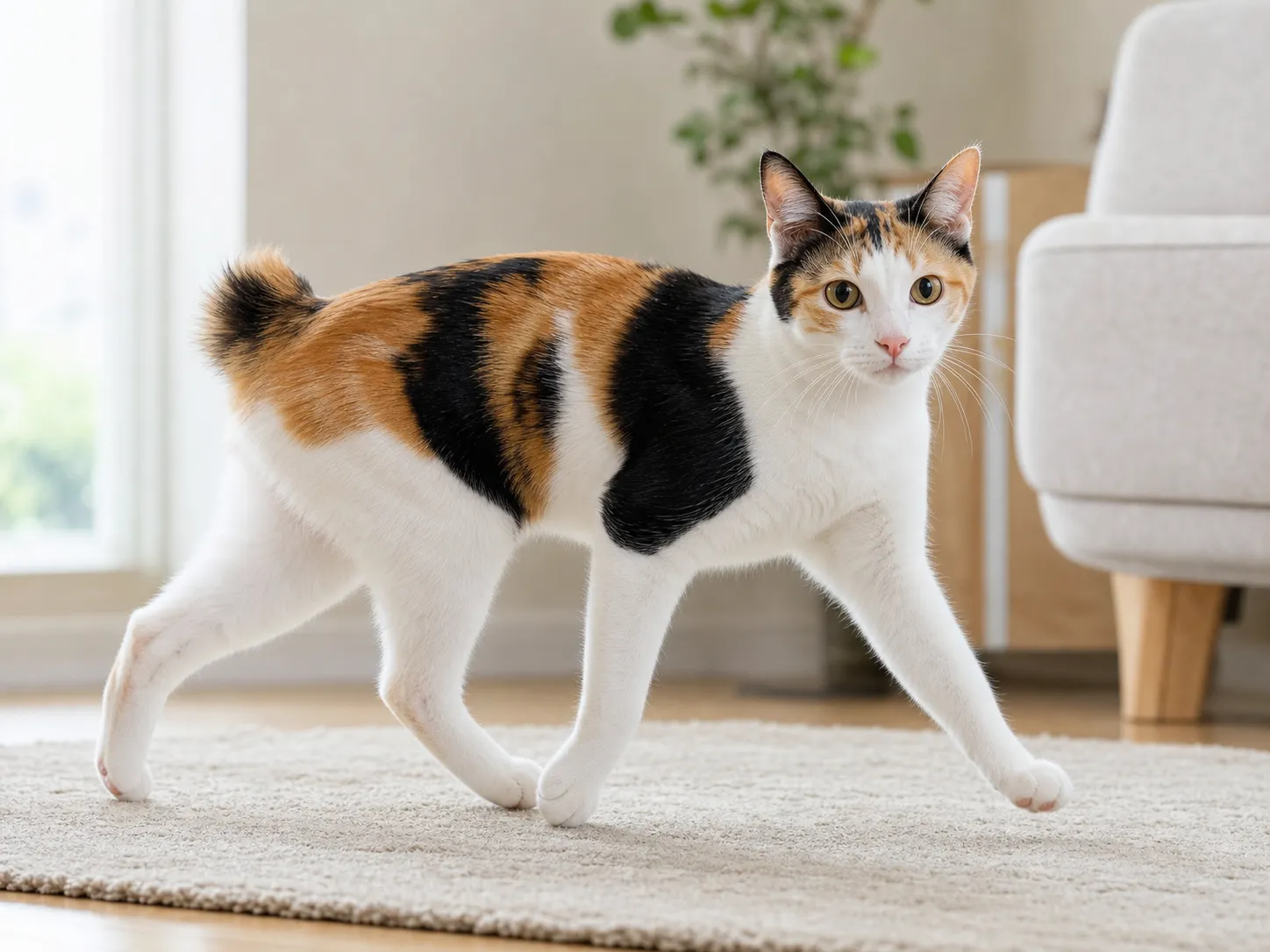
Bobtails are bright, busy, people-loving cats with a singsong voice — fanciers say they "sing," and a chatty Bobtail working through their morning report is genuinely melodic. They're confident travelers, quick learners, champion fetchers, and excellent family cats who tend to get along with kids, dogs, and other cats (especially other Bobtails — they're famously cliquish with their own kind). Each pom-pom tail is unique as a fingerprint: a few inches of kinked, curved vertebrae wearing a bunny-tail puff.
The Quirks That Make Us Love Them More
A bored Bobtail is a self-employed Bobtail, and you won't approve of the business. They need play, puzzles, and participation in household affairs — expect help with laundry, typing, and unpacking groceries. Many love water play, and most carry toys around like prey. They also famously ride shoulders. You will be furniture; accept it graciously.
A Little History
Bobtailed cats have lived in Japan for at least a thousand years, appearing in ancient scrolls, woodblock prints, and imperial courts. In 1602 Japanese authorities set the cats loose from their pampered lives to protect silkworms and granaries from rodents — turning the breed into a street-smart working cat. The maneki-neko "beckoning cat" of fortune is modeled on this breed. Bobtails arrived in the West in 1968 and remain uncommon and treasured.
Veterinary focus
Genetic predispositions and care notes
Genetic Predispositions for Japanese Bobtails
Here's a rare pleasure: the Japanese Bobtail is one of the healthiest pedigreed cats going. A crucial genetic point up front — the Bobtail's tail gene is completely different from the Manx's. It shortens only the tail, not the spine, so the spinal problems associated with Manx breeding simply don't occur in this breed. Centuries of street survival in Japan did the rest, selecting for vigor. That said, no cat is maintenance-free, so here's the honest list.
The Everyday Enemy: Dental Disease
Periodontal disease is the most common medical condition in all cats, lucky ones included. It starts as plaque, hardens to tartar, and progresses to painful infection and tooth loss — while the cat sings on and tells you nothing. Bad breath is a medical finding. Home brushing plus professional cleanings with dental X-rays as recommended protects the mouth and spares the heart and kidneys the chronic bacterial load.
Keeping the Athlete Lean: Obesity
Bobtails are naturally lean, leggy athletes — which makes them easy keepers, right up until indoor life and free-fed kibble catch up. Extra weight on a small, springy frame steals the jumping, invites diabetes, and stresses joints. Measured meals and daily interactive play (this fetch-obsessed breed makes it easy) keep the maneki-neko physique intact.
Heart Health: Hypertrophic Cardiomyopathy
No breed escapes the most common feline heart disease entirely. HCM thickens the heart muscle slowly and quietly; the first clue is usually a murmur at a routine exam. Annual visits (bi-annual for seniors) are the screening program, with proBNP blood testing and echocardiography if suspicion arises. Rapid breathing at rest or sudden hind-leg weakness is an emergency.
Bladder Business: FLUTD
Active, sensitive, social cats can still develop stress-related cystitis, crystals, or stones — particularly if water intake lags. Fountains help (many Bobtails think they're toys, which works in everyone's favor). Straining, blood-tinged urine, frequent small trips, or out-of-box accidents mean prompt exam time; a male cat straining without producing urine needs emergency care immediately.
Kidneys in the Golden Years
Chronic kidney disease is the standard tax on feline old age regardless of pedigree. The early signs — drinking more, urinating more, gradual weight loss — are easy to miss in a busy cat. Senior lab work catches it years before symptoms; early diet change is the single most effective intervention we have.
The Singing Voice as a Vital Sign
One Bobtail-specific tip: know your cat's normal chatter. In a breed this vocal, a quiet cat is data. Appetite, voice, and activity are your home monitoring system — changes in any of the three earn a checkup.
Keep the teeth clean, the body lean, the water flowing, and the senior labs on schedule, and your little fortune-beckoner will sing to you for a very long time. The maneki-neko raises one paw for luck. Yours will raise it for the fetch toy — same thing, really.
Questions about Japanese Bobtail?
We can talk through preventive care, symptoms worth watching, and what is normal for your individual pet.
Contact our team