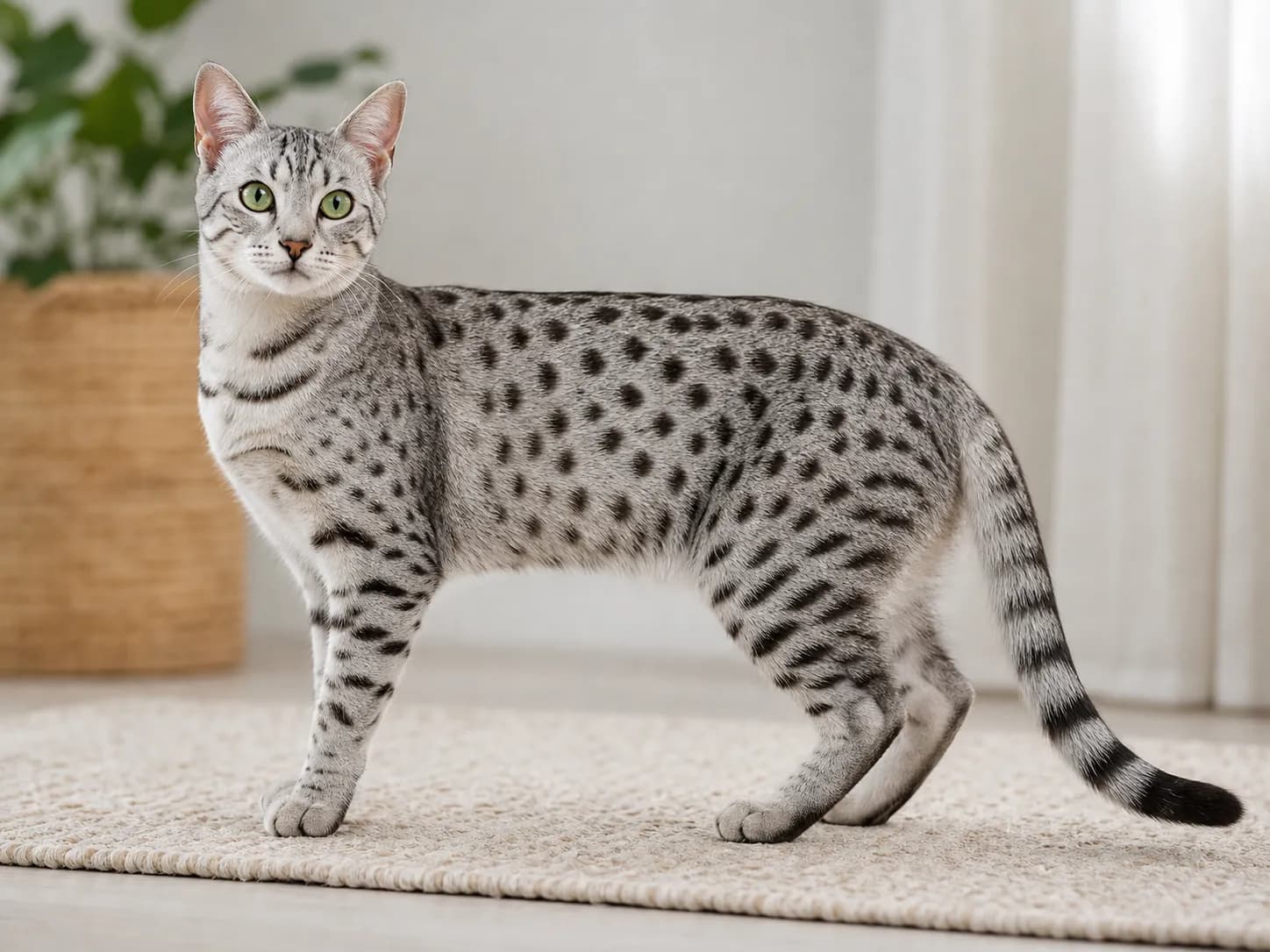
If an Egyptian Mau lives with you, you've seen the blur. This is the fastest domestic cat on record — clocked at thirty miles per hour — wearing the only naturally spotted coat in the cat fancy and an expression of slight, elegant concern. You don't own a Mau; you're staff to a small, devoted cheetah.
Care rhythm
What to keep on the calendar
- Coat
- Plan brushing, bathing, and grooming around this breed’s coat type and seasonal shedding.
- Movement
- Match exercise to age, conditioning, weather, and any orthopedic concerns.
- Veterinary flag
- Bring up breed-specific risks before procedures, diagnostics, or new medications.
The Best Bits of Egyptian Maus
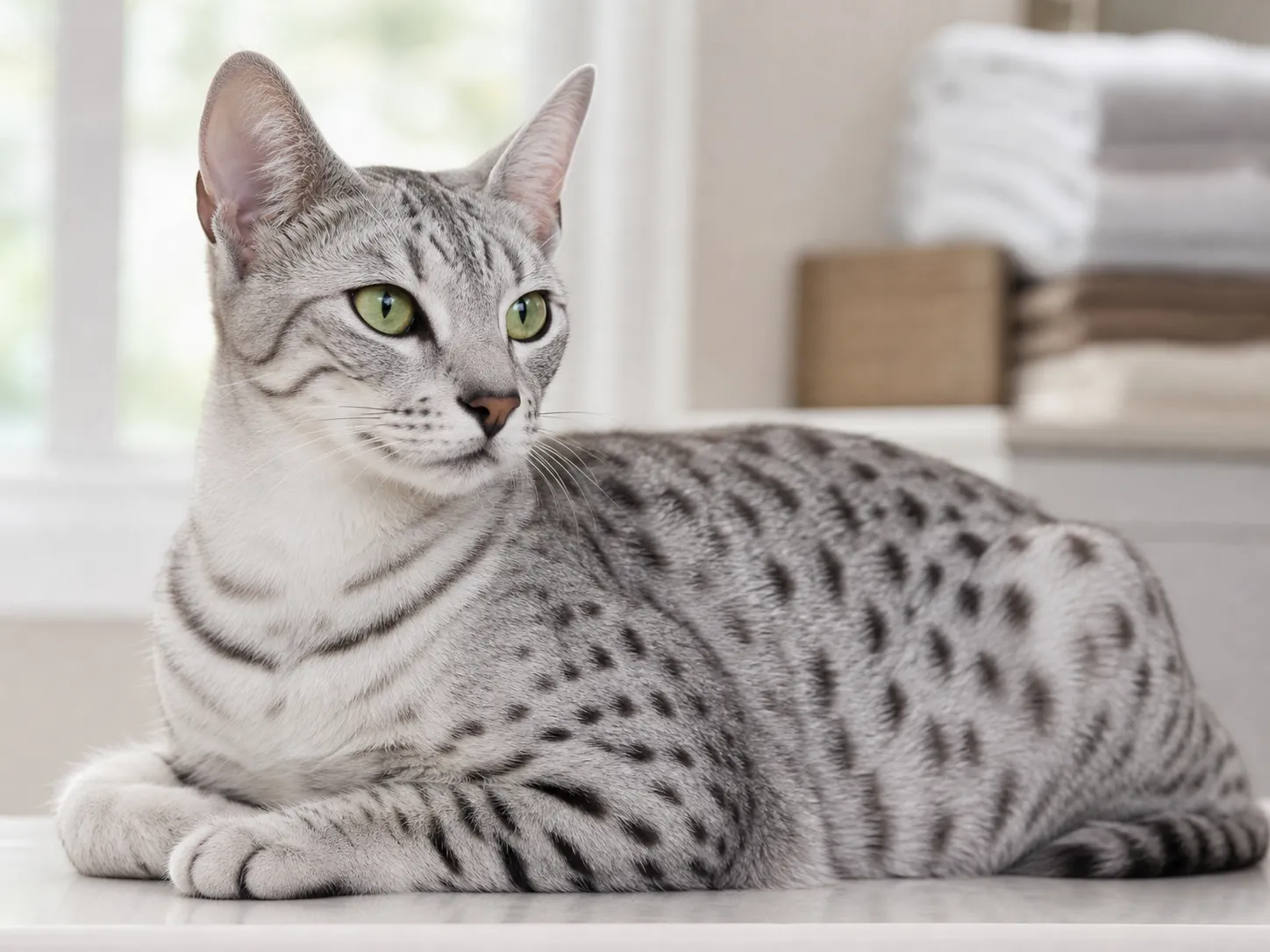
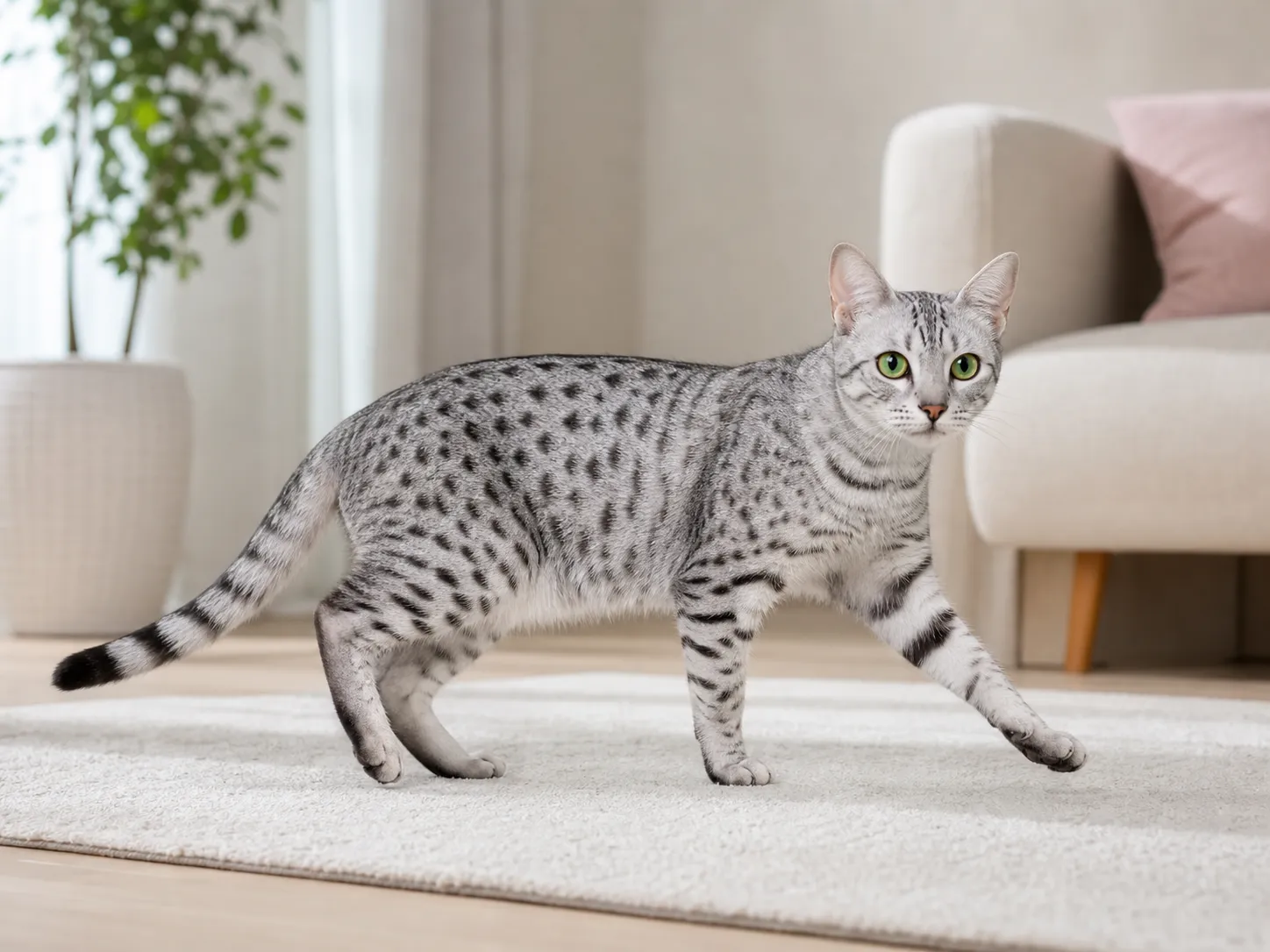
Maus are intensely loyal cats who choose their people and commit. With family they're affectionate, chirpy (they trill and chortle more than meow), and playful into old age; with strangers they're reserved, watching from the hallway until the newcomer clears vetting. The look is ancient and unmistakable: random spots stamped on a silver, bronze, or smoke coat, black eyeliner "mascara lines," and gooseberry-green eyes. A loose flap of skin from flank to knee — the same feature cheetahs have — gives them their extraordinary stride.
The Quirks That Make Us Love Them More
That speed comes with an engine that idles high. Maus need real play — chase, fetch, feather wands — and appreciate the tallest perch in the house as their observation post. They knead when happy, wiggle their tails when delighted (no, not spraying — check anyway, then relax), and many are notably temperature-sensitive: your Mau will find every sunbeam and claim every blanket. Doors are also apparently negotiable; this breed learns to open them.
A Little History
The spotted cats in Egyptian tomb paintings from 3,000 years ago look remarkably like the Mau at your window, and the breed's advocates will tell you that's no coincidence. The modern breed line began when exiled Russian princess Nathalie Troubetskoy acquired spotted cats in Italy and Egypt in the 1950s and brought them to New York. "Mau," fittingly, is simply the Egyptian word for cat.
Veterinary focus
Genetic predispositions and care notes
Genetic Predispositions for Egyptian Maus
The Mau is a generally healthy, long-lived breed, but it carries one signature inherited condition worth knowing — with a DNA test available — plus a few standard feline entries.
The Tested One: Pyruvate Kinase Deficiency
PK deficiency is the Mau's notable inherited disease: a missing red-blood-cell enzyme shortens the cells' lifespan, causing intermittent anemia. Affected cats may show lethargy, pale gums, poor appetite, or a swollen belly — sometimes episodically over years, sometimes barely at all. There's no cure, but many PK-deficient cats live long lives with monitoring. Best of all, a reliable DNA test exists: responsible breeders test their lines, and two tested-clear parents cannot produce an affected kitten. Ask for the paperwork when acquiring a Mau; for a Mau already in your family, testing is a simple cheek swab or blood sample if we ever need to explain an anemia.
The Sensitive Side: Anesthesia and Medications
Maus are lean, low-body-fat athletes, and some lines show sensitivity to certain anesthetics and medications. As with other lean breeds, this is a planning note, not a warning against needed procedures — anesthetic protocols tailored to the individual cat, with monitoring and warming, make dentals and surgeries routine. Just make sure the Mau on the table is identified as a Mau.
Heart Health: Hypertrophic Cardiomyopathy
The universal feline heart concern: gradual thickening of the heart muscle, silent until a murmur turns up at a routine exam. For a breed this athletic, protecting cardiac function is protecting identity. Annual exams (bi-annual for seniors), proBNP screening when indicated, and prompt attention to rapid breathing at rest or sudden hind-limb weakness — the latter two are emergencies.
Bladder Business: Urolithiasis and FLUTD
Urinary stones and stress-related cystitis appear in the breed lists for Maus. The clues are in the box: straining, frequent small urinations, blood-tinged urine, or accidents. Fountains earn their keep with this water-curious breed, routine urinalysis catches crystals early, and diet is a powerful preventive. A male cat straining without producing urine is a drop-everything emergency.
Fueling the Sprinter: Weight and Muscle
A fit Mau is muscle wrapped in spots; an under-exercised, over-fed Mau loses the thing that makes them them. Indoor life can't offer thirty-mile-per-hour straightaways, so structured daily play is the substitute — this breed will actually run for a thrown toy. Measured meals keep the flank flap athletic equipment rather than storage.
Dental Disease
Every cat's quiet tax. Periodontal disease is painful, progressive, and invisible behind those mascara lines until breath, drooling, or careful chewing gives it away. Home brushing plus professional cleanings with dental X-rays as recommended — the Mau's trainability makes brushing a realistic goal.
Verify the PK-deficiency testing, flag the breed at anesthesia time, keep the sprinter sprinting with real play and a lean body, and mind the heart and teeth. Do that, and the fastest housecat on earth will spend fifteen-plus years choosing, over and over, to slow down and sit with you. From a Mau, there's no higher compliment.
Questions about Egyptian Mau?
We can talk through preventive care, symptoms worth watching, and what is normal for your individual pet.
Contact our team