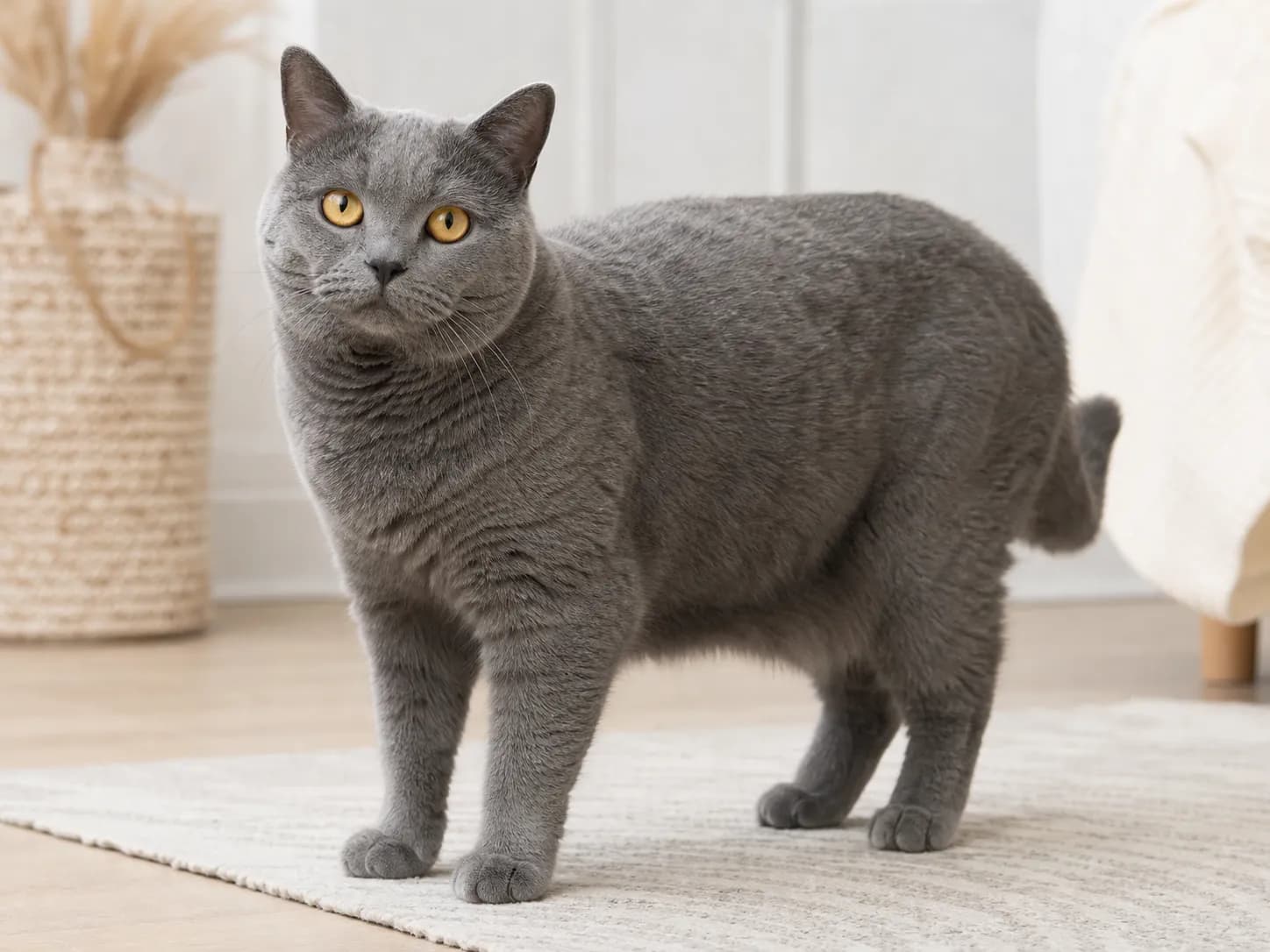
If you live with a Chartreux, you live with a cat who smiles. That's not sentiment — the breed's rounded head and tapered muzzle produce a genuine, permanent Mona Lisa smile, attached to one of the sweetest, quietest personalities in the cat world.
Care rhythm
What to keep on the calendar
- Coat
- Plan brushing, bathing, and grooming around this breed’s coat type and seasonal shedding.
- Movement
- Match exercise to age, conditioning, weather, and any orthopedic concerns.
- Veterinary flag
- Bring up breed-specific risks before procedures, diagnostics, or new medications.
The Best Bits of the Chartreux
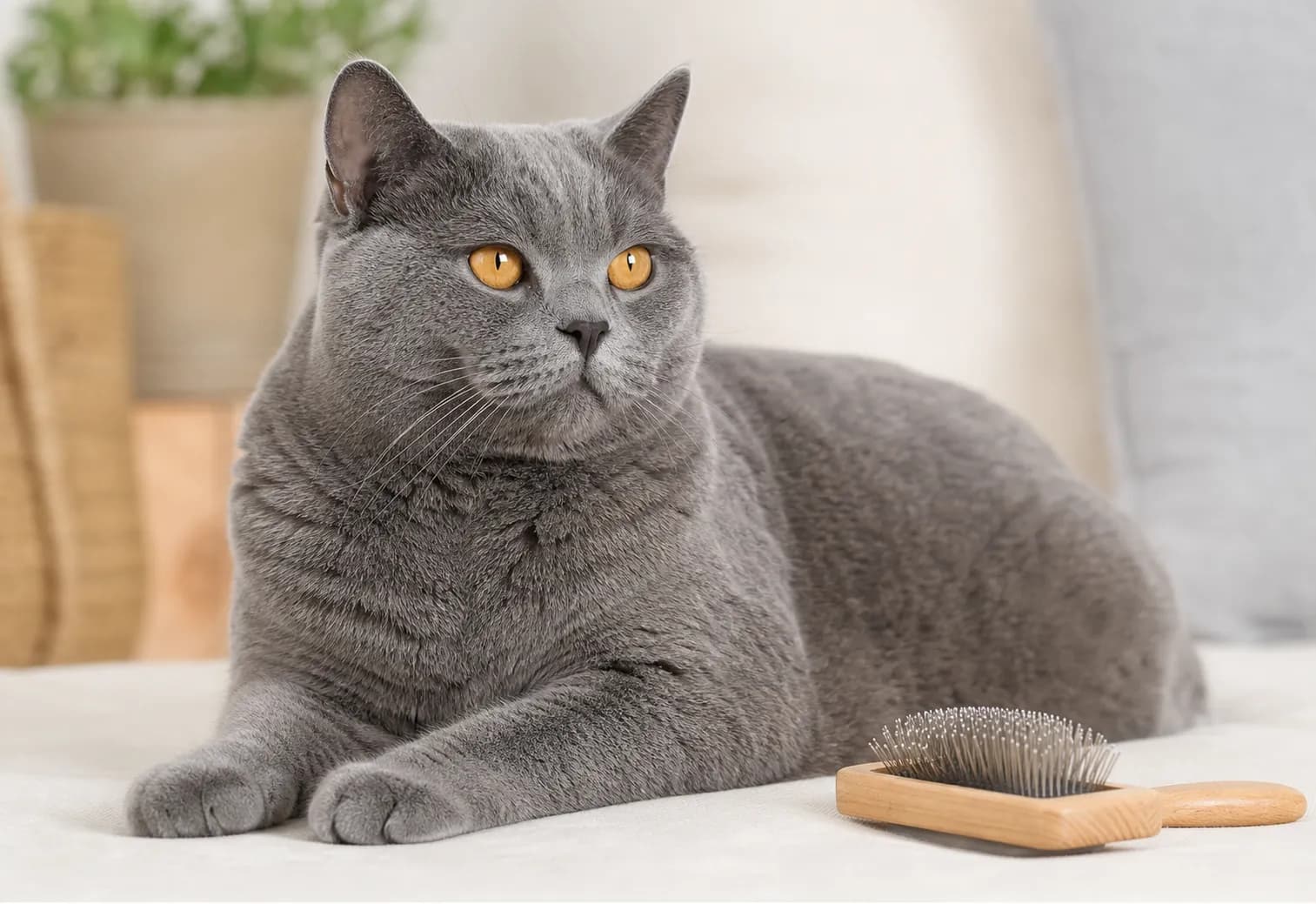
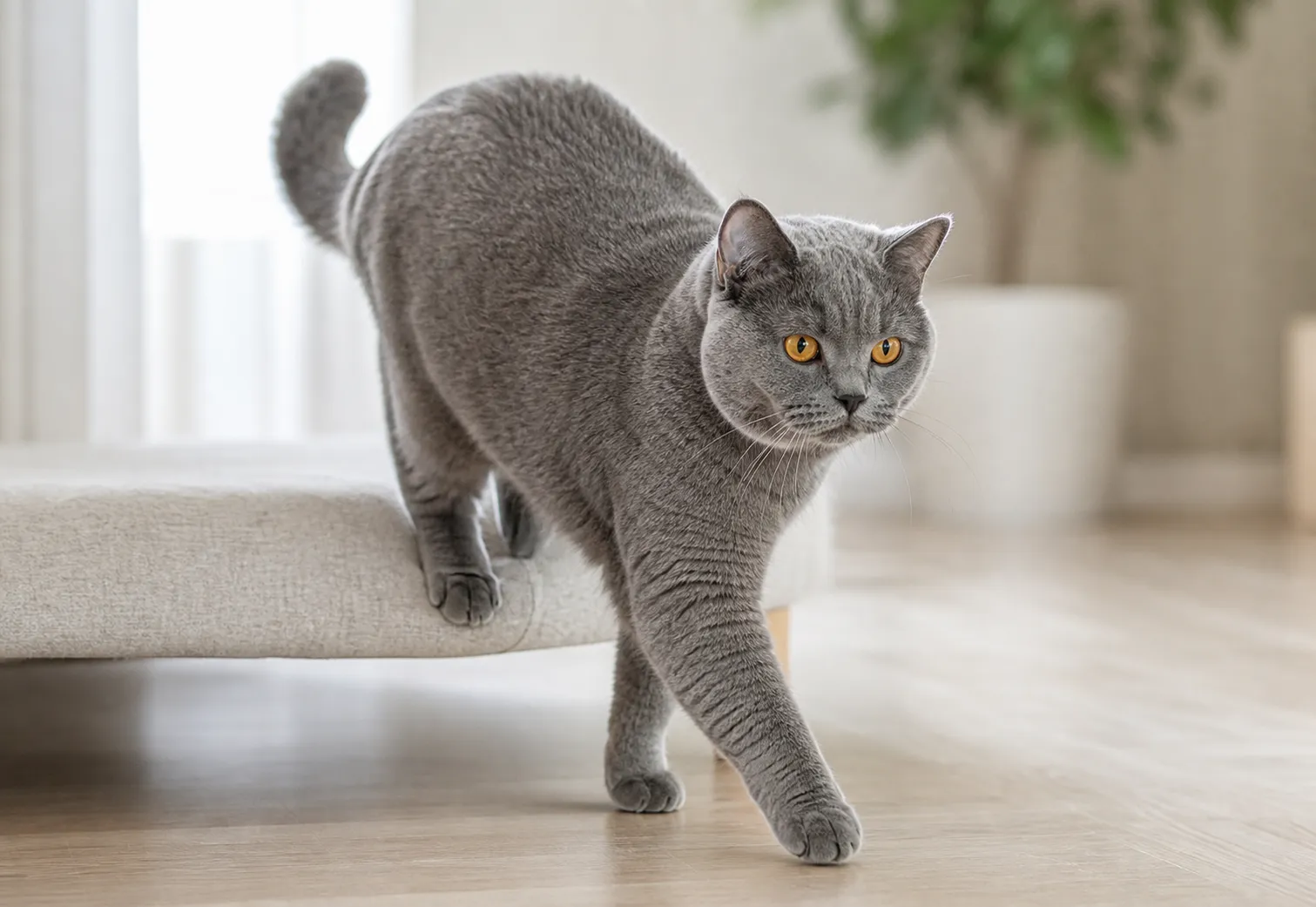
The Chartreux is a gentle, observant companion with a legendary calm. They rarely meow — many chirp or stay nearly silent — and they express affection by simply being wherever you are: on the desk, by the stove, at the foot of the bed. Underneath that woolly blue coat is a surprisingly powerful body; breeders describe them as "a potato on toothpicks," which is unkind but not entirely wrong — a robust, muscular trunk on relatively fine legs. They're patient with children, tolerant of dogs, and famously adaptable to new homes and routines.
The Quirks That Make Us Love Them More
Chartreux cats are watchers. New guest? They'll observe from a middle distance, file a report, and approach on their own schedule. They also tend to pick one person and quietly orbit them for life. And despite the calm exterior, they keep a sharp hunting instinct — a toy mouse tossed across the room flips a switch you didn't know was there.
A Little History
Legend ties the breed to the Carthusian monks of France (of Chartreuse liqueur fame), though the documented history begins with free-living blue cats in France prized for their hunting and their wool-like coats. The breed was nearly lost after World War II and rebuilt by dedicated French breeders. National treasure status is unofficial but, among Chartreux people, non-negotiable.
Veterinary focus
Genetic predispositions and care notes
Genetic Predispositions for Chartreux
The Chartreux is a hardy natural breed with a good lifespan, but a few conditions show up often enough to earn a place on your radar.
Wobbly Kneecaps: Patellar Luxation
This is the Chartreux's best-documented breed issue. The patella (kneecap) can slip out of its groove, causing a skip in the stride, a bunny-hop, or a sudden hind-leg hitch that resolves just as suddenly. Mild cases need only monitoring and weight control; severe cases can cause real lameness and benefit from surgery. It's worth having us check those knees at kitten visits and at spay/neuter time — early detection shapes the plan.
Hips Under That Woolly Coat: Hip Dysplasia
Less common in cats than dogs, hip dysplasia nonetheless appears in this sturdily built breed. Signs are subtle in cats: reluctance to jump, stiffness after rest, or grumpiness when the hindquarters are handled. X-rays make the diagnosis, and management — weight control, joint support, and modern feline pain medication — keeps affected cats comfortable and mobile.
Heart Health: Hypertrophic Cardiomyopathy
The most common feline heart disease doesn't skip France's blue cat. HCM thickens the heart muscle quietly, often flagged first by a murmur at a routine exam. Because the Chartreux is quiet by nature, behavioral clues are scarce — which makes the stethoscope, the proBNP blood test, and (when indicated) an echocardiogram the tools that matter. Rapid breathing at rest or sudden hind-leg weakness are emergencies.
Bladder Stones: Struvite and Oxalate
Chartreux appear on the breed lists for urinary stones. The early clues live in the litter box: frequent small urinations, straining, blood-tinged urine, or box avoidance. Routine urinalysis can catch crystals before they organize into stones, and diet is a genuinely effective preventive. As always: a male cat straining without producing urine is an emergency, immediately.
The Quiet Cat's Waistline: Obesity
That dense double coat could hide a second cat. Chartreux are moderate-energy, food-appreciating cats, and weight creeps on invisibly under the wool. Extra pounds aggravate the knees and hips this breed already worries about, and they set the table for diabetes. Measured meals, food puzzles, and a hands-on rib check (yours monthly, ours at every visit) are the plan.
Dental Disease
Some Chartreux lines are prone to gingivitis young, and periodontal disease is ubiquitous in cats regardless. A silent breed will be extra silent about mouth pain — watch for drooling, one-sided chewing, or the classic "approaches food bowl hungry, walks away" move. Home brushing plus professional cleanings with dental X-rays as recommended protects the mouth and everything downstream of it.
Keep the smiling blue cat lean, check the knees, mind the mouth, and listen to the heart once a year — that's the whole maintenance schedule. The Chartreux will handle the rest of the job: quietly supervising your life with that little smile, as their ancestors supervised the monks.
Questions about Chartreux?
We can talk through preventive care, symptoms worth watching, and what is normal for your individual pet.
Contact our team