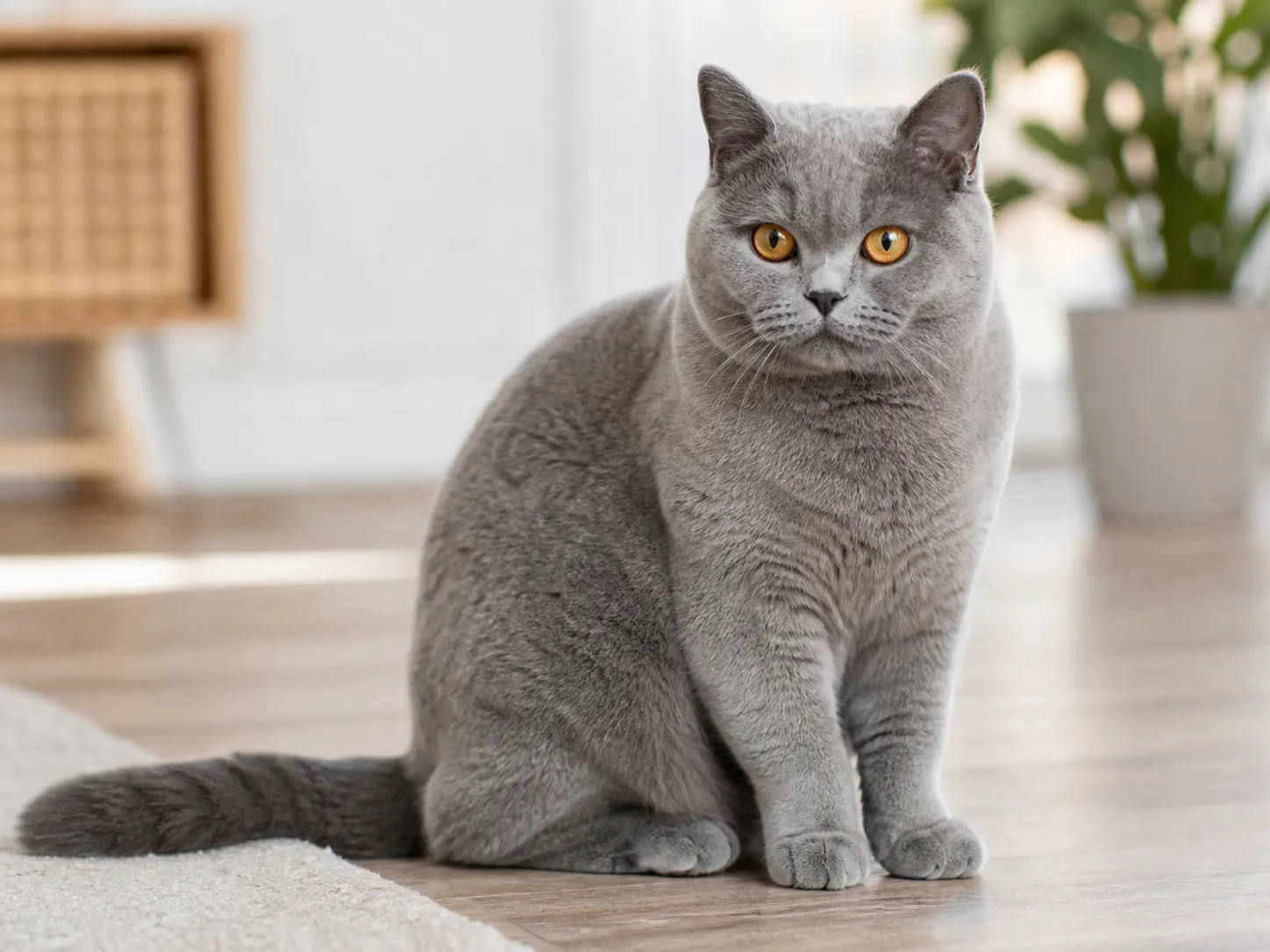
If you share your home with a British Shorthair, you know the look: round face, copper or gold eyes, plush coat, and an expression of unshakable composure — like a teddy bear that has seen things and remains unbothered. These are the gentlemen and gentlewomen of the cat fancy.
Care rhythm
What to keep on the calendar
- Coat
- Plan brushing, bathing, and grooming around this breed’s coat type and seasonal shedding.
- Movement
- Match exercise to age, conditioning, weather, and any orthopedic concerns.
- Veterinary flag
- Bring up breed-specific risks before procedures, diagnostics, or new medications.
The Best Bits of British Shorthairs
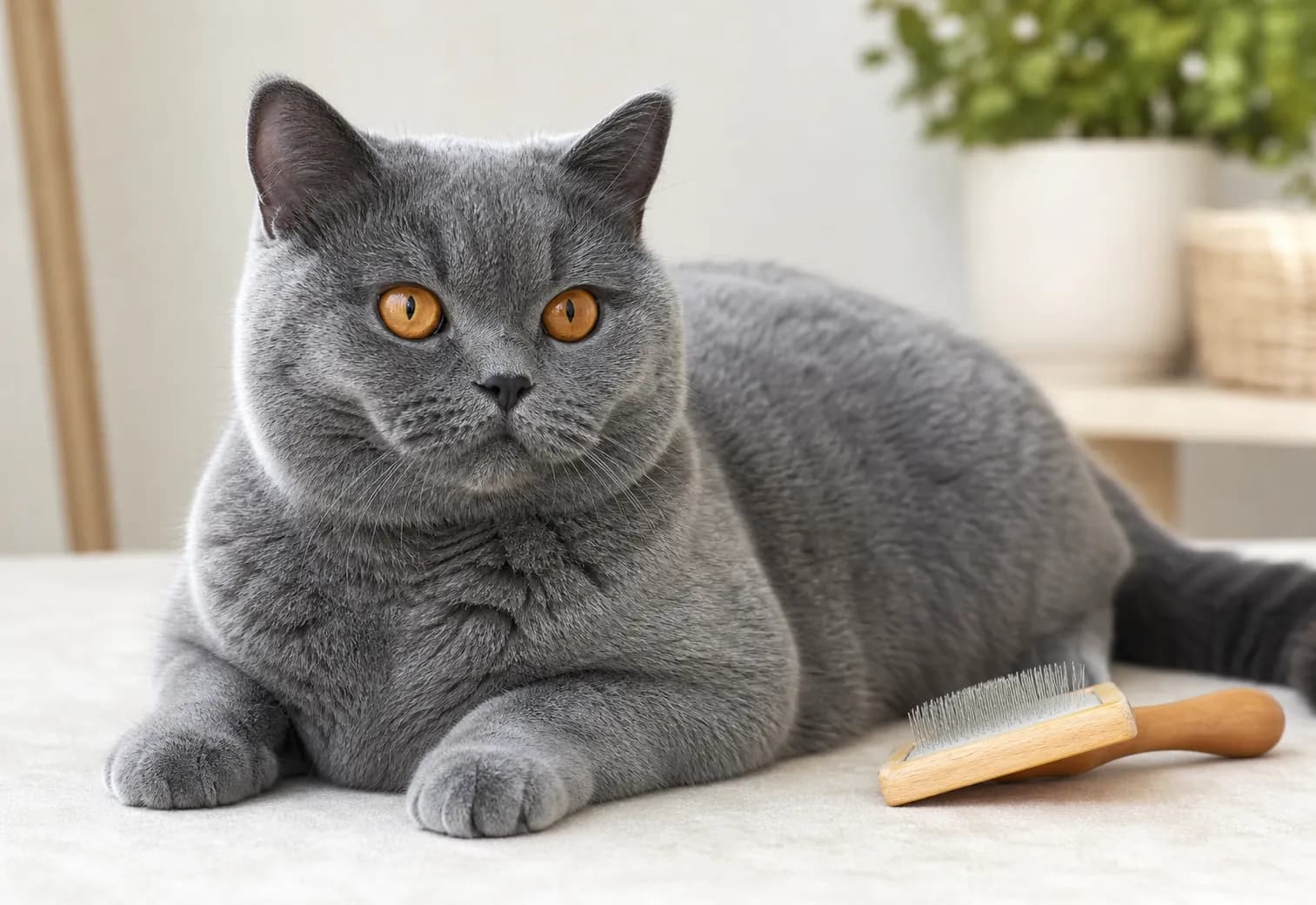
British Shorthairs are famously easygoing. They're affectionate without being needy, playful without being destructive, and dignified without being cold. They get along well with children, dogs, and other cats, and they handle alone time better than most breeds — a workday without you is a napping opportunity, not a crisis. That dense, plush coat (the famous "British Blue" is just one of many colors) is low-maintenance most of the year, though it does blow out seasonally.
The Quirks That Make Us Love Them More
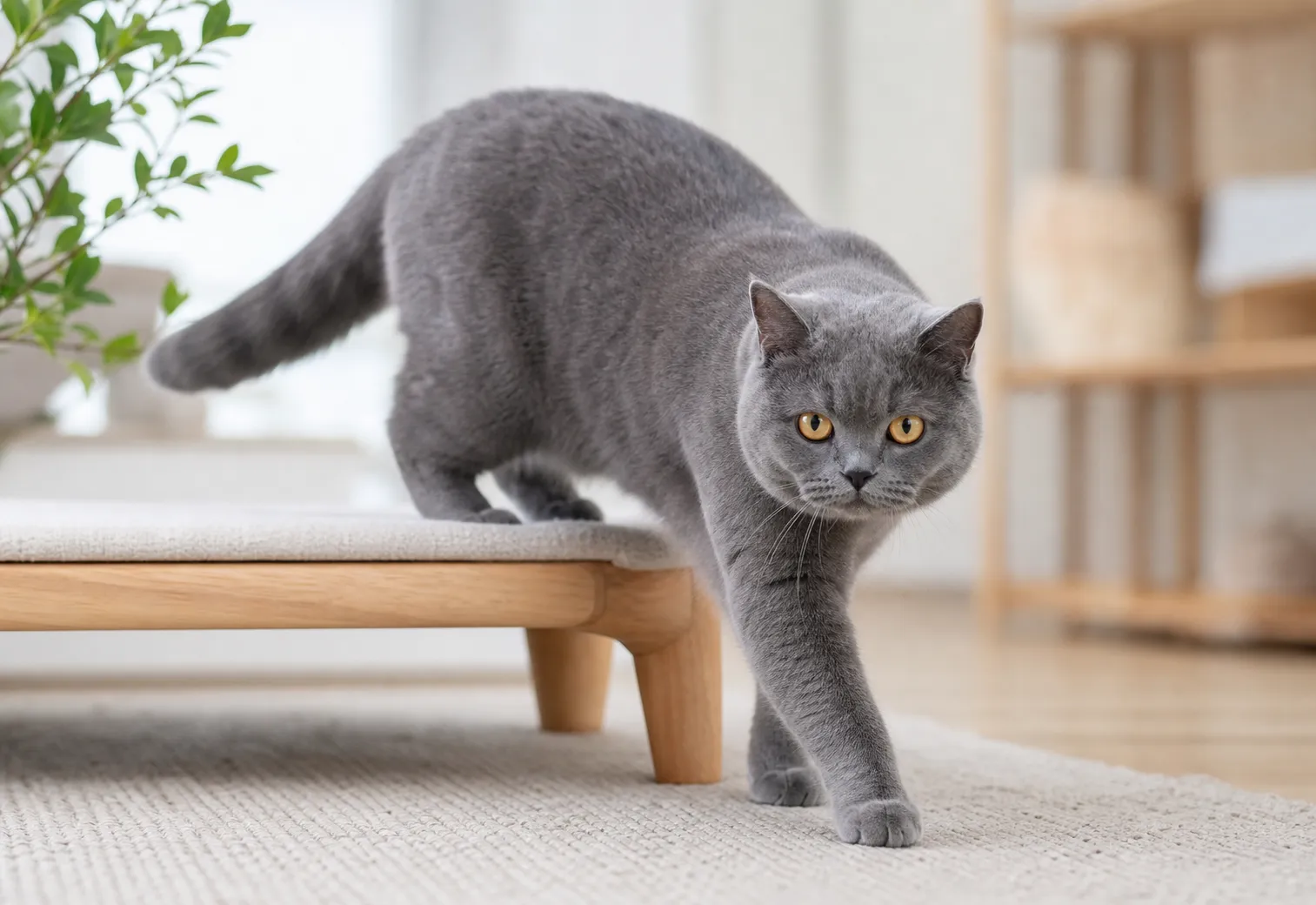
Here's the thing about Brits: they like to be near you, not on you. Many are lap-adjacent cats who will park themselves a dignified twelve inches away and supervise. Pick one up and you'll often get the stiff-legged "please put me down, I have my dignity" response. They're also famously food-motivated and famously sedentary — a combination we'll come back to.
A Little History
The British Shorthair may be Britain's oldest breed, descended from cats the Romans brought to the island two thousand years ago. Victorian fanciers refined the street cat into a show cat, the World Wars nearly wiped the breed out, and crosses with Persians helped rebuild it — which explains both the plush coat and one of the health notes below.
Veterinary focus
Genetic predispositions and care notes
Genetic Predispositions for British Shorthairs
British Shorthairs are a fundamentally sturdy breed with a long lifespan, but there are a few conditions every Brit owner should have on the radar.
Heart of the Matter: Hypertrophic Cardiomyopathy
HCM — a progressive thickening of the heart muscle — is the big one for this breed, particularly in males. It can smolder silently for years and then announce itself with rapid breathing, lethargy, or in the worst case a sudden blood clot. Because Brits are so good at hiding illness, we take any new murmur or gallop rhythm seriously: a proBNP blood test and echocardiogram give us answers, and early treatment can meaningfully slow the disease. Breeding cats should be screened by echocardiogram.
The Persian Inheritance: Polycystic Kidney Disease
Those Persian crosses that rebuilt the breed left a genetic souvenir in some lines: polycystic kidney disease (PKD), in which fluid-filled cysts slowly replace normal kidney tissue. A genetic test exists, and reputable breeders screen for it — ask for documentation. For cats already with us, ultrasound can detect cysts early, and kidney-friendly diets and monitoring help affected cats live comfortably for years.
The Battle of the Bulge: Obesity
If there were an Olympics of gaining weight gracefully, the British Shorthair would medal. Their sturdy build hides extra pounds, their metabolism is thrifty, and their relationship with the food bowl is sincere. Obesity feeds directly into diabetes, arthritis, and urinary disease, so measured meals, food puzzles, and honest body-condition checks are core preventive medicine for this breed. That "roundness" everyone loves should be bone structure, not fat.
Feline Diabetes Mellitus
Following straight from the last point: overweight, indoor, middle-aged Brits are prime diabetes candidates. Weight loss despite a hearty appetite, a suddenly bottomless water bowl, and heavy litter clumps are the early warnings. Weight management is both the best prevention and a key part of treatment — many diabetic cats improve dramatically, and some achieve remission, with diet change and insulin.
Creaky Joints: Arthritis and Hip Dysplasia
Heavier-boned breeds carry more load on their joints, and hip dysplasia — while rarer in cats than dogs — is documented in British Shorthairs. Feline arthritis is massively underdiagnosed because cats don't limp dramatically; they just stop jumping to the counter, hesitate on stairs, or sleep more. If your Brit is "slowing down," that's usually treatable pain, not dignified aging. Weight control, joint supplements, and modern feline pain medications make a real difference.
Dental Disease
Periodontal disease is the most common medical condition in all cats, and the Brit's stoicism means you'll rarely be told about a sore mouth. Bad breath is never "normal cat breath." Home brushing plus professional cleanings with dental X-rays as recommended protect far more than the teeth — chronic oral infection stresses the heart and kidneys too.
Bladder Business: FLUTD and Stones
Sedentary, plush-coated, food-loving cats who don't drink much are exactly the profile for urinary crystals, stones, and stress-related cystitis. Encourage water (fountains work), feed for a lean body, and treat any straining or out-of-box urination as a medical signal. A male cat straining without producing urine is an emergency — go now, day or night.
The formula for a long British Shorthair life is beautifully boring: keep them lean, check the heart, screen the kidneys, mind the teeth, and let them supervise your household from their preferred dignified distance. They'll handle the rest — they're British about it.
Questions about British Shorthair?
We can talk through preventive care, symptoms worth watching, and what is normal for your individual pet.
Contact our team